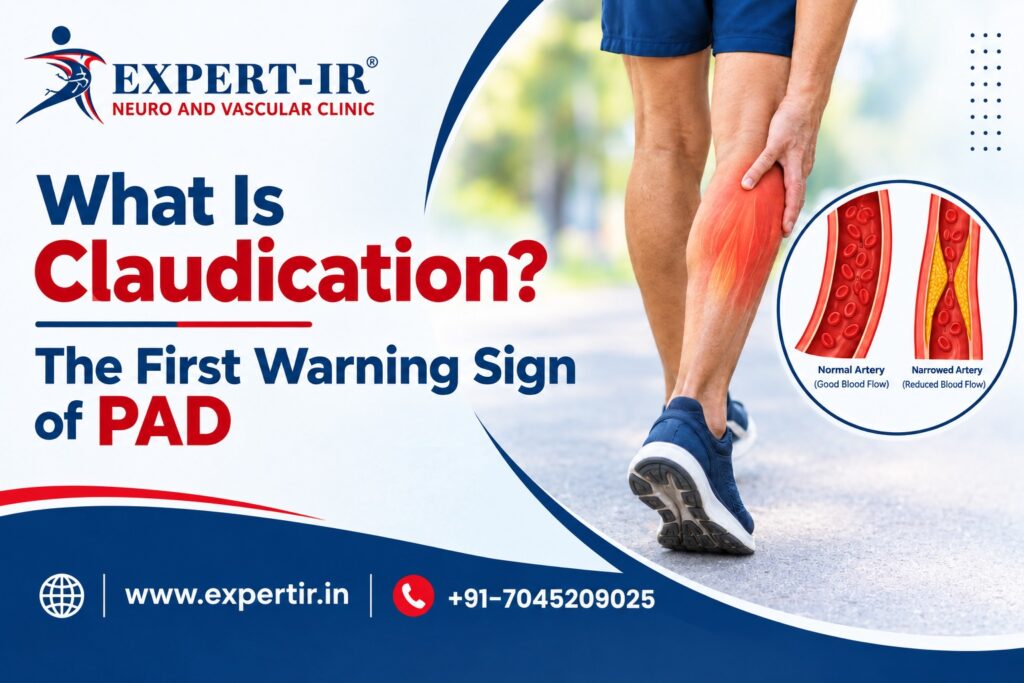
What Is Claudication? The First Warning Sign of PAD
If your legs cramp, ache, or feel heavy every time you walk a certain distance, and the pain eases the moment you stop, you may be dealing with claudication, not just “getting older” or being unfit. Claudication is often the earliest and most ignored warning sign of peripheral artery disease (PAD), a condition where the arteries carrying blood to your legs become narrowed by plaque buildup.
Many people brush off this pain for months, sometimes years, mistaking it for a muscle strain, arthritis, or general fatigue. But claudication disease is your body’s way of signalling that blood flow to your muscles is falling short of demand, and left unaddressed, it can progress toward non-healing wounds, gangrene, or even limb loss. Recognising the early signs of peripheral artery disease is often what stands between a simple lifestyle fix and a complex procedure later on. This guide breaks down what claudication is, why it happens, and when to see a vascular specialist before it advances.
Overview
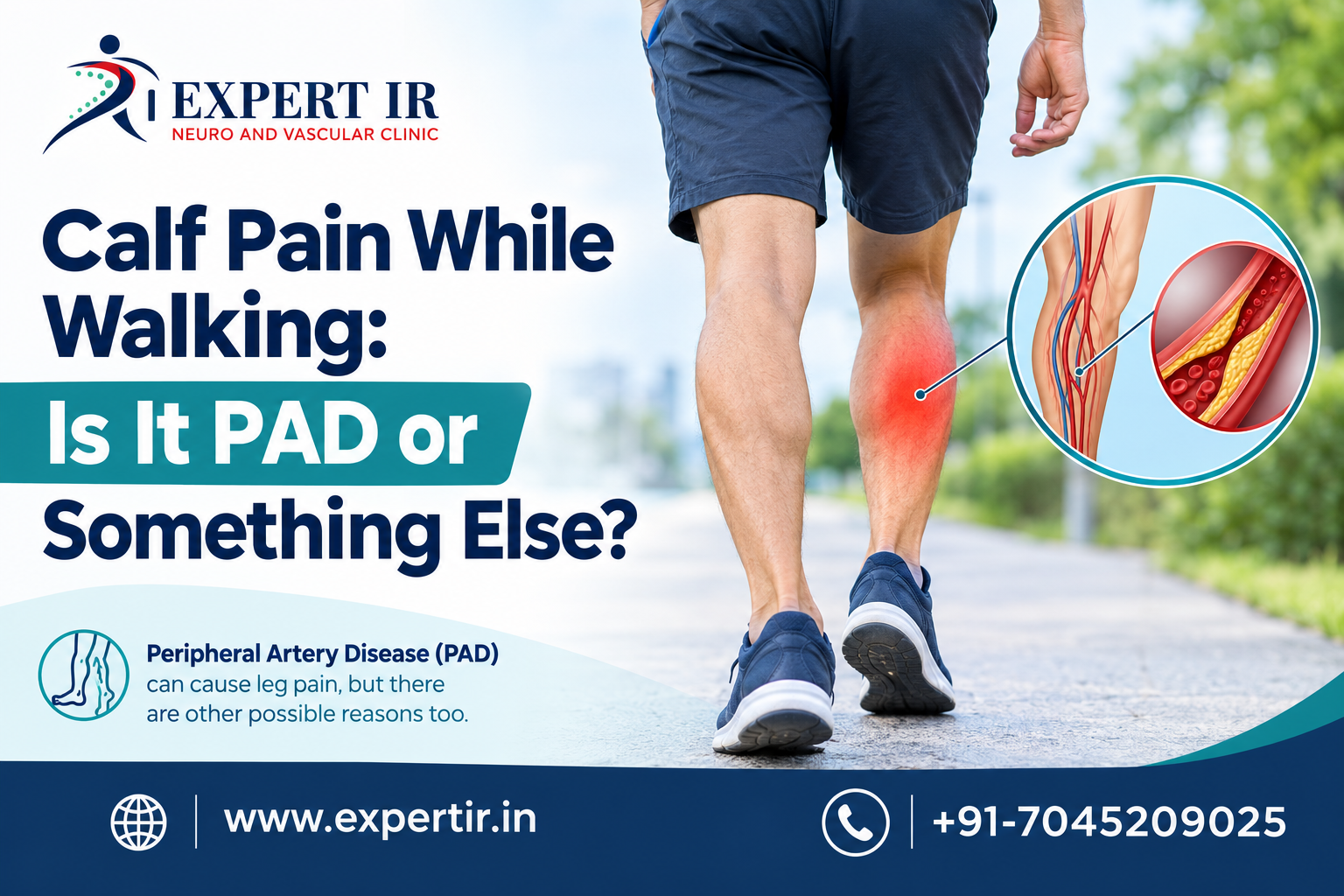
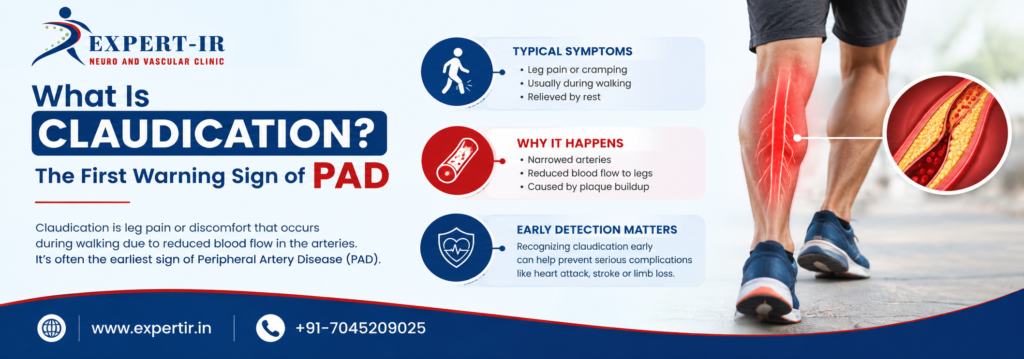
What is claudication? In simple terms, claudication is muscle pain, cramping, or heaviness that comes on with activity, usually walking, and settles down with a few minutes of rest. It most commonly affects the calf, but can also show up in the thigh, buttock, or foot.
Claudication itself is not a disease. It is a symptom, and in the vast majority of cases, it points to peripheral artery disease (PAD): narrowing or blockage of the arteries that supply the legs and arms, usually caused by atherosclerosis (fatty plaque building up inside artery walls).
You may also hear this condition called intermittent claudication, or its Latin form, claudicatio intermittens. “Intermittent” simply means the pain is not constant; it comes and goes with exertion. Some clinicians also refer to it as PVD with claudication, since peripheral vascular disease (PVD) and PAD are often used interchangeably.
In my years of practice as an interventional radiologist treating vascular disease, I have seen claudication dismissed far too often as a normal part of ageing. It is not. It is an early, treatable warning sign, and catching it in the claudication stage, before it progresses to rest pain or ulcers, gives patients far more treatment options and far better outcomes.
Symptoms
Claudication pain has a fairly recognisable pattern. Most patients describe it as:
- Cramping, aching, tightness, or a heavy, tired sensation in the muscle
- Pain that starts after walking a predictable distance (for example, always after two blocks)
- Pain that gets worse the faster or farther you walk, or the steeper the incline
- Relief within a few minutes of standing still or sitting down
- Pain that returns once you resume walking
The location of claudication pain often hints at where the blockage sits:
- Calf pain: the most common site, usually linked to blockages in the arteries above the knee
- Thigh or buttock pain: often points to disease higher up, near the pelvis or aorta
- Foot pain: suggests blockages further down, closer to the ankle and foot vessels
As PAD advances, some patients develop symptoms even at rest, a stage known as critical limb ischemia. Warning signs that need urgent attention include:
- Pain in the foot or toes at night or while lying flat
- Skin that feels cool to the touch or changes colour (pale, bluish, or dusky)
- Numbness or tingling in the leg or foot
- Wounds, cracks, or ulcers on the toes or feet that are slow to heal
If you notice a wound that isn’t healing, it’s worth understanding what an arterial ulcer looks like and how it’s treated, since these wounds need a different approach from ordinary cuts or venous ulcers.
When to See a Doctor
Do not wait for the pain to become unbearable before getting checked. See a vascular specialist if:
- You get consistent leg, calf, thigh, or buttock pain with walking that resolves with rest
- Walking distance is shrinking over weeks or months
- You notice a wound on your foot or toe that isn’t healing
- Your leg feels persistently cold, numb, or discoloured
- You have diabetes, smoke, or have high blood pressure or cholesterol and now notice leg discomfort with activity
An early diagnosis of vascular claudication matters because claudication is rarely an isolated problem. The same atherosclerosis narrowing your leg arteries is very often present in the arteries feeding your heart and brain, which raises your risk of heart attack and stroke. Getting your legs checked can end up protecting your heart too. If a wound has already appeared, knowing the difference between arterial and venous ulcers helps your doctor plan the right treatment path faster.
Causes
The overwhelming majority of claudication cases are caused by peripheral artery disease. Here’s what happens inside the artery:
- Cholesterol, fat, and other substances collect on the artery wall, forming plaque (atherosclerosis).
- Over time, this plaque hardens and narrows the artery’s inner channel.
- At rest, the narrowed artery can usually still deliver “just enough” blood.
- During exercise, your leg muscles demand more oxygen-rich blood than the narrowed vessel can supply, and that shortfall is what produces the cramping, aching claudication pain.
- If a plaque ruptures, a blood clot can form on top of it, narrowing or blocking the artery further and worsening symptoms rapidly.
Less commonly, claudication-like pain can arise from causes unrelated to artery blockage, including:
- Neurogenic (spinal) claudication: nerve compression in the lower spine, which produces similar leg pain but is triggered more by standing or posture than by walking distance, and often improves when leaning forward
- Chronic compartment syndrome: pressure buildup within a muscle compartment during exercise
- Popliteal artery entrapment: a structural issue where a muscle compresses an artery behind the knee, more common in younger, athletic patients
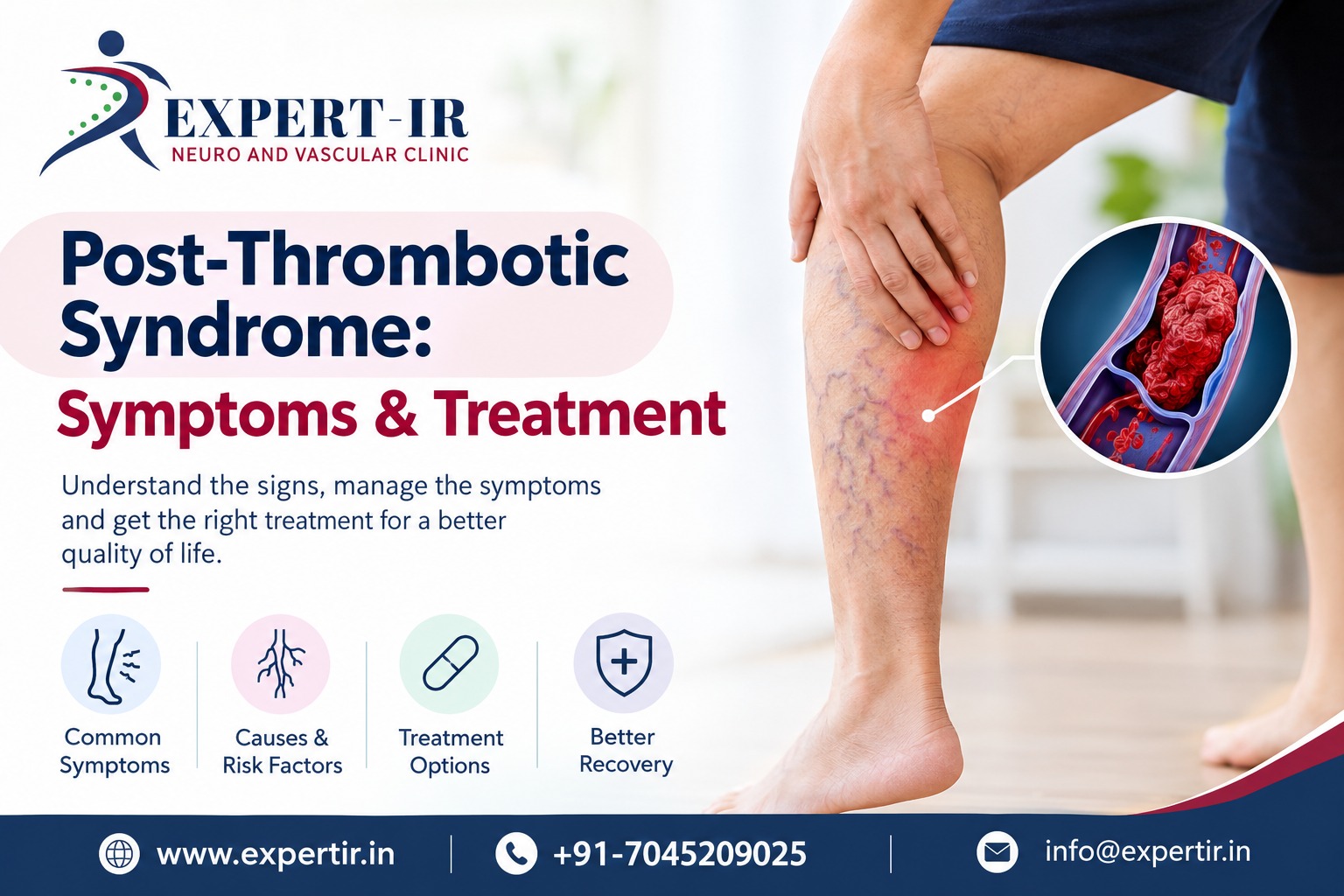
- Deep vein thrombosis (DVT): a blood clot in a deep leg vein, which needs urgent evaluation
A vascular specialist can usually tell these apart through a physical exam, pulse check, and simple tests such as an ankle-brachial index (ABI), Doppler ultrasound, or CT/MR angiography, the same imaging tools we use routinely to map blood flow before planning treatment.
Risk Factors
Several factors raise your likelihood of developing claudication and the peripheral artery disease behind it:
- Smoking or tobacco use: one of the strongest and most modifiable risk factors
- Diabetes: damages blood vessels and accelerates plaque buildup, and can progress through the stages of a diabetic foot ulcer if circulation problems go unmanaged
- High blood pressure
- High cholesterol
- Age: risk rises notably after 50, and further after 70
- Obesity (BMI over 30)
- Chronic kidney disease
- Family history of PAD, atherosclerosis, or claudication
- A personal history of heart disease or stroke, since the same arterial process often affects multiple vascular beds
If several of these apply to you, even mild claudication pain deserves a proper vascular work-up rather than a wait-and-watch approach.
Prevention
The good news: claudication and the artery disease driving it are largely preventable and manageable, especially when caught early. Steps that genuinely help include:
- Quit smoking: arguably the single most impactful change you can make
- Walk regularly: structured, supervised walking programs actually improve claudication pain by encouraging the body to open up small collateral blood vessels around the blockage
- Control blood sugar if you have diabetes
- Manage blood pressure and cholesterol, with medication if your doctor recommends it
- Eat a heart-healthy diet: lower in saturated fat and salt, higher in fibre, vegetables, and lean protein
- Maintain a healthy weight
- Get regular check-ups if you have risk factors, even without symptoms yet
When lifestyle measures and medication aren’t enough, or when claudication pain is significantly limiting daily life, nonsurgical treatment options for peripheral arterial disease, such as angioplasty and stenting performed by an interventional radiologist, can reopen or bypass blocked arteries, often restoring walking ability without open surgery. In more advanced cases, surgical bypass may be needed.
Conclusion
Accuracy based on established vascular medicine guidelines and years of hands-on clinical experience in treating peripheral artery disease at Expert IR Neuro & Vascular Clinic. Interventional radiologists there, including Dr. Santosh B. Patil (MBBS, DMRD, DNB, FNVIR, EBIR, European Board Certified Neuro and Vascular Interventional Radiologist and Endovascular Surgeon), have treated a wide range of complex vascular conditions using advanced, minimally invasive, non-surgical techniques, giving this guide a practical, real-world clinical grounding rather than just textbook theory.
Frequently Asked Questions (FAQs)
Claudication is muscle pain, cramping, or heaviness, usually in the calf, thigh, or buttock, that comes on with walking and eases with rest. It happens because narrowed arteries can’t deliver enough blood to the muscle during activity.
Ordinary muscle fatigue after unusual exertion doesn’t follow a consistent pattern and improves with conditioning. Claudication pain, by contrast, shows up at roughly the same walking distance every time and is tied to reduced blood flow, not just tiredness.
Yes. While the pain itself isn’t dangerous in the short term, intermittent claudication is usually a sign of peripheral artery disease, which raises the risk of heart attack, stroke, and, if untreated, non-healing wounds or limb loss.
The underlying artery narrowing can’t always be fully reversed, but symptoms can often be significantly improved or resolved through lifestyle changes, medication, supervised exercise, and, where needed, procedures like angioplasty or stenting.
Most people describe it as cramping, tightness, aching, or a heavy, tired sensation in the muscle, not a sharp or burning pain, that builds during walking and fades within a few minutes of resting.
Diagnosis typically starts with a physical exam and pulse check, followed by an ankle-brachial index (ABI) test, Doppler ultrasound, or CT/MR angiography to map the location and severity of the arterial blockage.
It most commonly affects the legs, especially the calves, but it can also affect the arms, shoulders, or buttocks if the arteries supplying those areas are narrowed.
Uncontrolled walking that ignores pain can strain the muscle, but structured, supervised walking programs are actually one of the most effective non-surgical treatments, as they encourage the body to develop small collateral vessels around the blockage.