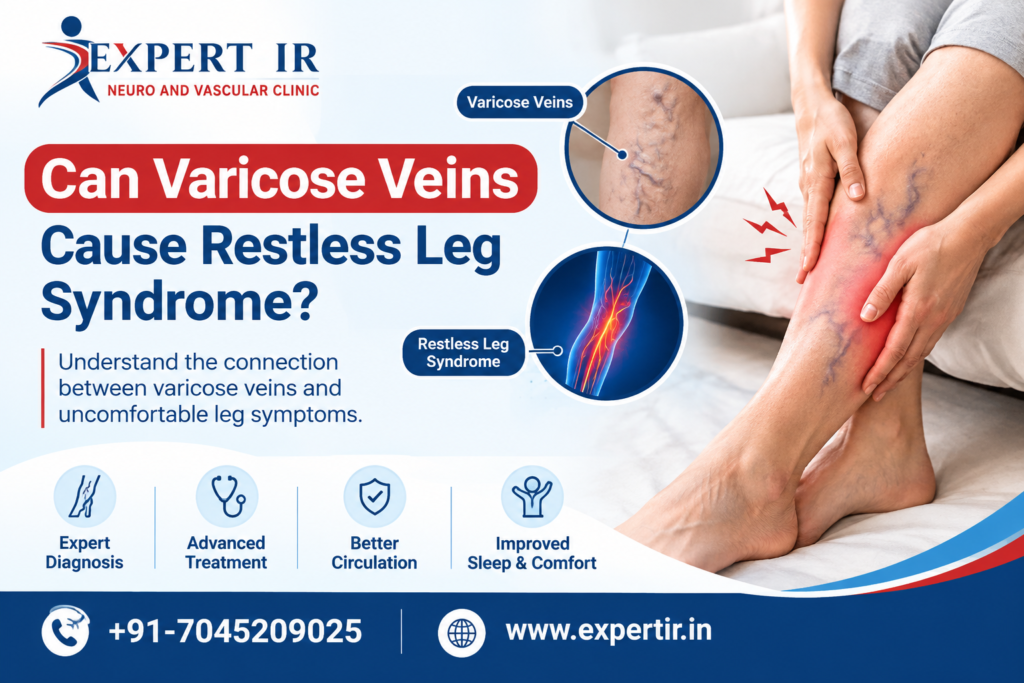
Can Varicose Veins Cause Restless Leg Syndrome?
Yes, varicose veins can contribute to restless leg syndrome (RLS). Weak vein valves let blood pool in the legs, which can trigger aching, crawling and an urge to move, especially at night. Studies link chronic venous insufficiency with RLS, and treating the diseased veins often eases both problems. Effective varicose veins treatment includes VenaSeal, laser ablation, radiofrequency ablation and sclerotherapy. See a vascular specialist for a duplex ultrasound if your leg discomfort keeps returning.
Do your legs ache, tingle or twitch every night, and do you also see bulging veins? You may be dealing with more than one problem. Many patients ask whether visible veins and restless legs are connected. The answer is often yes, and the right varicose veins treatment can bring real relief.
This guide explains the link, the warning signs, the risks of ignoring them and the treatments that work. I also share what I see in daily practice, so you know when to act. Our approach at the clinic focuses on VenaSeal glue treatment and other minimally invasive options.
Meet the Doctor Behind This Guide
This article is based on the clinical experience of Dr. Santosh B. Patil (MBBS, DMRD, DNB, FNVIR, EBIR, European Board Certified). He is the Director and Chief Vascular Interventional Radiologist at Expert-IR Neuro and Vascular Clinic in Pune.
Dr. Patil trained at Lokmanya Tilak Municipal Medical College (Sion Hospital), Mumbai, and Kovai Medical Center and Hospital, Coimbatore. He learned interventional radiology under Dr. Mathew Cherian and Dr. Pankaj Mehta, pioneers of the field in India. He is among the few doctors in the country with deep expertise in Venaseal treatment, and he has performed a large number of these procedures.
What Is Restless Leg Syndrome?
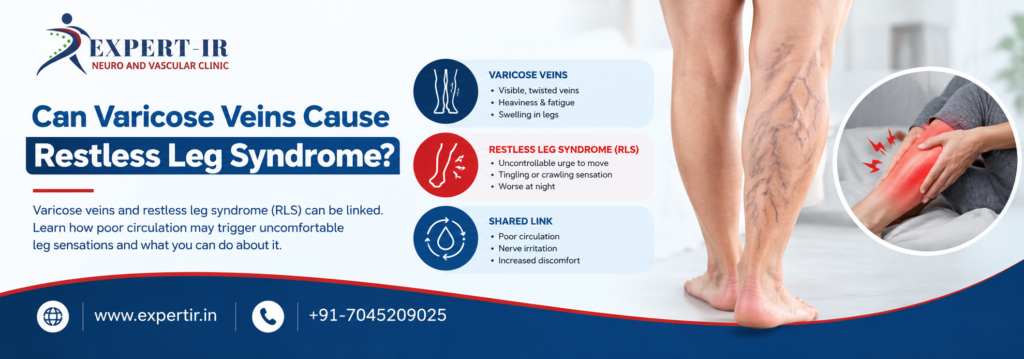
Restless leg syndrome is a nerve and movement disorder. It creates an irresistible urge to move your legs, usually in the evening or while you rest. Patients describe it as:
- Crawling or creeping sensations
- Pulling, throbbing or aching deep in the calf
- Relief only when they walk or stretch
- Poor sleep because of constant leg movement
Iron deficiency, pregnancy, kidney problems and some medicines can cause RLS. Poor vein health is another cause that many people miss.
Can Varicose Veins Cause Restless Leg Syndrome?
Varicose veins can contribute to RLS, and research supports the link. Studies show that a large share of people with RLS also have chronic venous insufficiency. In several reports, treating the faulty veins reduced RLS symptoms.
Here is the reason. Healthy leg veins have one-way valves that push blood up toward the heart. When these valves fail, blood flows backward and pools in the lower leg. This is called venous reflux. The pooled blood raises pressure, irritates nearby nerves and creates the heavy, restless feeling.
I regularly see patients who have been told for years that their night-time leg discomfort is “just stress.” After a duplex ultrasound shows reflux, and after we close the diseased vein, many say their legs finally feel calm.
Not every RLS case comes from veins. That is why a proper vascular check matters before any treatment starts.
Causes of Varicose Veins in Legs
Understanding the causes of varicose veins in legs helps you protect your veins. Common triggers include:
- Family history: Weak valves often run in families.
- Prolonged standing or sitting: Teachers, drivers, surgeons and office workers face higher risk.
- Pregnancy: Hormones and extra blood volume stress leg veins.
- Age: Vein walls lose elasticity over time.
- Obesity: Extra weight raises pressure inside leg veins.
- Previous leg injury or clots: Damage to the valves can lead to reflux.
Early Signs of Varicose Veins You Should Not Ignore
Catching varicose veins at the initial stage gives you more treatment choices and better results. Watch for these early signs of varicose veins:
- Heavy, tired legs at the end of the day
- Mild swelling around the ankles
- Night cramps and burning sensations
- Itching over a vein
- Thin, blue veins on skin, often called spider veins
Early Stage Varicose Veins Symptoms
Early-stage varicose veins symptoms are often subtle. You may see faint blue or purple lines behind the knee or on the calf. The legs feel fine in the morning and uncomfortable by evening. Many people delay care at this point because nothing looks serious.
Signs and Symptoms of Varicose Veins in Advanced Stages
As the disease progresses, the signs and symptoms of varicose veins become clearer:
- Twisted, rope-like veins that bulge above the skin
- Constant swelling and aching
- Brown or dark skin patches near the ankle
- Hard, tight skin
- Slow-healing sores
Left Leg Vein Pain
Many patients come in with left leg vein pain. The left leg is often more affected, partly because the large pelvic veins cross in the body. Pain in only one leg, especially with sudden swelling or warmth, needs urgent attention. It can signal a blood clot (DVT) rather than simple varicose veins. Do not wait if this happens.
Complications of Varicose Veins
Varicose veins are not only a cosmetic issue. The complications of varicose veins can be serious when the disease is left untreated:
- Chronic swelling and skin changes: Long-term pressure damages the skin.
- Venous ulcers: Open wounds that heal slowly and often return.
- Superficial thrombophlebitis: Painful inflammation and clotting in the vein.
- Deep vein thrombosis: A dangerous clot in the deep veins.
- Bleeding: Thin skin over a vein can break.
- Sleep loss and restless legs: Ongoing discomfort disrupts rest.
Ruptured, Burst or Popped Blood Vessel in Leg
Patients often panic about a ruptured blood vessel in the leg, a burst blood vessel in the leg, or a popped blood vessel in the leg. A varicose vein close to the skin can bleed heavily after even a minor knock, because the pressure inside the vein is high.
If this happens:
- Lie down and raise your leg above heart level.
- Press firmly on the spot with a clean cloth.
- Keep pressure on for 10 to 15 minutes.
- Go to a hospital if bleeding does not stop.
Once the bleeding is controlled, book a vein evaluation. A vein that has bled once is likely to bleed again.
How Varicose Veins Are Diagnosed
Diagnosis starts with a physical examination while you stand. Then we perform a duplex ultrasound. This painless test shows the direction of blood flow and pinpoints the failing valves. It also helps rule out clots and other causes of RLS, which protects you from unnecessary treatment.
Varicose Veins Treatment Options
Modern varicose veins treatment no longer requires large cuts or long hospital stays. As an interventional radiologist, I use image-guided methods that treat the vein from inside.
VenaSeal (Glue) Closure
VenaSeal uses a medical adhesive to seal the diseased vein. It needs no tumescent anaesthesia and no compression stockings in most cases, and patients usually walk out the same day. For readers who want a longer explanation, our guide on how to cure varicose veins permanently covers the full range of options.
Laser Ablation (EVLT)
A thin laser fibre heats and closes the vein. It is highly effective for large veins. You can read more about laser treatment for varicose veins and what to expect.
Radiofrequency Ablation (RFA)
RFA uses controlled heat from a catheter to collapse the vein. Recovery is quick, and results are long-lasting.
Sclerotherapy
A special solution or foam is injected into smaller veins and spider veins, and they fade over time. Sclerotherapy for varicose veins works well for blue veins on skin and residual small veins.
Cost of Treatment
Cost depends on the method, the number of legs treated and the severity. For a clear breakdown, see this page on varicose veins treatment cost in India.
Varicose Veins Weight Loss | Does It Help?
Many patients ask about varicose veins weight loss. Losing extra weight lowers pressure in the leg veins and can ease swelling and heaviness. It may also reduce RLS-type discomfort. However, weight loss cannot repair damaged valves or remove veins that have already stretched. It supports treatment, but it does not replace it.
Lifestyle Tips That Support Vein Health
Use these habits alongside medical care:
- Walk for 30 minutes daily to activate your calf muscle pump.
- Raise your legs above heart level for 15 minutes when resting.
- Avoid standing or sitting still for long periods.
- Wear medical-grade compression stockings if advised.
- Maintain a healthy weight and eat enough iron and fibre.
- Ask about physiotherapy for varicose veins to improve circulation and speed recovery.
When Should You See a Vein Specialist?
Book a consultation if you notice any of the following:
- Restless, aching legs that disturb your sleep
- Visible bulging veins with swelling
- Skin darkening or itching near the ankle
- A bleeding vein or a non-healing sore
- Pain or swelling in one leg, especially the left leg
Choosing the right doctor matters. A trained vascular surgeon in Pune can assess your veins, test for other causes of RLS and plan the safest procedure for you.
Conclusion
Restless legs and varicose veins often travel together, and treating the veins can improve your comfort and your sleep. Do not wait for complications. Early evaluation gives you simpler options and faster recovery. To discuss your symptoms, visit the Expert-IR Neuro and Vascular Clinic and consult Dr. Santosh Patil.
Frequently Asked Questions (FAQs)
Yes, they can contribute to it. Blood pooling from faulty valves irritates the leg nerves and triggers restlessness. A duplex ultrasound confirms whether your veins are involved.
It can help. Many patients report less aching, better sleep and calmer legs after the diseased vein is closed. Results vary, because RLS can also come from iron deficiency or nerve conditions.
The early signs of varicose veins include heavy legs by evening, mild ankle swelling, night cramps, itching over a vein and thin blue veins on skin. Early stage varicose veins symptoms are often mild, so do not ignore them.
The complications of varicose veins include chronic swelling, skin darkening, venous ulcers, vein inflammation, blood clots and bleeding. Early treatment lowers these risks.
Lie down, raise the leg above heart level and press firmly on the spot with a clean cloth for 10 to 15 minutes. A ruptured or popped blood vessel in the leg that keeps bleeding needs urgent hospital care. Book a vein check afterward, because the vein can bleed again.
Left leg vein pain often comes from venous reflux or pressure on the pelvic veins. Sudden pain with swelling and warmth in one leg can signal a clot (DVT), so see a doctor without delay.
No. Varicose veins weight loss lowers pressure in the veins and eases heaviness and swelling. It cannot repair damaged valves, so medical treatment is still needed for existing veins.
It can. Poor blood flow is often why diabetic foot ulcers fail to heal. Angioplasty or stenting can reopen blocked arteries and bring more blood to the wound, which can support healing and may help avoid amputation. Early assessment gives the best chance of saving the limb.