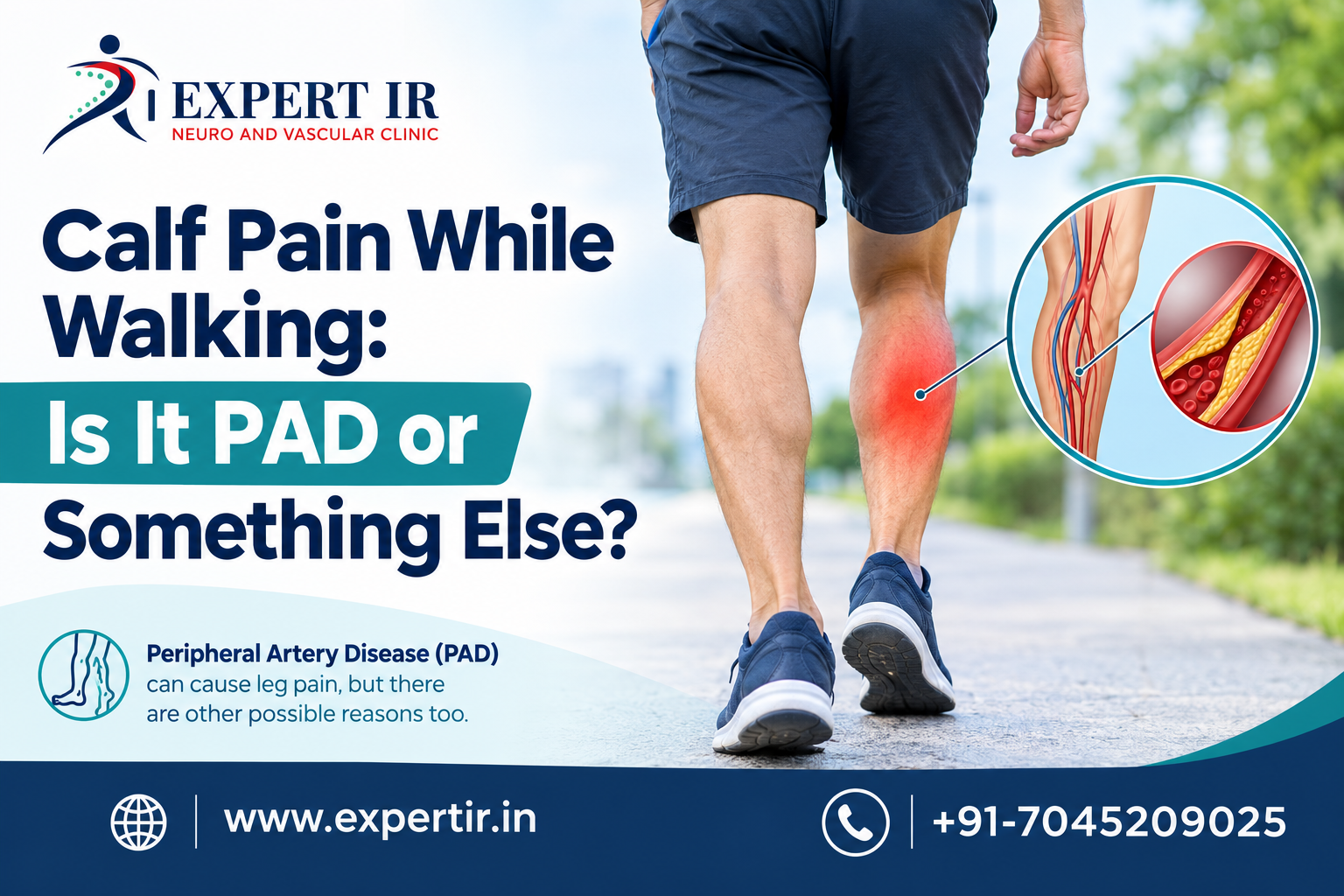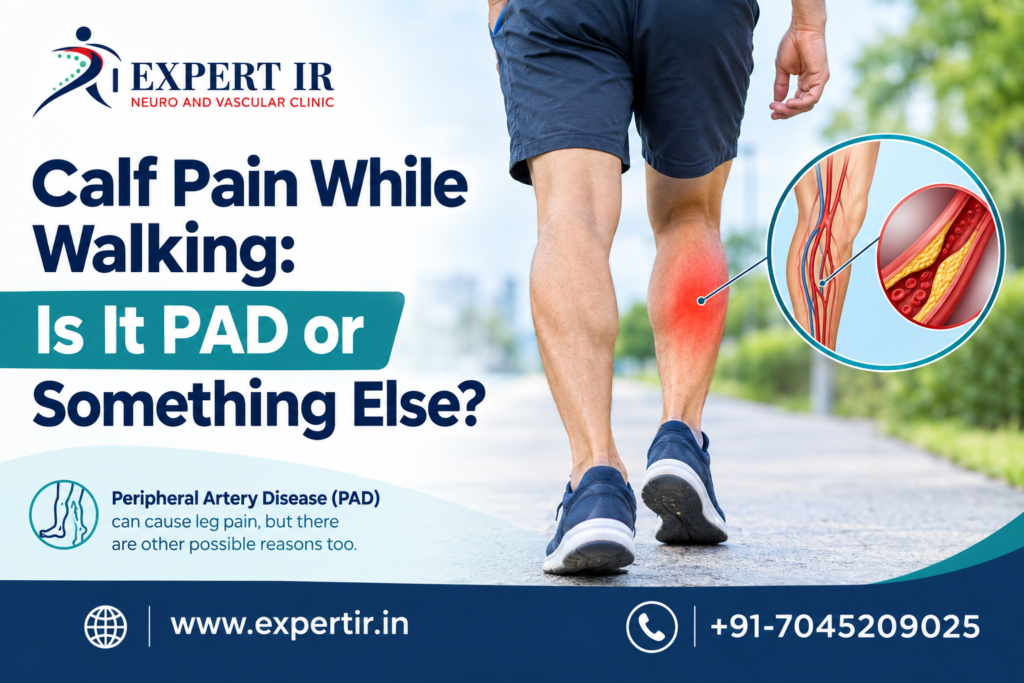
Calf Pain While Walking: Is It PAD or Something Else?
No, calf pain while walking is not always PAD. Muscle strain, a pinched nerve in the spine, and vein problems can all cause it. But a cramp that starts after a predictable walking distance and fades within minutes of rest is the classic sign of peripheral artery disease (PAD), and it should be tested.
You walk to the market, and halfway there your calf starts to cramp. You stop, rest, and it fades. Then it happens again next week.
Most people blame age or a pulled muscle. Sometimes that’s right. Sometimes it’s PAD, a circulation problem that also affects the heart. This guide helps you tell the difference.
TL;DR
- PAD is narrowing of the arteries that supply the legs, usually caused by atherosclerosis in legs.
- The signature symptom is claudication: calf pain with walking that eases within about 10 minutes of rest.
- Many other conditions mimic it, including lumbar spinal stenosis, muscle strain and chronic venous insufficiency.
- A painless ankle-brachial index (ABI) test is the usual first step. A reading of 0.90 or below suggests PAD.
- Peripheral artery disease treatment starts with quitting tobacco, supervised walking and medicines. Procedures are for severe cases.
- Leg pain is not a typical heart attack symptom, but the same plaque disease affects both legs and heart.
- No injection cures PAD or dissolves established plaque.
What Is PAD (Peripheral Artery Disease)?
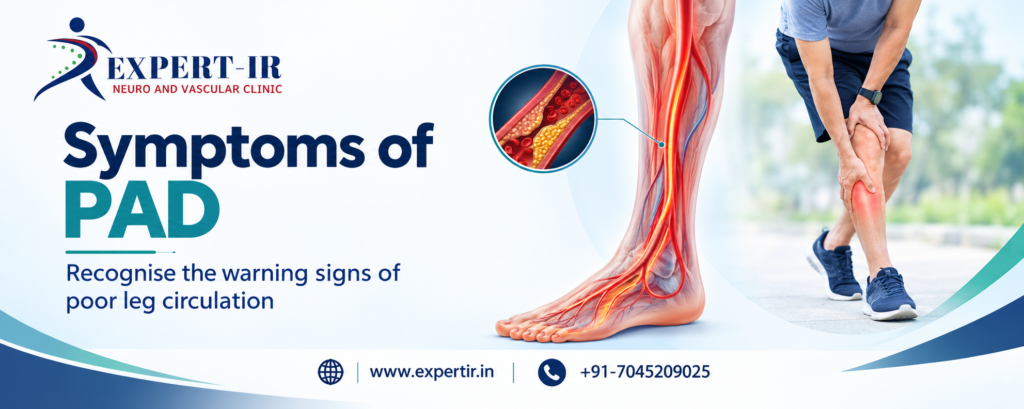
Peripheral artery disease is a condition in which arteries that carry blood to the limbs, most often the legs, become narrow or blocked.
The usual cause is atherosclerosis in the legs. Fatty deposits (plaque) build up inside artery walls. Less blood reaches the leg muscles, especially when they are working hard.
Think of a garden hose with a kink. At rest, enough water trickles through. When you walk briskly or climb stairs, the supply falls short. The muscle complains.
Item | Detail |
Full form | PAD = Peripheral Artery Disease (also called peripheral arterial disease) |
Main cause | Atherosclerosis (plaque build-up in arteries) |
Most affected area | Legs and feet |
Signature symptom | Intermittent claudication (pain on walking, relief on rest) |
First test | Ankle-Brachial Index (ABI) |
Diagnostic threshold | ABI of 0.90 or below |
Global burden | Over 200 million people worldwide |
Biggest modifiable risk factor | Smoking or tobacco use |
Symptoms of PAD
The Typical Claudication Pattern
- Cramping, aching or tightness in the calf (sometimes thigh or buttock)
- Starts after a fairly predictable walking distance
- Eases within about 10 minutes of rest
- Returns when you walk the same distance again
That predictability is the clue. Muscle strain is usually random and tied to a specific activity or injury.
Other PAD Symptoms
- Cold feet, or one leg colder than the other
- Shiny, pale or bluish skin
- Hair loss on the legs or feet
- Slow-growing toenails
- Sores on toes or feet that heal slowly or not at all (read: can PAD cause non-healing foot wounds?)
- Weak or absent pulse in the foot
Important: Many people with PAD have mild symptoms or none. Some assume the discomfort is ageing and quietly cut back on walking.
Read more about the early signs of peripheral artery disease and what claudication is.
Other Causes of Calf Pain While Walking
You can’t reliably self-diagnose from a list. But knowing the alternatives helps you describe your pain to a doctor.
Condition | How the pain feels | Clue that separates it from PAD |
PAD (claudication) | Cramping calf pain with walking | Predictable distance; relief within minutes of standing still |
Lumbar spinal stenosis | Aching, heaviness, sometimes numbness | Eases when you sit or lean forward |
Diabetic neuropathy | Burning, tingling, numbness | Often present at rest, worse at night |
Chronic venous insufficiency | Heaviness, swelling | Worse by evening; better with leg elevation |
Deep vein thrombosis (DVT) | Sudden pain, warmth, swelling in one leg | Emergency. Seek care immediately |
Muscle strain or cramps | Sharp or tight, random | Linked to exercise, dehydration or low electrolytes |
Baker’s cyst | Fullness behind the knee | Visible swelling behind the knee |
Compartment syndrome (exertional) | Tightness during exercise | Starts at a certain intensity; both legs often involved |
PAD and the Heart: Is Leg Pain a Heart Attack Sign?
Leg pain is not a typical sign of a heart attack. Heart attack symptoms usually include chest pressure, pain spreading to the arm or jaw, breathlessness, sweating or nausea.
The link between leg pain and heart attack risk is the underlying disease. The plaque that narrows leg arteries often narrows coronary arteries too. People with PAD are considerably more likely to have a heart attack or stroke than people without it.
The leg is simply where the problem showed up first. For the wider picture, see our guide to the causes and risk factors of vascular disease.
Stent for Heart Blockage vs Stent for PAD
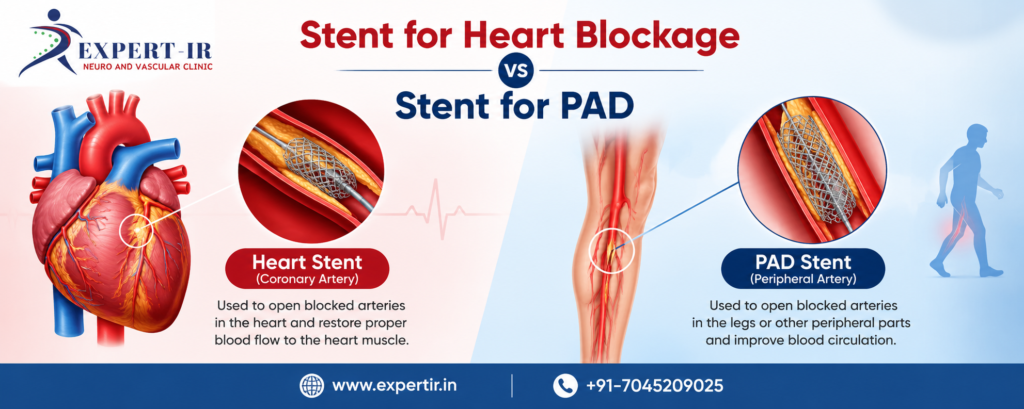
A stent for heart blockage is a small mesh tube placed in a coronary artery to keep it open. Stents can also be used in leg arteries, but that is a different procedure in a different location.
A stent does not treat the underlying disease. Lifestyle changes and medicines still matter.
Who Is at Risk of PAD?
- Smokers and tobacco chewers (the strongest risk factor)
- People with diabetes
- High blood pressure or high cholesterol
- Age above 50
- Family history of heart disease or PAD
- Overweight or inactive people
- Kidney disease
South Asians tend to develop heart and blood vessel disease earlier than many other populations. If you are in your 40s with several of these risk factors, don’t wait until 60 to get checked.
Understand how plaque forms in our guide to atherosclerosis and other vascular disease causes. If you have diabetes, also read how diabetes increases the risk of leg artery blockage.
How Is PAD Diagnosed?
Ankle-Brachial Index (ABI)
The standard first test. A technician compares blood pressure at your ankle with that at your arm. A lower ankle reading suggests reduced blood flow. An ABI of 0.90 or below generally indicates PAD.
Further Tests
- Doppler ultrasound to view blood flow and locate blockages
- CT or MR angiography for detailed images of the arteries
- Treadmill testing to measure how far you can walk before symptoms begin
In Pune, a vascular surgeon or cardiologist is the right specialist. Your family doctor can arrange an ABI and refer you.
PAD Treatments: What Are Your Options?
PAD treatments work in steps: lifestyle first, then medicines, then procedures if needed. Our peripheral artery disease treatment page explains the options offered at Expert IR.
Lifestyle Changes (The Foundation)
- Quit smoking. Nothing else comes close.
- Walk regularly. Structured walking (walk until mild pain starts, rest, repeat) can lengthen your pain-free distance over weeks.
- Eat a heart-friendly diet low in refined sugar and trans fats.
- Manage your weight.
- Check your feet daily, especially if you have diabetes.
Medication
- Antiplatelet drugs to reduce clot risk
- Statins to lower cholesterol and stabilise plaque
- Blood pressure medicines
- Diabetes control medication
- Cilostazol, which can improve walking distance in some patients
Don’t start or stop any medicine without medical advice.
Procedures
- Angioplasty: a tiny balloon opens the artery (see when angioplasty can restore blood flow)
- Stenting: keeps the artery open
- Bypass surgery: reroutes blood around a blockage
- Atherectomy: removes plaque
What About Injections?
No injection currently cures PAD or dissolves established plaque. Doctors use injectable clot-dissolving drugs through a catheter for sudden, severe limb blockage. Injections for varicose veins (sclerotherapy) treat veins, not arteries.
Be cautious of any clinic that promises a quick injection cure for PAD.
When to See a Doctor
Book an appointment soon if:
- Calf pain repeatedly appears with walking and eases with rest
- You have risk factors and any leg discomfort
- One leg or foot feels colder than the other
Get emergency help immediately if:
- A leg suddenly becomes painful, pale, cold or numb
- A sore or dark patch on the foot is not healing
- You have chest pain, breathlessness or sweating
Sudden loss of blood flow to a limb can cause permanent damage within hours.
Need help finding the right care? Explore our PAD treatment service and meet our vascular surgeon in Pune,
Conclusion
Calf pain while walking is not always PAD. But predictable cramping that fades with rest is a classic PAD symptom and deserves a simple ABI test.
PAD matters beyond the legs. It signals atherosclerosis that may also affect the heart. The earlier it’s found, the more options you have, from lifestyle changes to medicines and, if needed, procedures.
If this pain sounds familiar, don’t wait. Get tested.
Have you noticed leg pain while walking, or does someone in your family have it? What stopped you from getting it checked? Tell us in the comments.
Related Reading
- Peripheral artery disease treatment at Expert IR
- Early signs of peripheral artery disease most people ignore
- What is claudication? The first warning sign of PAD
- How diabetes increases the risk of leg artery blockage
- Can PAD cause non-healing foot wounds?
- Causes of vascular diseases and their risk factors
Frequently Asked Questions (FAQs)
PAD stands for peripheral artery disease, also written as peripheral arterial disease. It is a narrowing of arteries that supply blood to the limbs, most often the legs.
The main symptom is claudication: cramping pain in the calf, thigh, or buttock during walking that eases within about 10 minutes of rest.
No. Muscle strain, spinal stenosis, venous disease, and nerve problems can all cause calf pain. PAD is suspected when the pain follows a predictable, repeatable pattern with walking.
PAD pain appears after a fairly consistent walking distance and settles with rest. A muscle cramp is usually random, may come at night, and is linked to exertion, dehydration, or low electrolytes.
PAD affects arteries (blood going to the legs). Varicose veins and venous insufficiency affect veins (blood returning to the heart). Vein problems often cause swelling and heaviness that improves when the leg is raised.
No. Artery narrowing does not reverse by itself. Symptoms and cardiovascular risk can be controlled with treatment.
It can be. Pain in the foot or toes when lying down, relieved by hanging the leg over the bed, may signal advanced PAD. See a doctor promptly.
No. Heart attack pain is typically in the chest, arm, jaw, or back, with breathlessness or sweating. PAD pain is in the leg and linked to walking. Both come from the same vessel disease.