DVT vs Varicose Veins: 7 Important Differences and Symptoms to Know
Your calf feels heavy, and one leg looks bigger than the other. Is it a tired vein or a blood clot?
DVT and varicose veins both affect leg veins, yet they are very different problems. One is usually a slow nuisance. The other can become an emergency.
This guide explains the difference between DVT and varicose veins, the symptoms of each, and when to get tested.
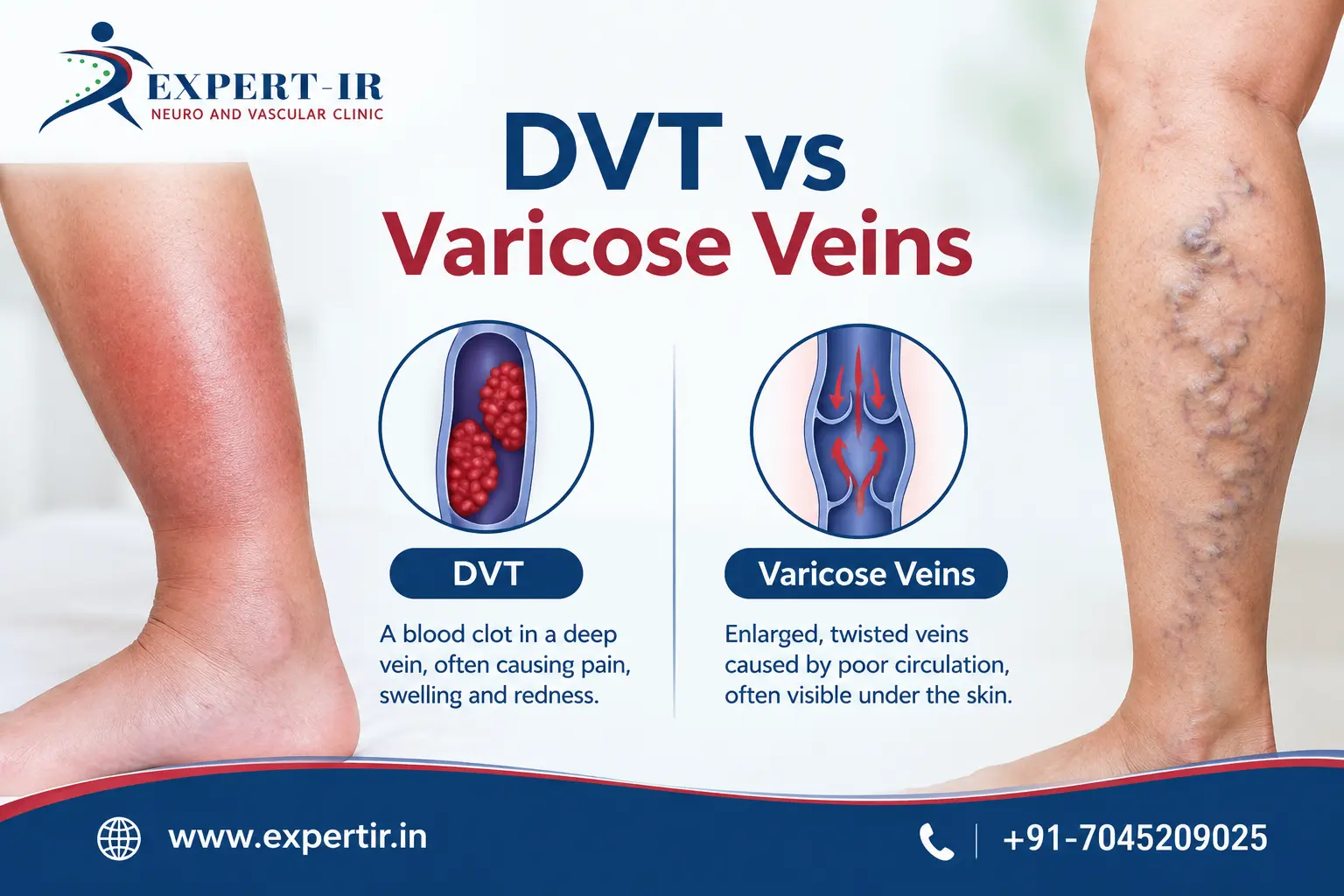
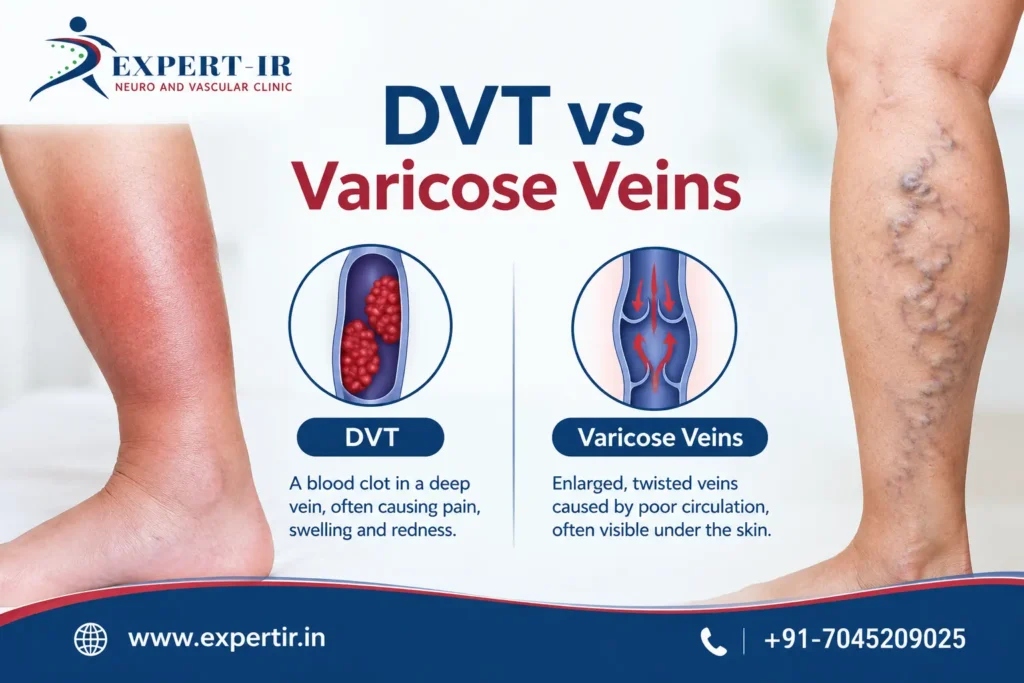
Varicose veins are swollen, twisted veins just under the skin. DVT (deep vein thrombosis) is a blood clot in a deep vein. Sudden swelling and pain in one leg need urgent medical attention.
What Is DVT?
Deep vein thrombosis (DVT) is a blood clot that forms in a deep vein, most often in the leg. Deep veins sit inside the muscle and carry most of the blood back to the heart.
A clot can partly or fully block this flow. The real danger is a clot breaking off and travelling to the lungs. That is called a pulmonary embolism, and it is life-threatening.
DVT can develop after long periods of immobility, surgery, injury, pregnancy, or in people with certain clotting conditions.
What Are Varicose Veins?
If you have been asking “what is varicose veins problem,” here is the plain answer.
Varicose veins are enlarged, twisted veins that sit close to the skin’s surface. They usually appear on the legs. They form when the small valves inside the vein weaken and let blood pool instead of moving upward.
Most varicose veins are a chronic circulation problem. They are often uncomfortable and sometimes cosmetic, but they are usually not dangerous on their own. Learn more about causes and stages of varicose veins on our blog.
DVT vs Varicose Veins: 7 Important Differences
S.No | Feature | DVT | Varicose Veins |
1 | Vein involved | Deep veins | Superficial (surface) veins |
2 | Nature of problem | Blood clot | Weak valves, pooled blood |
3 | Onset | Often sudden | Gradual, over months or years |
4 | Visible signs | Swelling, warmth, redness; veins may not look unusual | Bulging, rope-like, bluish veins |
5 | Pain pattern | Constant ache or cramp, often in the calf | Heaviness that worsens after standing, eases on rest |
6 | Main risk | Pulmonary embolism | Skin changes, ulcers, bleeding (in long-standing cases) |
7 | Urgency | Medical emergency if suspected | Usually non-urgent, needs evaluation |
Let’s look at each difference in more detail.
1. Deep Veins vs Surface Veins
DVT sits deep inside the leg, so you cannot see the clot. Varicose veins are visible because they lie just beneath the skin.
2. A Clot vs. a Valve Problem
DVT is about a clot blocking flow. Varicose veins are about blood flowing backward through faulty valves.
3. Sudden vs. Slow Onset
DVT symptoms can appear within hours or days. Varicose veins build up slowly, often over years.
4. What You See
Varicose veins are easy to spot. DVT can be silent or show up only as swelling in one leg, sometimes with redness or a change in skin colour.
5. How the Pain Feels
DVT pain is often described as a cramp or soreness that does not ease with rest. Varicose vein pain is usually a dull heaviness that improves when you elevate the leg.
6. Different Complications
Untreated DVT can lead to pulmonary embolism and long-term swelling (post-thrombotic syndrome). Untreated varicose veins can lead to skin darkening, eczema, and leg ulcers.
7. Different Levels of Urgency
Suspected DVT needs same-day evaluation. You can assess varicose veins at a planned appointment.
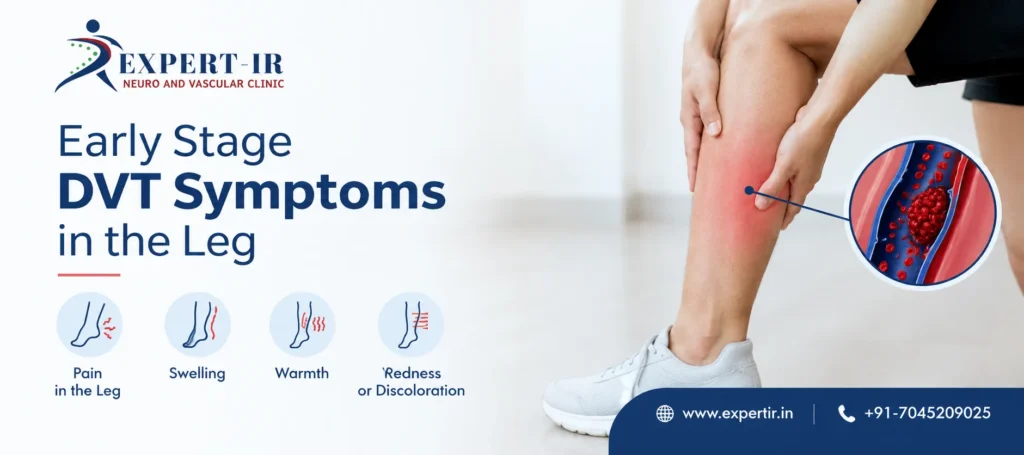
Early Stage DVT Symptoms in the Leg
Many people miss early-stage DVT symptoms in the leg because they feel mild. Watch for:
- Swelling in one leg (rarely both)
- A cramping or aching pain, often starting in the calf
- Warmth over the painful area
- Red or darkened skin
- Tenderness when pressing or walking
Some people have no symptoms at all, which is why risk factors matter.
Emergency Signs: Possible Pulmonary Embolism
Seek emergency care immediately if leg symptoms come with:
- Sudden shortness of breath
- Chest pain that worsens when you breathe in
- Rapid heartbeat or dizziness
- Coughing up blood
Varicose Veins Symptoms
Common signs include:
- Dark purple or blue veins that bulge
- Heaviness or aching in the legs, worse by evening
- Burning, throbbing, or night cramps
- Itching around the vein
- Swollen ankles after standing
Over time, the skin near the ankle may darken or harden. Do not ignore these changes.
Who Is at Risk?
DVT risk factors
- Long bed rest or long travel
- Recent surgery or fracture
- Pregnancy and the period after delivery
- Obesity, smoking, older age
- Cancer or inherited clotting disorders
- Hormonal medicines, as advised by your doctor
Varicose vein risk factors
- Family history
- Prolonged standing or sitting at work
- Pregnancy
- Obesity
- Increasing age
Test for DVT in Leg: How Is It Diagnosed?
A doctor looks at your symptoms, risk factors, and examines the leg. Then tests confirm the diagnosis.
- Compression duplex ultrasound: The main test for DVT. It is painless and shows blood flow and clots. See our vascular Doppler and ultrasound service.
- D-dimer blood test: Helps rule out a clot in people with lower risk. A raised result alone does not confirm DVT.
- Other imaging: CT or MR venography is used in selected cases.
Doppler ultrasound also assesses varicose veins to map which valves are leaking.
Treatment: DVT vs Varicose Veins
DVT Treatment
The main goals are to stop the clot from growing and prevent it from reaching the lungs. Treatment depends on the clot’s location and your health.
- Anticoagulants (blood thinners) are the usual first-line treatment
- Compression stockings may be advised to manage swelling
- Catheter-based procedures may be considered in selected cases
- IVC filter is used only when blood thinners cannot be given
DVT Treatment in Pune
If you are looking for DVT treatment in Pune, choose a centre with vascular and interventional radiology expertise, a vascular Doppler facility, and emergency support. Ask your doctor about the plan, expected duration of medicines, and follow-up.
Varicose Veins Treatment
Options depend on symptoms and scan findings.
- Lifestyle measures and compression stockings
- Endovenous ablation (laser or radiofrequency heat)
- Sclerotherapy (injection to close small veins)
- Medical adhesive closure in selected patients
- Surgery in some cases
Prevention Tips
- Keep follow-up appointments. Imaging at the intervals your doctor recommends can catch problems early.
- Track your periods. Note flow, duration and pain in a diary or app.
- Check hemoglobin if you feel unusually tired.
- Maintain a healthy weight through balanced meals and regular activity.
- Eat more vegetables, fruit and whole foods. This supports general health, though no diet can guarantee that fibroids will not return.
- Report new symptoms early instead of waiting for them to worsen.
- Discuss pregnancy plans with your doctor before trying to conceive. Read more on UFE and pregnancy.
When to See a Doctor
Book an appointment if you notice:
- New swelling in one leg
- Persistent leg pain or warmth
- Skin colour changes or sores near the ankle
- Varicose veins that ache, bleed, or itch
Go to an emergency room if you have breathlessness or chest pain.
Conclusion
DVT is a blood clot in a deep vein. Varicose veins are swollen surface veins from weak valves. The first can be dangerous without warning, while the second usually develops slowly.
The key takeaway: sudden, painful swelling in one leg needs a scan today, not next week. A simple Doppler ultrasound can sort out which condition you have.
Frequently Asked Questions (FAQs)
Varicose veins are swollen, twisted veins close to the skin, usually in the legs. They develop when vein valves weaken, and blood collects instead of flowing toward the heart. They cause heaviness, aching, and visible bulging veins.
Vascular dementia is a decline in thinking, memory, and reasoning caused by reduced blood flow to the brain, often after strokes or small vessel damage. It is a brain condition, different from DVT or varicose veins. However, healthy blood vessels, controlled blood pressure, and not smoking help lower vascular risk overall.
Varicose veins do not simply “turn into” DVT. But having them can slightly raise the chance of clots, and a surface clot can sometimes extend deeper. Any sudden swelling or pain needs a scan.
Don’t wait for it to settle. Untreated DVT can lead to pulmonary embolism. Always get evaluated and follow medical advice.
Once treatment starts, doctors often encourage walking, but this must be guided by your doctor. Do not massage the leg.
Duration varies. Many people take blood thinners for at least three months, and some need longer depending on the cause and risk of recurrence. Your doctor will decide.
A vascular specialist, vascular surgeon, or interventional radiologist can evaluate both conditions. Check their qualification and registration before booking.
They can ease swelling and heaviness in varicose veins and may be advised after DVT. Fit and grade should be recommended by your doctor.