DVT Treatment in Pune | Diagnosis, Treatment Options & Recovery.
One leg swells. It feels heavy, a little warm, and the calf aches as if you have pulled a muscle. Many people wait a few days to see if it passes.
With deep vein thrombosis (DVT), waiting can be risky. This guide explains how DVT treatment in Pune works: how the clot is confirmed, which treatments are used, and what recovery looks like.
What Is Deep Vein Thrombosis (DVT)?
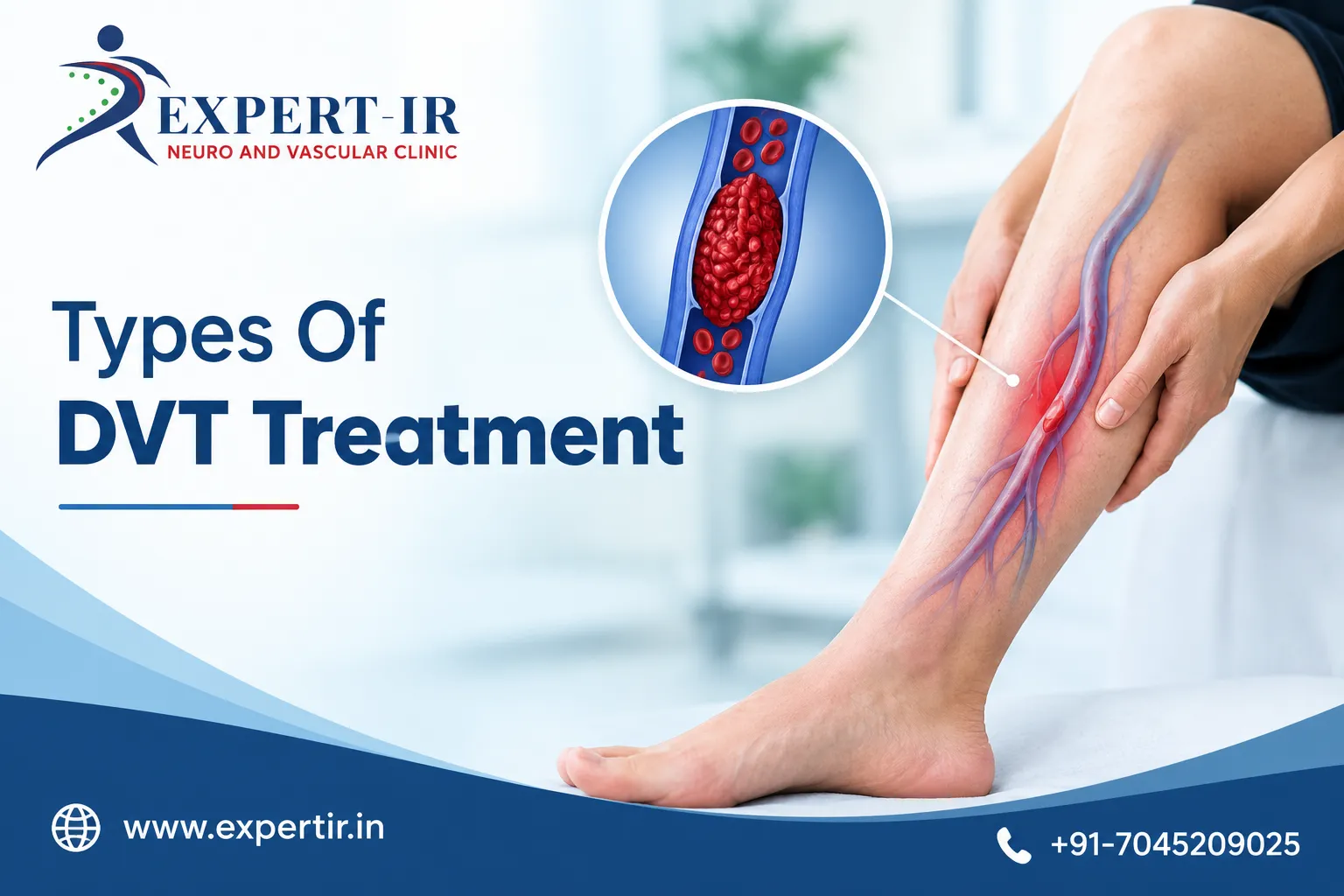
DVT is a blood clot that forms in a deep vein, usually in the leg or pelvis. The clot partly or fully blocks blood flow back to the heart.
The danger is not only the leg. A piece of the clot can break away, travel to the lungs and cause a pulmonary embolism (PE). That is a medical emergency.
DVT vs varicose veins
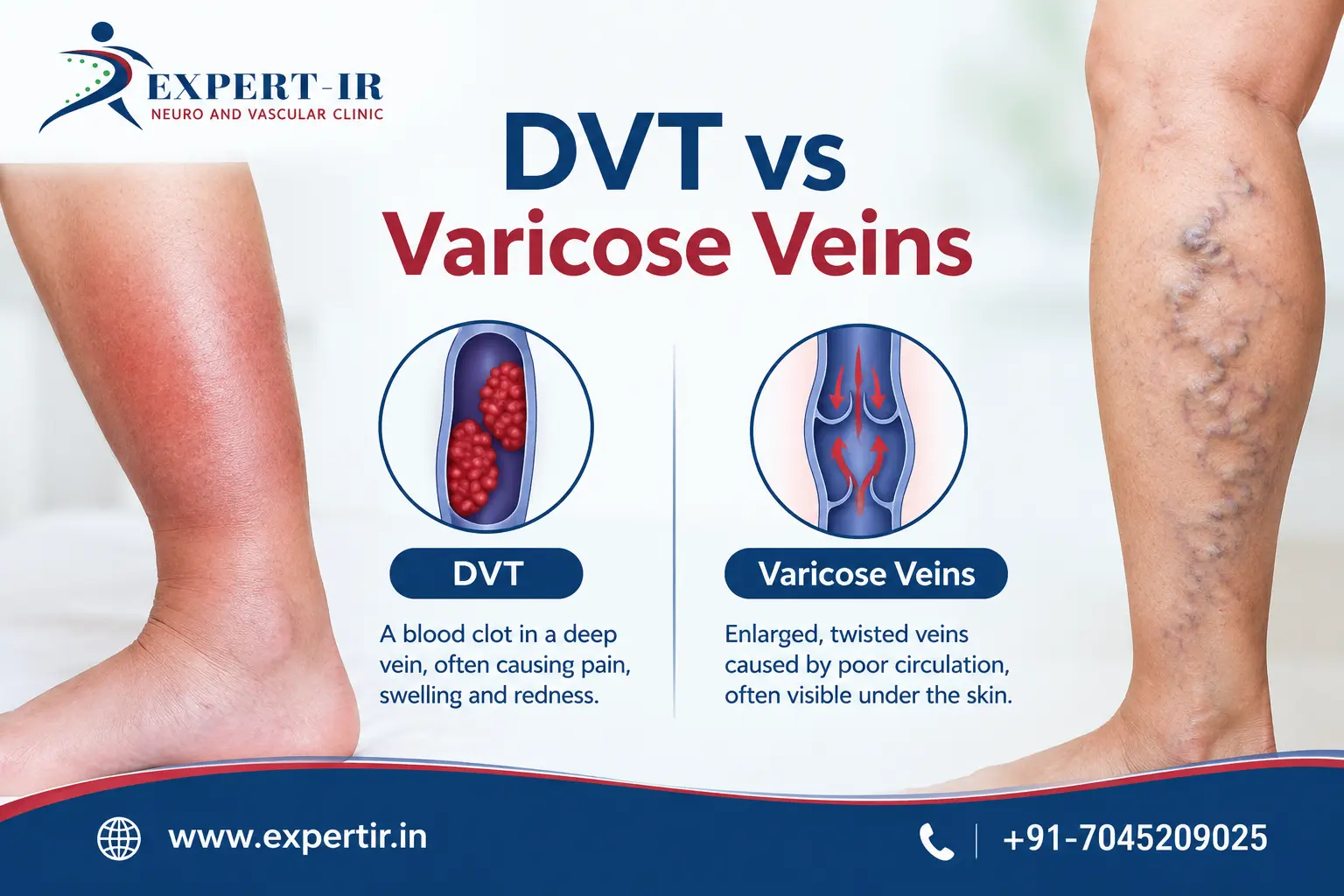
They are often confused, but they are different conditions. Varicose veins sit close to the skin and are usually visible. DVT sits deep and often shows up as one-sided swelling.
If you are unsure which one you have, read this comparison: DVT vs varicose veins: differences and symptoms.
Symptoms You Should Not Ignore
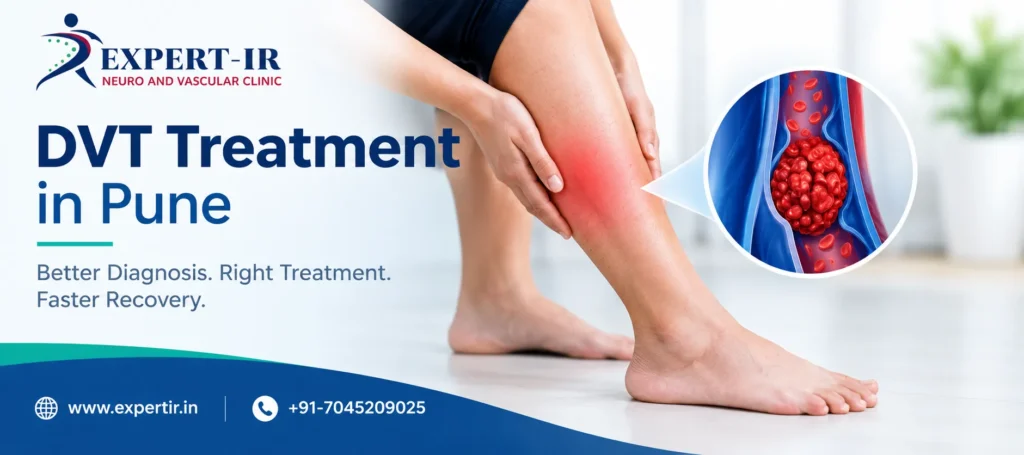
Some people have no symptoms at all. When symptoms do appear, they usually affect one leg only.
- Swelling in the calf, ankle, or whole leg
- Pain or tenderness, often like a cramp
- Warmth or redness over the area
- Skin that looks tight, shiny, or darker than usual
Who Is at Higher Risk?
DVT can affect anyone, but certain situations raise the odds:
- Recent surgery, fracture or long hospital stay
- Long travel or long periods of sitting
- Pregnancy and the weeks after delivery
- Cancer or cancer treatment
- Hormonal medicines, including some contraceptives
- Obesity, smoking, or a past DVT
- Inherited clotting disorders
How Is DVT Diagnosed?
Diagnosis starts with a conversation and a physical exam. Your doctor will ask about swelling, travel, surgery, medicines and family history.
Doppler ultrasound
This is the usual first test. It uses sound waves to show blood flow and whether a vein can be compressed. It is quick, painless and involves no radiation.
D-dimer blood test
D-dimer is a marker that rises when the body is breaking down clots. A normal result can help rule DVT out in low-risk patients. A high result is not a diagnosis on its own, because many conditions raise it.
CT or MR venography
When the clot may sit in the pelvis or abdominal veins, ultrasound may not see it well. Doctors then use CT or MR venography for a clearer view.
Types Of DVT Treatment
Treatment is chosen after looking at where the clot is, how severe the symptoms are, your other health conditions and your bleeding risk. There is no single plan that suits everyone.
Chronic DVT and Post-Thrombotic Syndrome
In long-standing DVT, the clot can damage the valves inside the vein. The vein then struggles to push blood back toward the heart, which is called chronic venous insufficiency. This often leads to post-thrombotic syndrome (PTS), with:
- Leg heaviness
- Swelling
- Skin discoloration
- Ulcers in some cases
For a long time, doctors treated these patients mainly with medicines and compression stockings. Image-guided procedures now give selected patients another option.
Chronic DVT Treatments
- Balloon angioplasty
A thin catheter is guided over a wire into the blocked vein. A small balloon on the catheter is then inflated to open up the narrowed or blocked area and improve blood flow.
- Endovenous stenting
A stent, a small mesh tube made of metal wires, is placed in the blocked vein to keep it open and restore normal blood flow. Over time, the symptoms of post-thrombotic syndrome may gradually ease.
Not every patient needs these procedures. Your doctor will decide based on scan findings, symptoms and overall health.
May-Thurner Syndrome
In some people, the left common iliac vein (the large vein of the left leg, in the lower abdomen) is squeezed by the artery that crosses over it. This makes DVT and chronic venous insufficiency in the left leg more likely. It is often found only after a clot has formed.
May-Thurner syndrome can be treated with balloon angioplasty and a stent in the left common iliac vein. This opens the vein and improves blood flow out of the leg.
Recovery After DVT
Most people improve steadily, but recovery takes patience.
First few days to weeks
- Pain and swelling usually begin to settle once treatment starts
- Your doctor will likely encourage walking, as advised for your case
- Keep the leg elevated when resting
First few months
- Take medicines at the same time every day
- Attend every follow-up scan and review
- Report any new swelling, bleeding or breathlessness
Watch for post-thrombotic syndrome (PTS)
Some patients develop long-term leg pain, heaviness, swelling or skin darkening after a DVT. This is called post-thrombotic syndrome. Early recognition helps, so read about post-thrombotic syndrome symptoms and treatment.
Similar skin changes can also come from vein valve problems. See why foot swelling is not always varicose veins.
Conclusion
DVT is a serious but treatable condition. Early diagnosis with a Doppler scan, the right blood thinner plan, and in selected cases catheter-based treatment, can protect both your leg and your lungs.
Recovery is gradual. Take medicines as prescribed, keep moving as advised, and attend follow-ups.
Frequently Asked Questions (FAQs)
Most DVTs can be treated successfully. The clot is usually cleared by the body over time with proper treatment, though some people have long-term vein damage. Follow-up is essential.
Anticoagulant treatment usually lasts at least three months. Your doctor may extend it depending on the cause and your risk of another clot.
In most cases, walking is encouraged once you are on treatment. Follow your doctor’s advice, because exceptions exist.
It can be. The main concern is pulmonary embolism, which needs emergency care.
Yes, recurrence is possible, especially if the cause is ongoing. Preventive habits and follow-up lower the risk.
No. Many patients are treated with blood thinners alone. Procedures are for selected cases.
Vascular surgeons, interventional radiologists, physicians, and hematologists may all be involved, depending on your case.
A muscle pull usually follows exertion and improves with rest. DVT often brings swelling, warmth and tenderness in one leg without a clear injury. Only a scan can tell them apart.