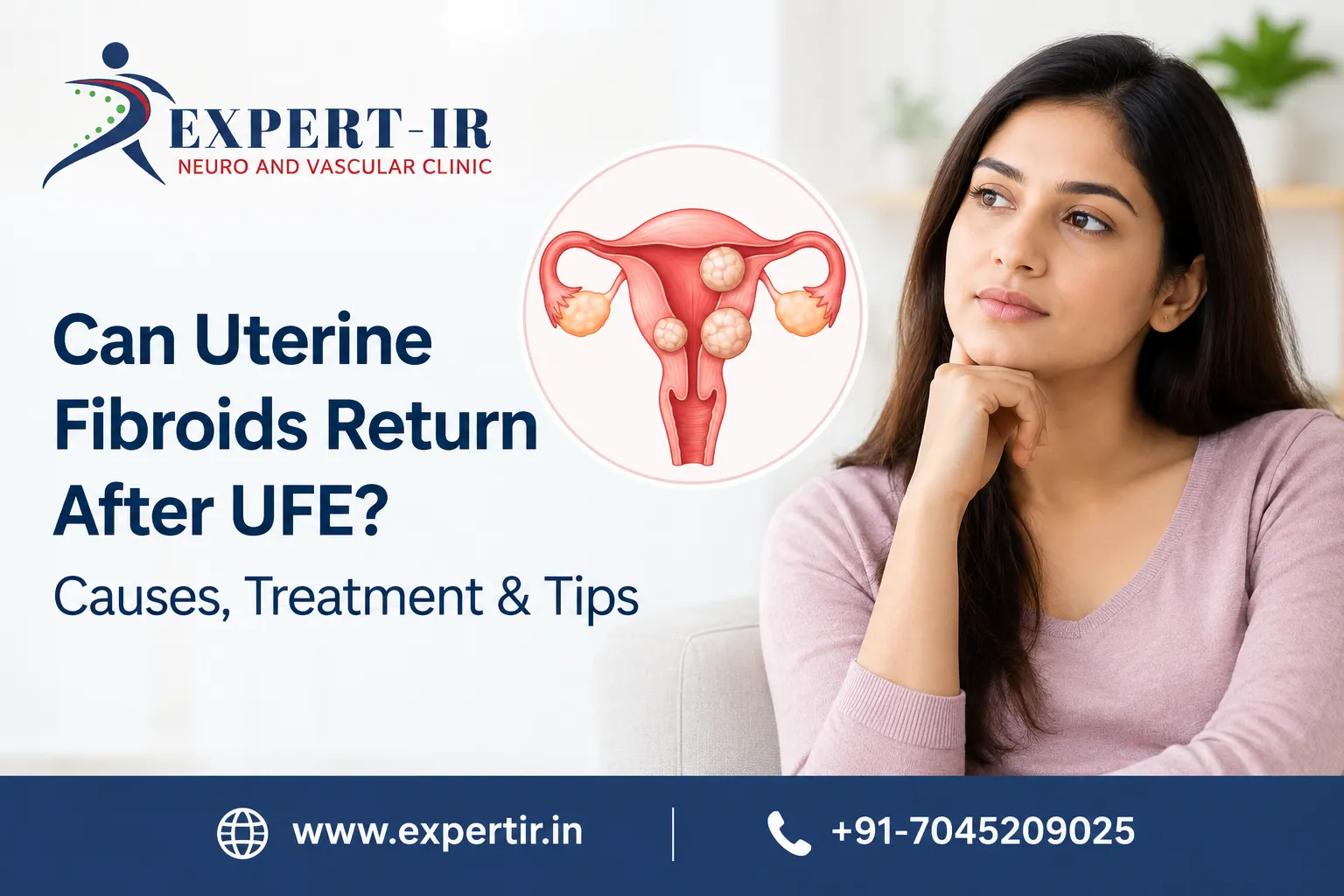
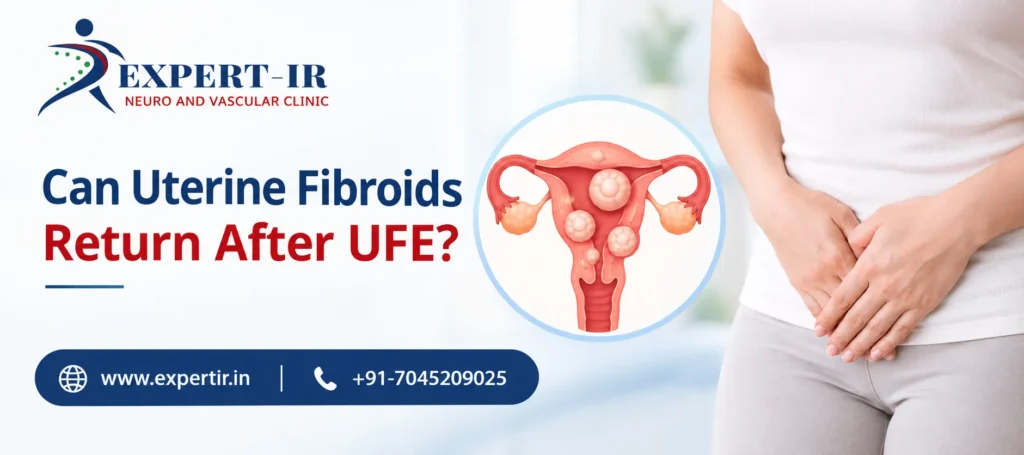
Can Uterine Fibroids Return After UFE? Causes, Treatment & Tips
Yes, symptoms can return after uterine fibroid embolization (UFE). Treated fibroids rarely regrow, but new fibroids can form, some fibroids may be only partly treated, and conditions like adenomyosis can mimic fibroids. Studies report further treatment in roughly 10% to 32% of women within five years.
Key facts at a glance
- UFE blocks the blood supply to fibroids that exist at the time of the procedure.
- UFE does not prevent new fibroids, because hormones and genetics still play a role.
- Returning symptoms are not always fibroids. Adenomyosis, polyps, and hormonal or thyroid problems can look similar.
- Diagnosis needs imaging (ultrasound, often MRI) plus a clinical assessment.
- Options exist if symptoms return: monitoring, medicines, repeat embolization, myomectomy, and others, chosen case by case.
TL;DR
Heavy periods eased. The pelvic heaviness faded. Then, a year or two later, something feels familiar again. If you have had UFE and your symptoms seem to be returning, worry is natural.
The fibroids that were treated usually stay shrunken. Symptoms can still come back for other reasons. This guide explains why, how doctors check, and what to do next.
What Is Uterine Fibroid Embolization (UFE)?
Uterine fibroid embolization (UFE) is a minimally invasive procedure in which an interventional radiologist blocks the arteries feeding uterine fibroids so that they shrink. Tiny particles are placed into those arteries through a thin tube. Without blood flow, the fibroids shrink over the following months.
The uterus is not removed and there is no large surgical cut. You can read more on the clinic’s uterine fibroid treatment page, or see the benefits of UFE explained in a separate guide.
Key point: UFE treats the fibroids that are present and supplied by those arteries at the time of the procedure. It does not stop new ones from forming later.
Can Uterine Fibroids Come Back After UFE?
Yes, symptoms can return after UFE, and in some women new fibroids appear. “Return” can mean four different things:
What may be happening | What it means | How doctors check |
Treated fibroid regrows | Uncommon. A fibroid regains blood supply and enlarges. | MRI, ultrasound |
Incomplete treatment | Part of a fibroid kept a secondary blood supply and stayed alive. | Contrast MRI |
New fibroid | A fibroid not present earlier has formed, driven by hormones and genetics. | Ultrasound, MRI |
A different condition | Adenomyosis, endometrial polyps, hormonal imbalance or thyroid disease. | MRI, hysteroscopy, blood tests |
Assuming “the fibroids are back” can send you down the wrong path, which is why imaging matters.
How Common Is Fibroid Recurrence After UFE?
Published studies report that roughly 10% to 32% of women have further treatment within five years of UFE, with results varying by study design, fibroid number and size, and follow-up method.
- A Korean study of women followed for five years found a reintervention rate of 10.4%. Viable non-dominant fibroids on follow-up MRI were linked to a higher chance of further treatment [1].
- The Dutch EMMY trial reported 28.4% reintervention at five years, and the REST trial reported about 32% in the embolization group [2].
These are group averages from specific studies. They cannot predict what will happen to you. Your doctor can interpret them against your own scan findings.
What Causes Fibroids in a Woman?
The exact cause of fibroids is not fully known, but hormones, family history and age are the main linked factors. These factors usually continue after UFE, which is why new fibroids remain possible.
- Hormones: Estrogen and progesterone support fibroid growth. Fibroids are most common in the reproductive years and tend to shrink after menopause.
- Family history: A mother or sister with fibroids raises your risk.
- Age: Risk rises through the 30s and 40s.
- Body weight: Higher body weight is associated with higher estrogen levels and greater fibroid risk.
- Early first period: Starting menstruation at a young age is linked to higher risk.
- Diet and lifestyle: Some studies link high red meat intake and low fruit and vegetable intake with higher risk. The evidence is not conclusive.
Uterine Fibroid Symptoms to Watch For
Common uterine fibroid symptoms include heavy or prolonged periods, pelvic pressure, frequent urination and lower back pain. Many women have fibroids with no symptoms at all. The full list of fibroids symptoms:
- Heavy or prolonged periods, sometimes with clots (see this guide on heavy menstrual bleeding and fibroids)
- Bleeding between periods
- Pelvic pressure or a feeling of heaviness
- Frequent urination or difficulty emptying the bladder
- Constipation or bloating
- Lower back or leg pain
- Pain during intercourse
- Signs of anemia: tiredness, breathlessness or dizziness
When symptoms need prompt attention
Contact a doctor soon for very heavy bleeding (soaking a pad every hour), severe sudden pelvic pain, fainting, or any bleeding after menopause. These should not wait for a routine visit.
Uterine Fibroids Diagnosis: How Doctors Confirm Recurrence
Uterine fibroids diagnosis relies on imaging plus clinical assessment, not symptoms alone. Doctors usually combine these steps:
- History and examination. Your doctor asks about your cycle, flow, pain, and how things compare with before UFE. A pelvic examination may follow.
- Pelvic ultrasound. Usually the first test. It shows fibroid size, number, and position.
- MRI. It shows whether treated fibroids lost their blood supply, whether any remain active, and whether adenomyosis could be the real cause.
- Blood tests. A hemoglobin test checks for anemia from heavy bleeding. Other tests may rule out thyroid or hormonal causes.
Treatment Options if Symptoms Return
Treatment depends on age, symptoms, fibroid size and location, and whether you plan to have children. Your doctor may discuss:
- Monitoring: Small fibroids without troublesome symptoms may be watched with periodic scans.
- Medicines: Options may reduce bleeding or pain, or act on hormones. They manage symptoms and may not remove fibroids.
- Repeat embolization: In selected cases, a second UFE may be considered, especially if imaging shows an untreated blood supply.
- Myomectomy: Surgical removal of fibroids while keeping the uterus, often discussed when fertility is a priority.
- Other uterus-preserving techniques: Some centers offer focused ultrasound or similar methods for carefully selected cases.
- Hysterectomy: Removal of the uterus, usually reserved for women who have completed childbearing and have persistent or severe symptoms.
Each option has benefits and risks. Ask your doctor to explain them for your specific case. For background on non-surgical care in Pune, see uterine fibroid embolization in Pune.
Practical Tips After UFE
- Keep follow-up appointments. Imaging at the intervals your doctor recommends can catch problems early.
- Track your periods. Note flow, duration and pain in a diary or app.
- Check hemoglobin if you feel unusually tired.
- Maintain a healthy weight through balanced meals and regular activity.
- Eat more vegetables, fruit and whole foods. This supports general health, though no diet can guarantee that fibroids will not return.
- Report new symptoms early instead of waiting for them to worsen.
- Discuss pregnancy plans with your doctor before trying to conceive. Read more on UFE and pregnancy.
Getting Evaluated Near Hadapsar, Pune
Women in Hadapsar can arrange a fibroid evaluation through the clinic’s locations page. Expert IR lists consultation centres in Baner, Kharadi and Sadashiv Peth. Kharadi is on the east side of Pune, the same side as Hadapsar. Please confirm timings before you travel. To ask about your scan reports, you can contact the clinic.
Conclusion
UFE can bring lasting relief for many women, but it does not make you immune to fibroids. Returning symptoms may come from new fibroids, partly treated ones, or a different condition altogether, so scans and a proper evaluation matter more than guesswork.
If something feels familiar again, do not wait. Speak with a qualified medical practitioner, ideally an interventional radiologist or gynecologist experienced in fibroid care. You can start with the clinic’s page on uterine fibroids.
Frequently Asked Questions (FAQs)
Treated fibroids rarely regrow, but new fibroids can form, and incompletely treated ones may continue to grow. Imaging shows which of these is happening.
It varies. Some women notice changes within a couple of years, others much later, and many never have a return of symptoms. Follow-up scans help your doctor track this.
Not necessarily. New fibroids, or a condition like adenomyosis, can cause symptoms even when the original treatment worked as intended.
Not always. The need depends on your scan findings, symptoms and goals. Monitoring, medicines or a repeat procedure may be options before surgery is considered.
Mild, stable symptoms may only need monitoring, but mention them at your next check-up. Heavy bleeding, severe pain or fainting needs prompt medical attention.
In selected women, yes. Repeat embolization is usually considered when MRI shows viable fibroid tissue or a blood supply that was not treated the first time. Other options include medicines or myomectomy, and the choice depends on your scan results and plans for pregnancy.
Pregnancies after UFE have been reported, but the evidence is less extensive than for myomectomy. If you want to conceive, discuss this with your doctor before choosing a procedure. See the clinic’s guide on UFE and pregnancy for background.
No proven method prevents fibroids. A healthy weight, regular physical activity and a diet rich in vegetables and fruit support general health, and some studies link these habits with lower fibroid risk. The evidence is not conclusive, so these steps should not replace follow-up scans.