Can Teenagers Develop Varicocele?
Yes, teenagers can develop varicocele. It usually appears during puberty, most often on the left side, and many boys don’t know they have it.
Roughly 1 in 6 adolescent boys is affected. Most cases cause no trouble, but some need follow-up. This guide explains what to look for and when to see a doctor.
TL;DR
Yes, teenagers can develop a varicocele, which is an enlargement of the veins inside the scrotum. It commonly develops during puberty and often affects the left testicle. Symptoms may include scrotal heaviness, mild pain, or swelling, although many teenagers have no noticeable symptoms. Early evaluation by a qualified doctor can help monitor testicular growth and identify potential fertility concerns.
What Is Varicocele?
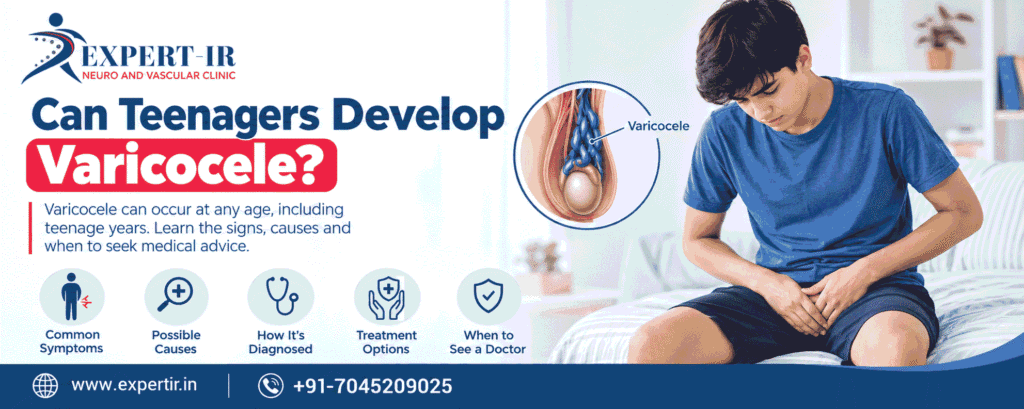
A varicocele is an enlargement of the veins inside the scrotum, similar to varicose veins in the legs. The affected veins are part of the pampiniform plexus, the network that drains blood from the testicle.
When valves in these veins don’t work well, blood pools instead of flowing upward. The veins widen, and the area may look or feel like a bag of worms.
A varicocele is a vein condition, not an infection, and it is not caused by anything a teenager did or didn’t do.
How Common Is Varicocele in Teenagers?
Varicocele is seen in about 15% of adolescent and adult males. It rarely appears before age 10 and becomes more visible as puberty progresses, because blood flow to the testicles increases during this time.
Most varicoceles diagnosed in teens are found by chance, during a routine check-up, a sports physical, or an ultrasound done for another reason.
Why Is Left Varicocele So Much More Common?
About 80–90% of cases are left varicocele. The reason is anatomy.
- The left testicular vein is longer than the right.
- It drains into the left renal vein at a near-right angle, which can raise pressure.
- The right testicular vein drains into a larger vein at a gentler angle.
Why right-sided matters: A varicocele only on the right, or one that appears suddenly, is less typical. Doctors may order further tests to find the cause.
Signs and Symptoms in Teenagers
Many teens have no symptoms at all. When symptoms do occur, they can include:
- A dull ache or heaviness in the scrotum, often worse after standing or exercise
- Visible or palpable swollen veins, usually on the left side
- One testicle looking smaller than the other
- A feeling of discomfort that eases when lying down
Pain is not the most important sign. Difference in testicular size matters more to doctors because it can suggest the testicle isn’t growing normally.
Why Does It Matter?
In most teens, a varicocele stays harmless. The concern is that, in some, it may affect testicular growth and, later in life, sperm quality.
Not every boy with a varicocele will have fertility problems. Many varicocele patients go on to father children without difficulty. Doctors monitor teens because it’s hard to predict who will be affected.
This is why a medical assessment is better than guessing or waiting indefinitely.
How Is Varicocele Diagnosed?
Physical examination
A doctor examines the scrotum while the teen stands, sometimes asking him to bear down (the Valsalva manoeuvre). This makes the veins more prominent.
Grading
Varicoceles are commonly graded:
- Grade 1: Felt only when bearing down
- Grade 2: Felt while standing, without bearing down
- Grade 3: Visible through the skin
Scrotal Doppler ultrasound
Ultrasound confirms the diagnosis and measures testicular volume. It also shows the direction of blood flow in the veins. This helps doctors compare both testicles objectively.
Semen analysis
In older adolescents, a semen analysis may be considered. This is done only when appropriate and with sensitivity to the teen’s comfort and consent.
Varicocele Treatment: When Is It Considered?
Most teens need no immediate procedure. A doctor may suggest observation with regular follow-up, usually every 6 to 12 months, including size checks and ultrasound when advised.
Varicocele Treatment may be discussed when there is:
- A noticeable size difference between the testicles
- Persistent pain that affects daily activities
- Abnormal semen parameters in an older teen
- A large (grade 3) varicocele with other concerns
Available options
- Surgical varicocelectomy, including microsurgical techniques, where the affected veins are tied off
- Varicocele embolization, a minimally invasive procedure by an interventional radiologist, where the abnormal vein is blocked through a small puncture
Each option has its own benefits, risks, and suitability criteria. The right choice depends on the teen’s age, grade, symptoms, and overall health, and the decision is made after a proper evaluation. No procedure is guaranteed to work in every case.
If you want to understand how image-guided procedures are assessed for safety across age groups, see this related article: Is Interventional Radiology Safe for Senior Citizens?
How is varicocele different from other vein conditions?
Varicocele belongs to the wider family of venous (vein) conditions. The same valve problem that causes it can also cause problems elsewhere in the body.
These articles explain related vein conditions in the legs:
- Can Varicose Veins Cause Restless Leg Syndrome?
- Is Foot Swelling Always Caused by Varicose Veins?
- Post-Thrombotic Syndrome: Symptoms and Treatment
For leg-vein concerns, see the varicose vein treatment page.
What About Medicines or Home Remedies?
No medicine or supplement has been shown to cure a varicocele. Supportive measures can help with comfort:
- Wear snug, supportive underwear
- Using a cold compress for aching
- Taking medically advised pain relief when needed
These don’t remove the varicocele. They only ease symptoms. Any teen with persistent pain or swelling should be examined by a doctor.
When Should a Teen See a Doctor?
Book an appointment if you notice:
- A lump, swelling, or visible veins in the scrotum
- One testicle that looks smaller
- Ongoing scrotal pain or heaviness
- A swelling that doesn’t reduce when lying down
Seek urgent care for sudden, severe testicular pain. This can be testicular torsion, which is a medical emergency, not a varicocele.
In Pune, an assessment can be arranged with a qualified urologist, paediatric surgeon, or interventional radiologist. Expert-IR Neuro and Vascular Clinic has clinic locations in Baner, Kharadi and Sadashiv Peth, and appointments can be requested through the contact page.
Talking to Your Teen
Many boys feel embarrassed. Parents can help by:
- Choosing a private, calm moment
- Explaining that it is a common, treatable vein condition
- Letting the teen ask questions during the doctor’s visit
Conclusion
Teenagers can develop varicocele, and it is more common than most people realise. Most cases are mild, found on the left side, and need only monitoring. Others need a closer look because of pain or reduced testicular growth.
Early diagnosis through a physical exam and Doppler ultrasound lets a doctor decide whether to watch or treat.
Frequently Asked Questions (FAQs)
Yes. It most often develops during puberty.
No. Most affected males are fertile, though some develop reduced sperm quality over time.
Usually not, but it often stays mild and stable.
In most cases, yes. A doctor can advise if pain limits activity.
It typically appears from around the start of puberty, often between ages 10 and 15, and becomes more noticeable through the teen years.
Often it does not. When pain occurs, it is usually a dull ache or heaviness that worsens after standing for long periods and eases when lying down. Sudden, severe pain is different and needs urgent care.
In some boys, the affected testicle grows less than the other. A doctor checks this with an exam and ultrasound measurements, and a clear difference is one of the main reasons they discuss treatment.
Recurrence is possible after any varicocele procedure. The chance depends on the technique used and the individual’s anatomy, which is why follow-up visits are important.