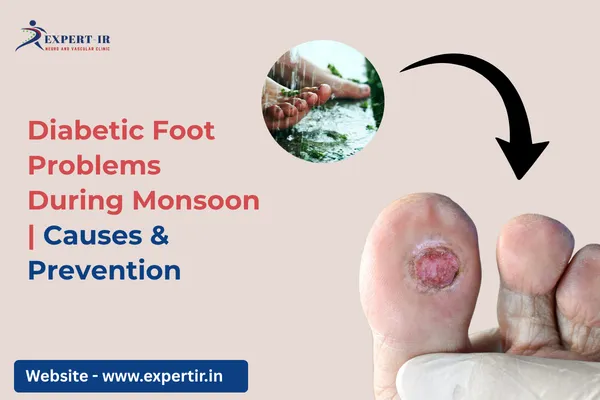
Diabetic Foot Problems During Monsoon | Causes & Prevention
The monsoon season brings relief from heat, but for people with diabetes, rainy weather can create additional challenges for foot health. Wet footwear, prolonged moisture between the toes, walking through contaminated water, minor cuts, fungal infections, and unnoticed injuries can become more serious when diabetes has already affected the nerves or blood circulation.
This is why diabetic foot care during monsoon requires extra care.
Diabetes can cause peripheral neuropathy, which reduces the ability to feel pain, heat, or injury. It can also affect blood vessels and circulation, making wounds harder to heal and infections more difficult to fight.
Those patients wh ohas a diabetes, a small blister or cut may not remain a small problem if it is overlooked.
What Is a Diabetic Foot Problem?
A diabetic foot problem refers to a range of conditions affecting the feet in people with diabetes. These may include:
- Cuts and blisters
- Cracked or excessively dry skin
- Fungal infections
- Calluses and corns
- Ingrown toenails
- Foot ulcers
- Skin infections
- Reduced sensation or numbness
- Poor circulation
- Non-healing wounds
Two major complications—diabetic neuropathy and poor blood circulation—can make ordinary foot injuries much more difficult to detect and heal.

Why Is Monsoon Risky for Diabetic Feet?
Monsoon itself does not directly cause diabetic foot disease. The concern is that rainy conditions can increase exposure to moisture, contaminated water, skin irritation, and accidental injuries.
1. Constantly Wet Feet
Wet socks and shoes keep the skin moist for prolonged periods. Excess moisture can weaken the skin barrier and create an environment where fungal infections can develop.
The area between the toes deserves particular attention because moisture can remain trapped there.
2. Walking Through Rainwater or Flooded Areas
Rainwater in streets may contain contaminants. For a person with diabetes, especially someone with reduced sensation or poor circulation, walking through contaminated water can increase the risk of skin injury and infection.
3. Minor Injuries May Go Unnoticed
Diabetic neuropathy can reduce sensation in the feet. A person may develop a blister, cut, or pressure injury without experiencing the usual pain that would prompt them to stop and check the foot.
4. Poor Circulation Can Delay Healing
Diabetes can contribute to narrowing and hardening of blood vessels. Reduced blood flow means less oxygen and fewer nutrients reach injured tissues, making it harder for wounds to heal and for the body to fight infection.
If peripheral artery disease (PAD) is also present, the risk can be even greater.
Common Diabetic Foot Problems During Monsoon
Fungal Infections
Persistent moisture around the feet, particularly between the toes, can encourage fungal growth.
Possible symptoms include:
- Itching
- Peeling skin
- Redness
- Burning
- Cracks between the toes
- Unusual odor
Do not ignore persistent skin changes, especially if you have diabetes.
Blisters and Skin Abrasions
Wet footwear can rub against the skin and cause blisters or abrasions. Poorly fitting shoes can make the problem worse. A blister may not feel painful if neuropathy has reduced sensation.
Cracked Skin
Although monsoon conditions are humid, people with diabetes can still develop dry or cracked skin because diabetes-related nerve damage can affect the skin’s ability to regulate moisture.
Cracks can become entry points for bacteria.
Diabetic Foot Ulcers
A diabetic foot ulcer is an open wound that may develop because of repeated pressure, trauma, neuropathy, poor circulation, or a combination of these factors.
Importantly, a diabetic foot ulcer may not always be painful. Any ulcer or open wound should be evaluated promptly rather than treated only with home remedies. The American Diabetes Association advises that every diabetic foot ulcer should be assessed by a healthcare professional.
7 Ways to Protect Your Feet During Monsoon
1. Inspect Your Feet Every Day
Make foot inspection part of your daily routine.
Look for:
- Cuts
- Blisters
- Redness
- Swelling
- Cracks
- Skin discoloration
- Calluses
- Ingrown toenails
- Open wounds
Check the soles and between the toes. If you cannot see the bottom of your feet easily, use a mirror or ask someone for help.
2. Keep Your Feet Clean and Completely Dry
Wash your feet daily and dry them thoroughly, especially between the toes. Avoid leaving wet feet inside socks or shoes for prolonged periods.
The goal is not simply to wash your feet—it is to clean, dry, inspect, and protect them consistently.
3. Change Wet Socks and Footwear Immediately
If your socks or shoes become soaked during the monsoon, change them as soon as possible.
Consider moisture-wicking socks and footwear that protects the feet while allowing adequate ventilation.
4. Avoid Walking Barefoot
Avoid walking barefoot outdoors—and preferably indoors as well if you have neuropathy or reduced sensation.
Shoes or protective slippers reduce the chance of stepping on sharp objects or developing unnoticed injuries.
5. Do Not Soak Your Feet
A common misconception is that soaking tired feet in warm or hot water is beneficial.
For people with diabetes, prolonged soaking is not recommended. If neuropathy is present, reduced temperature sensation can also increase the risk of burns from hot water.
Use warm—not hot—water for washing and dry your feet thoroughly afterward.
6. Moisturize—but Not Between the Toes
If your feet are dry or cracked, a suitable moisturizer can help protect the skin.
However, avoid applying moisturizer between the toes because excessive moisture in this area can increase the risk of infection.
7. Choose Properly Fitting Footwear
Your monsoon footwear should:
- Fit comfortably
- Not rub against the skin
- Protect the toes
- Have adequate room
- Be checked for stones or sharp objects before wearing
When Is a Diabetic Foot Wound an Emergency?
Do not wait for a wound to become painful.
Seek medical evaluation promptly if you notice:
- An open wound or ulcer
- Increasing redness
- Foot swelling
- Pus or discharge
- Foul odor
- Increasing warmth
- Skin turning blue, purple, or black
- Fever associated with a foot wound
- A wound that is not healing
- Sudden change in foot color or temperature
This is particularly important if you have neuropathy or poor circulation. Diabetic foot infections can progress rapidly, while reduced sensation may prevent the person from recognizing how serious the problem has become.
Could Poor Blood Flow Be the Reason a Diabetic Foot Wound Is Not Healing?
Yes.
Not every diabetic foot wound is caused by poor circulation, but peripheral artery disease can significantly impair wound healing.
If a wound remains open despite appropriate wound care, the blood supply to the foot should be assessed.
Possible warning signs of reduced arterial circulation include:
- Cold feet
- Weak or absent foot pulses
- Pain in the calf while walking
- Rest pain, particularly in advanced disease
- Pale, blue, or darkened toes
- Non-healing wounds
A vascular evaluation may include clinical examination, Doppler ultrasound, ankle-brachial index (ABI), toe pressure testing, or other vascular imaging depending on the individual case.
How PAD and Diabetes Can Work Together
This is an important connection for diabetic patients.
Diabetes → nerve damage → reduced sensation
Diabetes → arterial disease → reduced blood flow
Together, these problems can create a dangerous cycle:
Minor injury → unnoticed wound → poor healing → infection → tissue damage
The American Diabetes Association notes that diabetes-related neuropathy and poor circulation are major contributors to foot ulcers and limb-threatening complications.
What Happens If a Diabetic Foot Wound Is Ignored?
A small wound can potentially progress through several stages:
Skin injury → persistent ulcer → infection → deeper tissue involvement → tissue death
In severe cases involving critical loss of blood flow or uncontrolled infection, limb-threatening complications can occur.
This does not mean every diabetic foot wound will become severe. Early assessment is what helps prevent progression.
Role of Expert IR Neuro & Vascular Clinic in Diabetic Foot Care
At Expert IR Neuro & Vascular Clinic, diabetic patients with non-healing wounds or suspected poor circulation can undergo vascular assessment to determine whether an arterial blockage is contributing to the problem.
Under the care of Dr. Santosh Patil, the evaluation may focus on identifying:
- Reduced blood flow to the foot
- Peripheral artery disease
- The location and severity of arterial blockage
- Whether revascularization could improve circulation and support wound healing
When appropriate, minimally invasive endovascular treatment can restore blood flow without the need for major open vascular surgery.
The objective is not simply to treat the wound on the surface—it is to identify and address the underlying vascular problem when poor circulation is contributing to delayed healing.
Monsoon Diabetic Foot Care: Quick Daily Routine
A simple routine can make a significant difference:
Morning
- Inspect your feet
- Check your socks and footwear
- Wear comfortable, protective shoes
During the day
- Avoid walking barefoot
- Keep feet away from contaminated water
- Change wet socks immediately
- Avoid prolonged moisture
Evening
- Wash feet with warm water
- Dry thoroughly, particularly between toes
- Check again for redness, blisters, cuts, or swelling
- Moisturize dry areas while avoiding between the toes
Regular foot care and prompt medical attention for abnormalities are key parts of diabetic foot prevention.
Conclusion
Diabetes makes the feet more vulnerable to injury, infection, and delayed healing—and monsoon conditions can add extra challenges through moisture, wet footwear, contaminated water, and unnoticed injuries.
The most effective prevention strategy is simple:
Inspect daily + keep feet clean and dry + wear protective footwear + avoid barefoot walking + address wounds early.
If a diabetic foot wound is not healing, do not assume it is only a skin problem. Poor arterial circulation or PAD may be contributing, and restoring blood flow can be an important part of limb-preserving treatment.
Early evaluation can prevent a small foot problem from becoming a serious complication.
Frequently Asked Questions (FAQs)
Monsoon conditions can expose diabetic feet to prolonged moisture, wet footwear, contaminated water, and minor injuries. Diabetes-related neuropathy and poor circulation can make these problems harder to detect and heal.
It is best to avoid walking through potentially contaminated rainwater, particularly if you have neuropathy, an existing wound, or poor circulation. Contaminated water can expose damaged skin to infection.
Prolonged moisture can weaken the skin barrier and encourage fungal infections, particularly between the toes. Dry your feet carefully after washing or getting wet.
Monsoon weather itself does not directly cause diabetic foot ulcers. However, wet footwear, skin breakdown, unnoticed injuries, and infections can contribute to foot problems that may progress to ulcers in people with diabetes.
It is generally recommended that people with diabetes avoid walking barefoot because neuropathy can prevent them from feeling cuts, burns, or objects underfoot.
Do not ignore it. Inspect the area, protect the foot, and contact your healthcare professional promptly—particularly if you have neuropathy, poor circulation, or a history of foot ulcers.
Diabetes can cause nerve damage and poor blood circulation. Reduced blood flow limits oxygen and nutrients needed for tissue repair and makes it harder for the body to fight infection.
Yes. Peripheral artery disease reduces blood flow to the foot and can significantly impair wound healing. If a diabetic wound remains non-healing, assessment of arterial circulation may be necessary.
Seek prompt medical attention for an open ulcer, spreading redness, swelling, pus, foul odor, increasing warmth, black or blue discoloration, fever, or a wound that is not healing.
If an arterial blockage is limiting blood flow, endovascular treatment such as angioplasty may be used to restore circulation. Whether it is appropriate depends on vascular imaging and the patient’s individual condition.
Keep feet clean and dry, inspect them every day, change wet socks promptly, wear properly fitting protective footwear, avoid walking barefoot and contaminated water, and seek medical attention for wounds or infections.