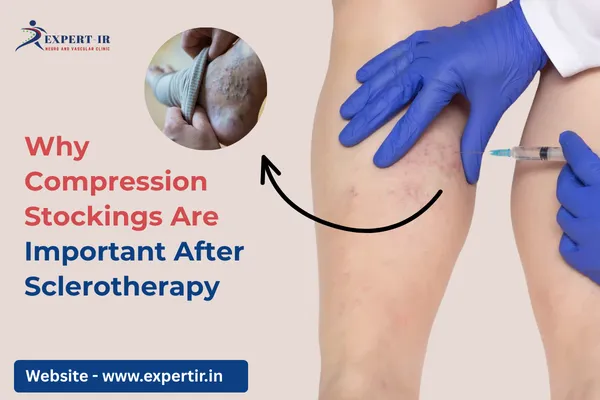
Why Compression Stockings Are Important After Sclerotherapy
Sclerotherapy is a minimally invasive treatment used to close unwanted or diseased veins, including spider veins and selected varicose veins. Although the procedure itself is relatively quick, what you do afterward can influence comfort and recovery.
One of the most commonly discussed aspects of post-sclerotherapy care is compression therapy.
So, why are compression stockings important after sclerotherapy?
Compression stockings apply controlled pressure to the legs. After sclerotherapy, this can help support the treated veins, reduce swelling and discomfort, and promote recovery. However, compression is not simply a one single requirement the appropriate type and duration should be determined by the treating specialist.
What Happens to the Vein During Sclerotherapy?
Before understanding compression, it helps to understand what happens during the procedure.
During sclerotherapy, a specially selected sclerosant solution or foam is injected into the targeted vein. The treatment irritates the vein’s inner lining, causing it to collapse and eventually become sealed.
The body gradually processes the treated vein, while blood is redirected through healthier veins.
After treatment, the vein goes through a healing process. Compression can help support the treated area during this period.
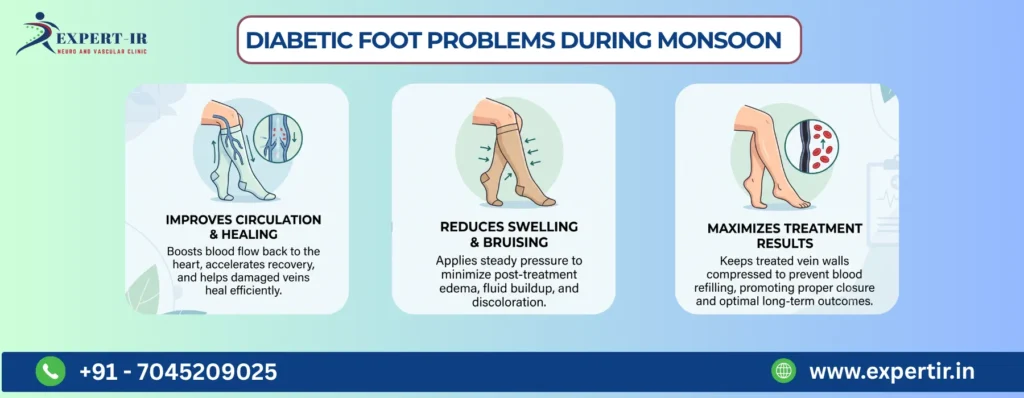
Why Are Compression Stockings Used After Sclerotherapy?
1. Support the Treated Vein
Compression provides external pressure around the leg. This can help keep the treated vein compressed during the early healing period.
The European Society for Vascular Surgery notes that post-procedure compression is used with the rationale of compressing treated venous segments and potentially reducing inflammation, pain, bruising, bleeding, and thrombotic complications.
2. Reduce Swelling
Some patients experience temporary swelling following vein treatment.
Graduated compression helps support venous return, which may reduce postoperative edema and improve comfort.
Evidence is not identical across every type of venous intervention, but studies summarized in European guidelines have found benefits for early pain and edema in some post-procedure settings.
3. Reduce Bruising and Discomfort
Mild bruising, tenderness, or tightness can occur after sclerotherapy.
Compression can provide support to the treated area and may make the recovery period more comfortable.
However, persistent or worsening pain should not simply be attributed to normal recovery and should be discussed with your doctor.
4. Help to Support Healthy Blood Flow
Compression does not “push blood through” the treated vein. Instead, graduated pressure helps support the return of blood through functioning veins.
This is particularly useful in patients who have underlying venous insufficiency.
5. Support Better Early Recovery
Post-treatment compression has been used for many years in venous procedures. However, the evidence regarding exactly how long stockings should be worn is mixed.
The ESVS guidelines state that the duration of post-procedure compression remains controversial and is largely individualized based on clinical judgment. That means longer is not automatically better.
How Long Should You Wear Compression Stockings After Sclerotherapy?
There is no single duration that applies to every patient.
Doctor may recommend compression for a period ranging from several days to longer depending on:
- Type of sclerotherapy performed
- Size and location of treated veins
- Whether foam or liquid sclerotherapy was used
- Number of veins treated
- Presence of swelling or discomfort
- Your underlying venous disease
- Your clinician’s treatment protocol
For some venous interventions, guidelines and clinical protocols commonly use approximately one week of compression, while other situations may require a different duration. The ESVS notes evidence supporting at least one week in some endovenous treatment settings, while NICE recommends limiting compression after interventional treatment for varicose veins to no more than seven days. These recommendations should not be automatically applied to every individual sclerotherapy case.
Can You Sleep Wearing Compression Stockings After Sclerotherapy?
This depends on your doctor’s instructions and the type of compression prescribed. Some patients may be instructed to wear compression continuously for an initial period, while others may be told to remove the stockings at night.
Do not assume that wearing stronger compression for longer will produce better results. The correct pressure level, stocking length, wearing schedule, and duration should be individualized.
What Happens If You Don't Wear Compression After Sclerotherapy?
Not wearing compression stockings does not automatically mean that sclerotherapy will fail. The evidence on routine compression after venous interventions is mixed, and recommendations vary according to the procedure and clinical circumstances.
However, your doctor may prescribe compression because they believe it could improve your early recovery, comfort, swelling, or treatment outcome. If you were specifically instructed to wear compression and are having difficulty tolerating it, speak with your treatment provider rather than simply discontinuing it.
How to Choose the Right Compression Stockings
Not every compression stocking is appropriate after sclerotherapy.
Your clinician may recommend a specific:
Compression level
Compression strength is measured in mmHg. The appropriate pressure depends on your condition and treatment.
Length
Depending on the treated veins, you may need knee-high or thigh-high compression.
Size
Incorrect sizing can make stockings ineffective or uncomfortable.
Material
Breathable, medical-grade materials can improve comfort, particularly in warm climates.
Do not automatically choose the highest compression available.
Who Need Extra Caution With Compression?
Compression therapy is not appropriate for everyone. Patients with significant arterial circulation problems, certain vascular conditions, severe skin problems, or other medical conditions may require specialist assessment before using compression.
This is particularly important for patients who have symptoms suggestive of peripheral artery disease (PAD).
Your doctor may evaluate your circulation before prescribing compression when there is a concern about arterial blood flow.
Role of Expert IR Neuro & Vascular Clinic in Sclerotherapy Aftercare
At Expert IR Neuro & Vascular Clinic, post-sclerotherapy care is tailored to the patient’s vein condition and the treatment performed.
Dr. Santosh Patil, vascular surgeon in Pune can assess the treated veins and determine whether compression is appropriate, what type of compression is required, and how long it should be used.
The approach focuses on more than treating visible veins—it involves identifying the underlying venous problem and providing appropriate follow-up to support safe recovery.
Conclusion
Compression stockings can play an important role after sclerotherapy by supporting the treated area, reducing early swelling and discomfort, and promoting venous circulation.
However, there is no universal rule that every patient must wear compression stockings for the same number of days. Current guidelines acknowledge uncertainty and variation in the evidence, so the duration should be individualized
Frequently Asked Questions (FAQs)
Compression stockings apply controlled pressure to the leg and may help reduce swelling, discomfort, bruising, and inflammation while the treated vein heals.
The duration varies depending on the type of sclerotherapy, veins treated, and your individual condition. Your treating specialist should determine the appropriate schedule.
Sometimes. Some treatment protocols require continuous compression initially, while others allow removal at night. Follow the specific instructions provided by your doctor.
Sclerotherapy can be effective without prolonged compression in some patients. However, your specialist may recommend compression to support early recovery and symptom control.
Sclerotherapy can be effective without prolonged compression in some patients. However, your specialist may recommend compression to support early recovery and symptom control.
No. Compression stockings can help control symptoms but do not permanently correct faulty vein valves or prevent every future vein problem.
Walking is generally encouraged after sclerotherapy and other minimally invasive vein procedures, unless your doctor gives you different instructions.
Light activity such as walking is commonly encouraged, while strenuous exercise may need to be temporarily restricted depending on the procedure. Follow your clinician’s recovery instructions.
Excessive or incorrectly fitted compression can cause discomfort, numbness, skin irritation, or circulation problems. The stocking should be properly fitted and prescribed at the appropriate compression level.
No. People with significant arterial circulation problems or certain vascular conditions may require assessment before using medical compression.
No. Compression stockings do not remove spider veins. Sclerotherapy or another appropriate vein treatment is used to target unwanted veins.