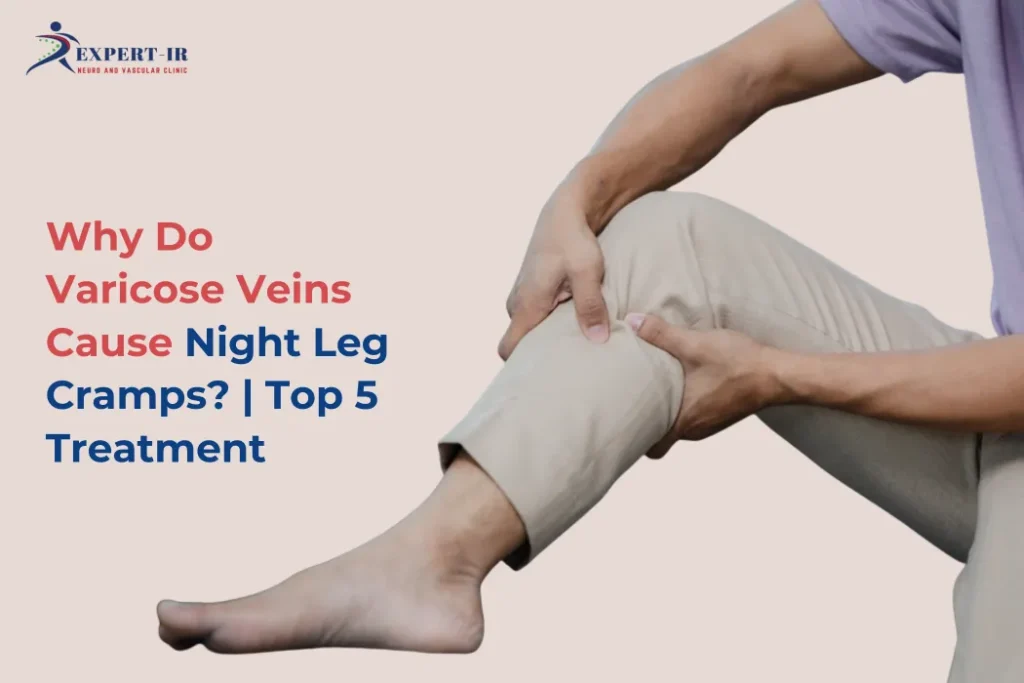
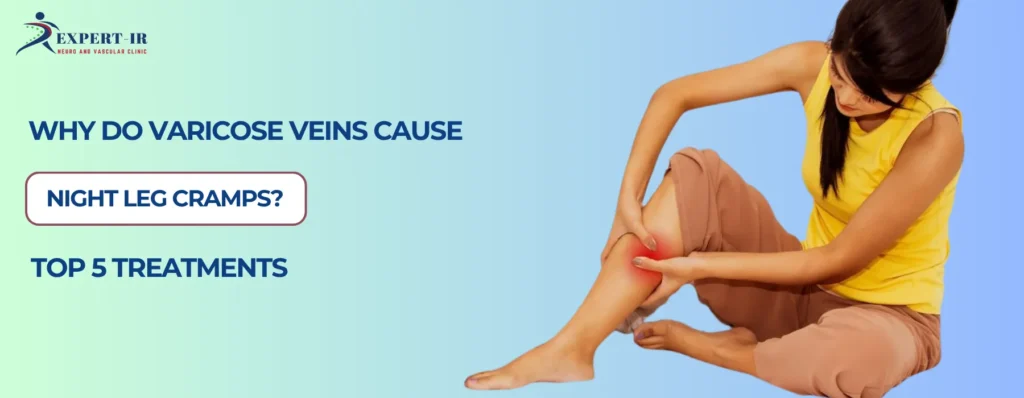
Why Do Varicose Veins Cause Night Leg Cramps? | Top 5 Treatment
Many people with varicose veins notice that their legs feel normal during the day but become painful at night. One of the most common complaints is waking up with sudden calf cramps, muscle tightness, or sharp pain that interrupts sleep.
Although nighttime leg cramps can occur for many reasons, chronic venous insufficiency (CVI) caused by varicose veins is an often-overlooked reason—especially when cramps are accompanied by leg heaviness, swelling, or visible veins.
This article explains why varicose veins cause night leg cramps, who is at risk, and the five most effective Varicose Veins treatments to relieve symptoms and address the underlying cause.
Can Varicose Veins Really Cause Night Leg Cramps?
Yes. Research and clinical experience show that people with chronic venous insufficiency frequently experience nighttime leg cramps. While cramps alone do not confirm varicose veins, recurring cramps combined with visible veins, swelling, or aching legs should prompt a vascular evaluation.
The reason lies in poor blood circulation and increased pressure inside the leg veins, which affects the muscles and surrounding tissues.
Why Do Varicose Veins Cause Night Leg Cramps?
1. Blood Pooling Increases Pressure
Healthy veins carry blood back to the heart using one-way valves. When these valves fail, blood flows backward (venous reflux) and collects in the leg veins.
This increased pressure stretches the veins and surrounding tissues, creating discomfort that becomes more noticeable at night.
2. Reduced Oxygen Supply to Muscles
Muscles require a constant supply of oxygen-rich blood to function properly.
When circulation is impaired, calf muscles may receive less oxygen, making them more prone to involuntary contractions and painful cramps during rest.
3. Fluid Accumulation Around Muscles
Throughout the day, increased venous pressure allows fluid to leak into surrounding tissues.
This swelling places additional stress on muscles and nerves, contributing to nighttime cramping.
4. Muscle Fatigue After Standing All Day
People who stand for long hours often experience worsening venous pressure by evening.
The combination of muscle fatigue and poor venous return increases the likelihood of cramps during sleep.
When Are Night Leg Cramps a Warning Sign?
Occasional cramps after exercise or dehydration are common.
However, you should consult a vascular specialist if:
- Cramps occur several nights each week
- They wake you from sleep regularly
- Pain is associated with visible varicose veins
- Leg swelling is persistent
- Skin becomes dark, itchy, or thickened
- Walking becomes uncomfortable
Ignoring these symptoms may allow vein disease to progress.
Top 5 Treatments for Night Leg Cramps Caused by Varicose Veins
1. Compression Therapy
Medical-grade compression stockings improve blood flow by gently supporting the veins.
Benefits include:
- Reduced swelling
- Better circulation
- Less nighttime discomfort
They are particularly useful in early-stage varicose veins.
2. Lifestyle Changes
Simple daily habits can reduce venous pressure:
- Walk for 30–45 minutes daily
- Avoid standing or sitting for prolonged periods
- Elevate your legs for 15–20 minutes after work
- Maintain a healthy weight
- Stay hydrated
These measures relieve symptoms but do not repair damaged vein valves.
3. Laser Treatment (EVLA)
Endovenous Laser Ablation (EVLA) is one of the most effective treatments for chronic venous insufficiency.
A laser fiber is inserted into the affected vein under ultrasound guidance, where controlled heat seals the diseased vein permanently.
Benefits include:
- No major surgery
- Local anesthesia
- Same-day discharge
- Quick return to normal activities
- Long-term symptom relief
4. Radiofrequency Ablation (RFA)
RFA uses radiofrequency energy instead of laser heat to close the faulty vein.
It provides similar success rates with minimal discomfort and is suitable for many patients with symptomatic varicose veins.
5. VenaSeal (Medical Glue Treatment)
VenaSeal is an advanced non-thermal, non-tumescent treatment that seals the diseased vein using a specially designed medical adhesive.
Advantages include:
- No heat-based energy
- Minimal injections
- Little post-procedure discomfort
- Quick recovery
- Compression stockings may not be required in selected patients
It is an excellent option for patients seeking a minimally invasive treatment with minimal downtime.
How Expert IR Neuro & Vascular Clinic Treats Night Leg Cramps Caused by Varicose Veins
Persistent night cramps should not be treated with painkillers alone because they often indicate underlying venous disease.
At Expert IR Neuro & Vascular Clinic, every patient undergoes a comprehensive Doppler ultrasound evaluation to identify venous reflux and determine the exact cause of symptoms.
Based on the findings, Dr. Santosh Patil offers personalized, minimally invasive treatments including:
- Endovenous Laser Ablation (EVLA)
- Radiofrequency Ablation (RFA)
- VenaSeal™ Glue Treatment
The goal is not only to relieve night cramps but also to restore healthy circulation and prevent complications such as chronic venous insufficiency, skin damage, and venous ulcers.
Can Night Leg Cramps Be Prevented?
Night leg cramps may seem like a minor inconvenience, but when they occur frequently alongside varicose veins, they often signal chronic venous insufficiency.
While hydration and stretching may offer temporary relief, they do not address the underlying problem. Modern treatments such as Laser Ablation, Radiofrequency Ablation, and VenaSeal™ effectively eliminate venous reflux, improve circulation, and provide lasting symptom relief.
If night cramps are disturbing your sleep, an early vascular evaluation can help prevent progression and restore your quality of life.
Conclusion
Night leg cramps may seem like a minor inconvenience, but when they occur frequently alongside varicose veins, they often signal chronic venous insufficiency.
While hydration and stretching may offer temporary relief, they do not address the underlying problem. Modern treatments such as Laser Ablation, Radiofrequency Ablation, and VenaSeal™ effectively eliminate venous reflux, improve circulation, and provide lasting symptom relief.
If night cramps are disturbing your sleep, an early vascular evaluation can help prevent progression and restore your quality of life.
Frequently Asked Questions (FAQs)
Varicose veins cause blood pooling and increased pressure in the leg veins, reducing oxygen supply to muscles and making nighttime cramps more likely.
They can be. Frequent cramps associated with leg heaviness, swelling, or visible veins may indicate chronic venous insufficiency.
Hydration may help if dehydration contributes to cramps, but it will not correct faulty vein valves or venous reflux.
The most effective treatment is addressing the underlying venous insufficiency with minimally invasive procedures such as EVLA, RFA, or VenaSeal™.
Yes. By closing the diseased vein and restoring healthy blood flow, laser treatment often reduces or eliminates cramps caused by venous insufficiency.
Both are highly effective. The most suitable option depends on your vein anatomy, symptoms, and medical history. Your vascular specialist will recommend the best treatment after a Doppler ultrasound evaluation.
Seek medical evaluation if cramps occur frequently, disturb your sleep, or are associated with swelling, skin changes, or visible varicose veins.