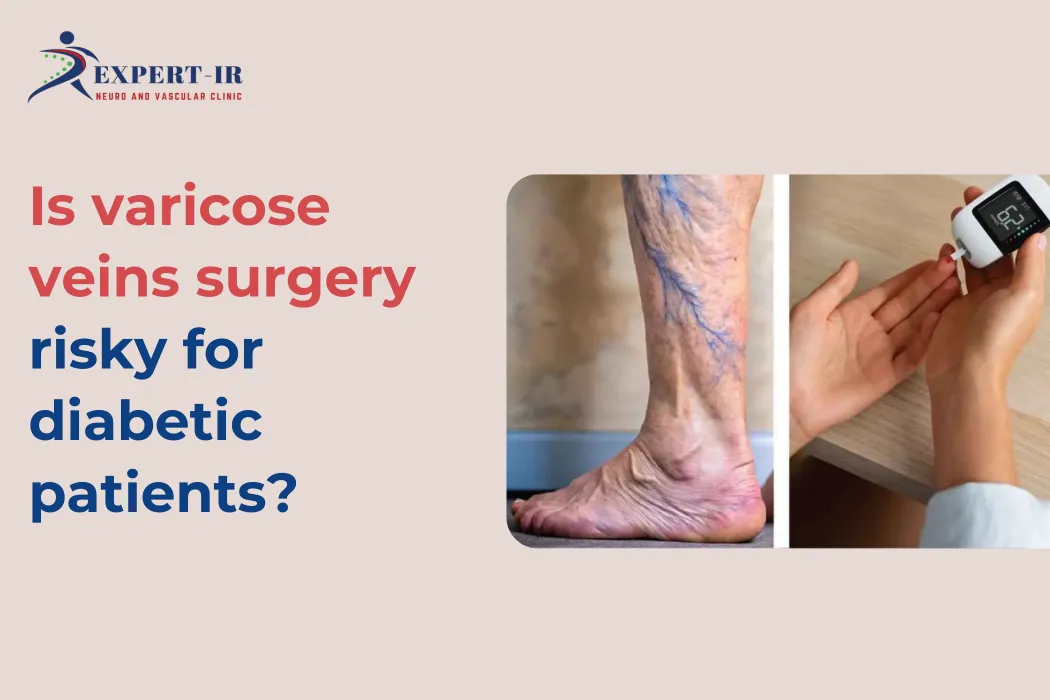
When Do Varicose Veins Need Surgery? Signs | Best Treatment

When Do Varicose Veins Need Surgery? Signs | Best Treatment

Many people live with varicose veins for years assuming they are only a cosmetic concern. Visible veins, mild swelling, or leg pain are often ignored until the discomfort becomes severe. The truth is that varicose veins are a medical condition, not just a beauty issue. If left untreated, they can progress and lead to serious complications.

Understanding when you actually need medical treatment or surgery can help you avoid long term damage and unnecessary suffering. If you are searching for varicose veins treatment in Pune, this guide will help you make an informed decision.

What Are Varicose Veins?

Varicose veins develop when the valves inside your leg veins weaken. These valves normally help blood flow upward toward the heart. When they fail, blood starts pooling in the legs due to gravity.

This leads to:

  • Persistent Severe Pain

    If leg pain interferes with daily activities and does not improve with conservative or minimally invasive treatment, further intervention may be required.

  • Non-Healing Venous Ulcers

    Open sores around the ankle that do not heal indicate advanced venous disease. These ulcers require urgent medical attention and sometimes more aggressive treatment.

  • Recurrent Bleeding from Varicose Veins

    Thin, stretched veins can rupture, especially after minor trauma. Repeated bleeding episodes increase the need for definitive treatment.

  • Skin Changes and Hardening

    Dark pigmentation, thickened skin, or eczema-like rashes around the ankles signal chronic venous insufficiency that has progressed significantly.

  • Failure of Minimally Invasive Treatment

    In rare cases where laser or radiofrequency procedures are not feasible due to vein anatomy, surgery may be considered.

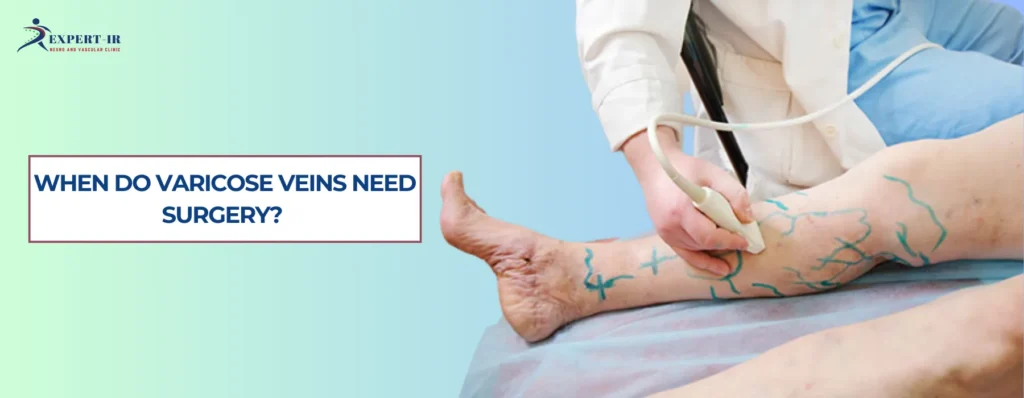
When Do Varicose Veins Need Surgery

Is Surgery Always Necessary?

No. In fact, most varicose vein cases today do not require open surgery. Minimally invasive procedures have largely replaced traditional vein stripping because they offer:

  • Higher success rates
  • Less pain
  • Faster recovery
  • Minimal scarring
  • Same-day walking

Surgery is now reserved for selected complex cases.

Warning Signs That You Should See a Specialist Immediately

If your symptoms increase in frequency or intensity, medical evaluation becomes necessary.

Consult a vein specialist if you experience:

  • Daily leg pain or throbbing
  • Persistent ankle swelling
  • Burning or itching near veins
  • Prominent bulging veins
  • Restless legs at night
  • Pain after long sitting or standing

Best Treatment for Varicose Veins

Endovenous Laser Ablation (EVLA)

Laser treatment seals the faulty vein from inside using controlled heat energy. It permanently closes the vein with minimal discomfort and allows patients to resume normal activities quickly.

Radiofrequency Ablation (RFA)

Similar to laser treatment, RFA uses thermal energy to close the affected vein. It is highly effective and widely preferred.

Image-Guided Treatment Planning

Accurate Doppler ultrasound mapping ensures that all refluxing veins are identified and treated, reducing recurrence.

At Expert IR Clinic, advanced, non-surgical treatments are offered with precise imaging. Dr. Santosh Patil specializes in minimally invasive vein procedures that eliminate symptoms without the risks of open surgery.

Benefits of Varicose Veins without Surgery

  • No stitches
  • Minimal pain
  • Same-day discharge
  • Faster recovery
  • Return to work within 24–48 hours
  • Lower risk of complications

This makes treatment convenient for working professionals who cannot afford long hospital stays.

Expert Vein Care for Professionals in Pune

For advanced and reliable varicose veins treatment in Pune, consult Expert IR Clinic Pune, led by Dr. Santosh Patil, an experienced Interventional Radiologist in Pune specializing in minimally invasive vein treatments.

With modern laser technology, precise imaging guidance, and personalized care, patients receive safe treatment and can return to work quickly making it ideal for busy office professionals.

Frequently Asked Questions (FAQs)

No. Most cases are treated successfully with minimally invasive procedures like laser or radiofrequency ablation.

Persistent pain, skin discoloration, non-healing ulcers, and recurrent bleeding are signs of advanced disease requiring urgent evaluation.

Yes. Laser treatment is less invasive, has quicker recovery, and offers high long-term success rates compared to traditional surgery.

A Doppler ultrasound examination determines severity and helps decide whether surgery or minimally invasive treatment is required.

Yes. Advanced cases may lead to ulcers, infections, or blood clots if left untreated.

For More Details Visit Our Channel