
Diabetic Foot Ulcer Treatment: A Complete Step-by-Step Guide
A small cut on the foot doesn’t sound serious. But for someone living with diabetes, that same small cut can quietly turn into an open wound that refuses to heal, sometimes putting the entire limb at risk. This is what makes diabetic foot ulcers so important to understand, catch early, and treat properly.
If you or a family member has been told about a diabetic foot ulcer, this article walks you through what it is, why it happens, and exactly how effective diabetic foot ulcer treatment works, step by step, in language that doesn’t require a medical degree to follow.
What Is a Diabetic Foot Ulcer?
A diabetic foot ulcer is an open sore or wound that usually develops on the sole, heel, or side of the foot in people with diabetes. Unlike a normal cut that scabs over and heals within days, these wounds can linger for weeks or months because diabetes affects two things at once: nerve sensation and blood circulation.
High blood sugar levels over time can damage the nerves in the feet, a condition called peripheral neuropathy. This means a person may not even feel a blister, a stone in their shoe, or a small crack in the skin. At the same time, diabetes can narrow the blood vessels supplying the legs and feet, a condition known as peripheral arterial disease. Less blood flow means less oxygen and fewer healing nutrients reach the wound, so it stays open far longer than it should.
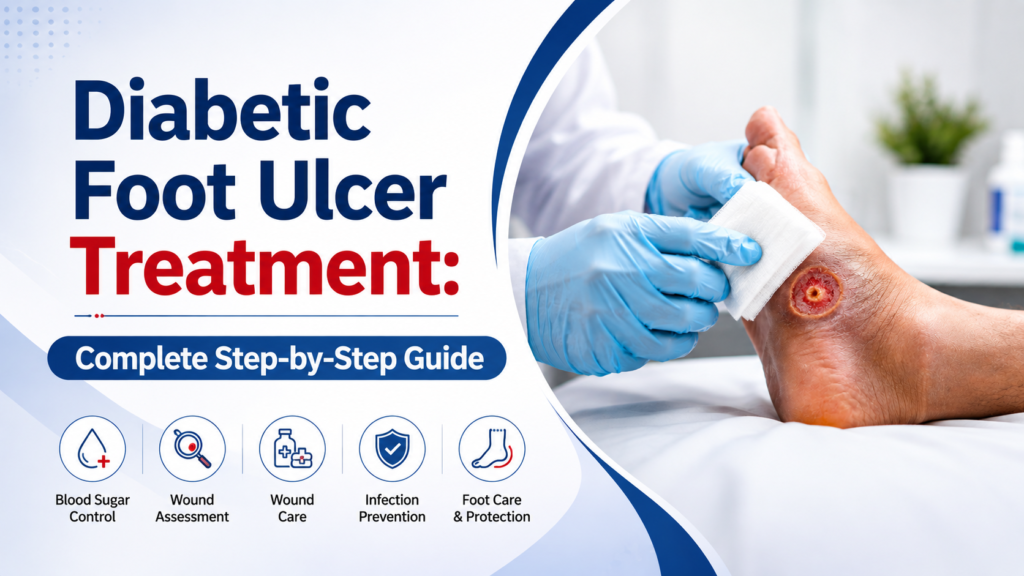
Why Foot Ulcers Need Expert Attention?
Left untreated, a diabetic foot ulcer can lead to infection, and in more serious cases, tissue death or amputation. This isn’t meant to alarm you. It’s meant to explain why early, structured treatment matters so much more here than with an ordinary wound.
The encouraging part is that with the right care plan, most diabetic foot ulcers can heal well. Treatment today combines wound care, circulation assessment, infection control, and pressure relief, tailored to each patient’s specific stage of ulcer and overall health.
Common Causes and Risk Factors
Understanding what leads to a diabetic foot ulcer helps explain why treatment isn’t just about the wound itself.
- Poorly controlled blood sugar levels over a long period
- Reduced sensation in the feet due to nerve damage
- Poor circulation from narrowed or blocked leg arteries
- Ill-fitting footwear that causes friction or pressure points
- Foot deformities such as bunions or hammertoes
- A history of previous foot ulcers or amputation
- Smoking, which further restricts blood flow
- Prolonged standing or walking without proper foot checks
Many patients we see in Pune fall into more than one of these categories, which is exactly why a combined vascular and wound-care approach tends to work better than treating the ulcer in isolation.
Step-by-Step Diabetic Foot Ulcer Treatment Process
Every patient’s case is different, but effective treatment generally follows a consistent sequence. Here is how it typically unfolds in a specialist clinic setting.
Step 1: Complete Wound and Vascular Assessment
The first visit usually involves examining the ulcer’s size, depth, and appearance, along with checking blood flow to the leg using a Doppler ultrasound or ankle-brachial index test. This step is critical because a wound with poor blood supply needs a very different treatment plan than one with good circulation.
Step 2: Blood Sugar and Infection Control
Before deep healing can begin, blood sugar levels need to be brought under better control, often in coordination with the patient’s diabetologist. If there are signs of infection, such as redness, swelling, warmth, discharge, or fever, antibiotics and wound cultures are used to identify and treat the specific bacteria involved.
Step 3: Debridement (Cleaning the Wound)
Debridement means removing dead or infected tissue from the wound surface. This may sound uncomfortable, but it’s usually done carefully and with local anaesthesia when needed. Removing this tissue allows healthy new skin to grow and helps the body’s natural healing process take over.
Step 4: Restoring Blood Flow When Needed
If the vascular assessment shows narrowed or blocked arteries, restoring circulation becomes a priority. This can involve minimally invasive procedures such as angioplasty, where a small balloon is used to open the narrowed artery, sometimes with a stent placed to keep it open. Improved blood flow significantly boosts the wound’s ability to heal.
Step 5: Offloading Pressure
Even the best wound care won’t help much if the patient keeps walking directly on the ulcer. Offloading means reducing pressure on the affected area using special footwear, custom insoles, casts, or crutches. This step is often underestimated but is one of the most important parts of the healing process.
Step 6: Advanced Wound Dressings and Therapies
Depending on the wound’s stage, specialised dressings are used to maintain a moist healing environment, control bacteria, and encourage new tissue growth. In more resistant cases, therapies such as negative pressure wound therapy (a controlled vacuum dressing) or growth factor treatments may be recommended.
Step 7: Regular Monitoring and Follow-Up
Healing is tracked through scheduled follow-up visits, usually every one to two weeks, where the wound size, depth, and tissue quality are reassessed and the treatment plan adjusted accordingly. Patients are also taught daily foot inspection habits to catch any new problem areas early.
Leg Ulcer and Venous Ulcer Treatment: How It Differs
Not every leg wound in a diabetic patient is purely a diabetic foot ulcer. Some patients also develop venous leg ulcers, which occur when faulty vein valves cause blood to pool in the lower legs, raising pressure in the skin and tissue. These ulcers typically appear near the ankle and often come with swelling and skin discolouration.
For patients seeking leg ulcer treatment in Pune, an accurate diagnosis matters because venous ulcers respond well to compression therapy and vein treatment, while diabetic foot ulcers respond better to offloading and circulation-focused care. Many patients actually have a mix of both venous and diabetic factors, which is why a specialist evaluation before starting treatment is so important. Venous leg ulcer treatment in Pune, when done correctly, usually combines compression bandaging, wound dressing, and in some cases, minimally invasive procedures to correct the underlying vein problem.
Real-World Examples of Diabetic Foot Ulcer Care
Consider a patient in their late fifties with type 2 diabetes for over a decade, who notices a small wound near the big toe that hasn’t healed in three weeks despite home dressing. A vascular assessment reveals reduced blood flow in the leg. Once circulation is improved through a minimally invasive procedure and the wound is properly debrided and dressed, the ulcer typically shows visible improvement within a few weeks, with full closure over the following months depending on wound depth.
Another common scenario involves a patient whose ulcer keeps reopening because they continue standing for long hours at work. In such cases, custom offloading footwear combined with consistent wound care usually resolves the recurring breakdown, showing that healing isn’t only about medication and dressings; it’s also about changing daily pressure habits on the foot.
These patterns repeat often enough in clinical practice that they illustrate a broader truth: successful treatment depends on addressing circulation, infection, and pressure together, not the wound alone.
How to Prevent Diabetic Foot Ulcers From Recurring
Once a wound has healed, prevention becomes the focus. A few simple habits go a long way:
- Check your feet daily for cuts, blisters, redness, or swelling
- Wash and dry feet thoroughly, especially between the toes
- Moisturise the skin, but avoid applying lotion between the toes
- Wear well-fitted, cushioned footwear at all times, even indoors
- Avoid walking barefoot, especially outdoors
- Keep blood sugar levels within the target range recommended by your doctor
- Schedule regular foot check-ups, particularly if you have reduced sensation
- Quit smoking, as it directly affects circulation and healing capacity
When to See a Specialist
You should not wait for a wound to worsen before seeking help. See a vascular and wound-care specialist if you notice any of the following:
- A wound that hasn’t shown improvement within one to two weeks
- Increasing redness, warmth, or swelling around a wound
- Foul-smelling discharge from a sore
- Numbness, tingling, or loss of sensation in the feet
- Cold feet or leg pain while walking, which may point to circulation issues
Conclusion
Diabetic foot ulcers can feel worrying, especially when a wound doesn’t seem to heal the way it should. But with a structured, step-by-step approach covering wound assessment, infection control, circulation improvement, and pressure offloading, most patients see steady and lasting healing. The key is not delaying care and choosing a treatment team that looks at the whole picture, not just the wound itself.
If you’re noticing a slow-healing wound, changes in foot sensation, or leg discomfort, it’s worth getting it evaluated properly rather than waiting it out. Book a consultation with our vascular and wound-care specialists in Pune to get a clear diagnosis and a treatment plan built around your specific condition.
Frequently Asked Questions (FAQs)
Healing time varies based on the ulcer’s depth, blood circulation, and how well blood sugar is controlled. Mild ulcers may heal within four to six weeks with proper care, while deeper or infected wounds can take several months.
Yes, many diabetic foot ulcers heal with non-surgical treatment such as wound debridement, dressings, offloading, and blood sugar control. Surgery or minimally invasive procedures are usually reserved for cases involving poor blood flow or severe infection.
A diabetic foot ulcer usually develops on the sole or pressure points of the foot due to nerve damage and poor circulation, while a venous leg ulcer typically appears near the ankle due to faulty vein valves causing blood pooling. Treatment approaches differ, so accurate diagnosis matters.
Most treatment steps, including wound cleaning and dressing changes, are done with minimal discomfort, often using local anaesthesia when needed. Patients with nerve damage may actually feel little to no pain during the process.
You should seek medical attention if a wound doesn’t improve within one to two weeks, shows increasing redness or swelling, has an odour, or is accompanied by fever, numbness, or leg pain. Early evaluation prevents complications.
Yes, recurrence is common if the underlying causes, such as poor blood sugar control, unmanaged circulation issues, or pressure on the same spot, are not addressed. Following a prevention routine and wearing proper footwear significantly lowers the chance of a repeat ulcer.
Not necessarily, but pressure on the ulcer itself needs to be avoided. This is why offloading devices such as special footwear, insoles, or walking aids are recommended, so you can stay mobile without slowing down the healing process.
Common assessments include a physical wound examination, blood sugar testing, a Doppler ultrasound or ankle-brachial index to check blood flow, and sometimes an X-ray or MRI if bone infection is suspected. These tests help decide the right treatment approach.
Coverage depends on the specific insurance provider and policy, but many plans do cover diagnostic tests, wound care procedures, and hospitalisation if required. It’s best to check directly with your insurer or ask the clinic’s team to help verify coverage before starting treatment.