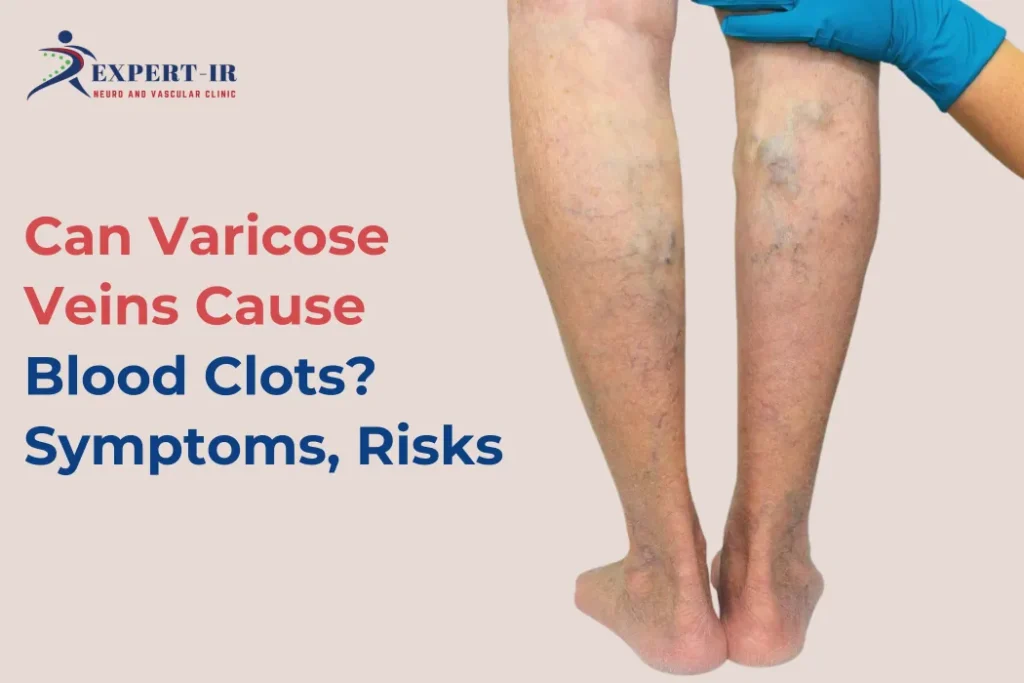
Can Varicose Veins Cause Blood Clots? Symptoms, Risks
Varicose veins are often dismissed as a cosmetic concern, but medically they represent chronic venous insufficiency, it is a condition where blood flow in the veins is impaired. This naturally raises an important clinical question:
Do varicose veins increase the risk of blood clots?
The answer is YES—but not all clots are equally dangerous, and understanding the difference is critical for both patients and early intervention.
Why Clots Form in Varicose Veins?
Blood clots typically form when three conditions occur (known as Virchow’s triad):
Sluggish blood flow
Vessel wall damage
Increased clotting tendency
Varicose veins fulfill two major components of this triad.
Because vein valves fail, blood does not flow efficiently upward. Instead, it pools and stagnates, especially in the lower legs. This slow-moving blood increases the likelihood of clot formation.
At the same time, stretched vein walls become inflamed and damaged, creating an environment that further promotes clotting.
What Type of Clots Are Common in Varicose Veins?
1. Superficial Thrombophlebitis (Most Common)
This is the most frequent clot associated with varicose veins.
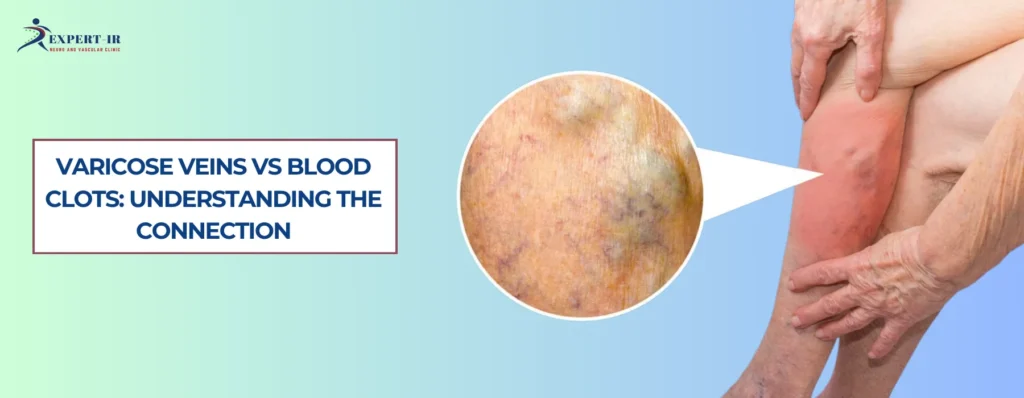
It occurs in veins close to the skin and presents with:
Localized pain
Redness
Warmth
A hard, cord-like vein
While usually not life-threatening, it should never be ignored, as it can extend into deeper veins in some cases.
Radiofrequency Ablation (RFA) Uses controlled heat to close the diseased vein.
These treatments:
Are performed under local anesthesia
Allow walking within hours
Have high long-term success rates
Significantly reduce complication risks
At Expert IR Neuro & Vascular Clinic, treatment is planned using Doppler-based vein mapping. Dr. Santosh Patil focuses on non-surgical, precision-based vein care that directly reduces clot risk.
Who Is at Highest Risk of Clots with Varicose Veins?
Risk increases significantly when varicose veins are combined with:
Long sitting (travel, desk job)
Diabetes
Obesity
Smoking
Hormonal therapy
Pregnancy
This is where most patients go wrong—they ignore combined risk.
Varicose veins increase the risk of superficial blood clots due to slow blood flow and vein inflammation, but they are not the main cause of deep vein thrombosis.
Superficial clots occur in surface veins and are less dangerous, while DVT occurs in deeper veins and can lead to serious complications like pulmonary embolism.
Ovarian vein reflux occurs when vein valves weaken or fail, allowing blood to flow backward and pool in the pelvic veins. Hormonal changes (especially high estrogen levels), pregnancy, and multiple childbirths increase the risk.