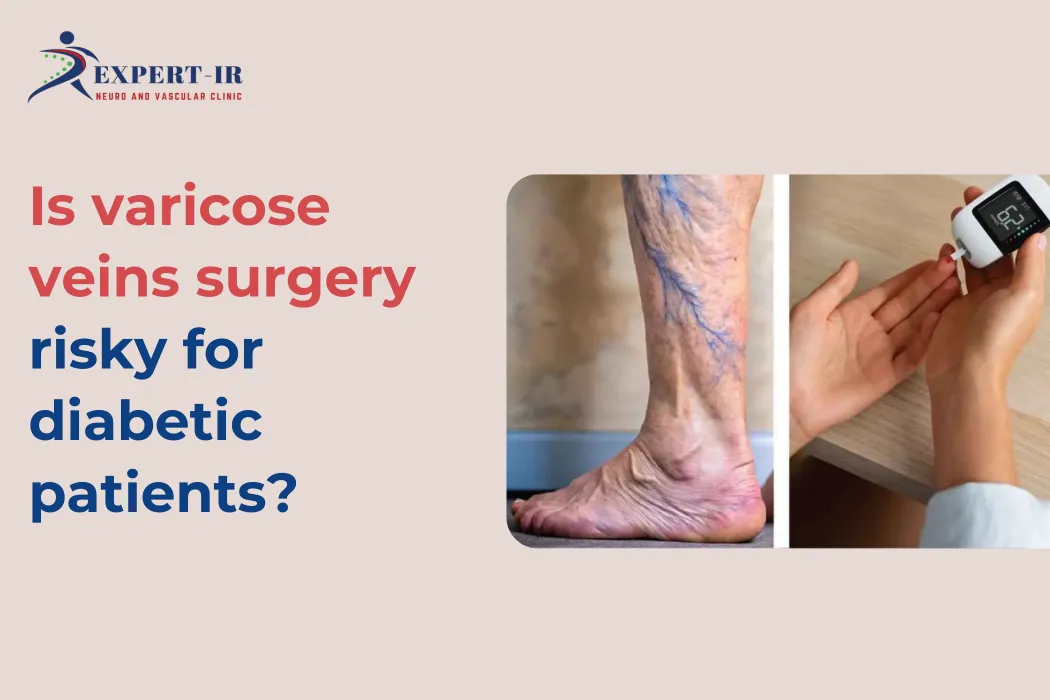
Why Your Legs Feel Heavy at Night | Could It Be Varicose Veins?

Why Your Legs Feel Heavy at Night | Could It Be Varicose Veins?

Do your legs feel unusually heavy, tired, or achy by the end of the day? Many people dismiss this sensation as normal fatigue from work or daily activity. However, persistent leg heaviness at night can be an early warning sign of varicose veins or underlying venous insufficiency.

While occasional tired legs are common, recurring evening heaviness especially when associated with swelling or visible veins should not be ignored. Understanding the cause helps you decide whether it’s simple muscle fatigue or something more serious.

Why Do Legs Feel Heavier at Night?

Your veins work against gravity to return blood from your legs back to your heart. Throughout the day—especially if you stand or sit for long hours—blood naturally pools in the lower limbs.

In healthy veins, one-way valves prevent backward flow. But when these valves weaken, blood accumulates in the veins, increasing pressure. This pressure builds up during the day, which is why leg heaviness is often worse at night.

Is Leg Heaviness a Sign of Varicose Veins?

Yes, leg heaviness is one of the earliest and most common symptoms of varicose veins. In many cases, it appears long before veins become visibly bulging.

If heaviness is accompanied by:

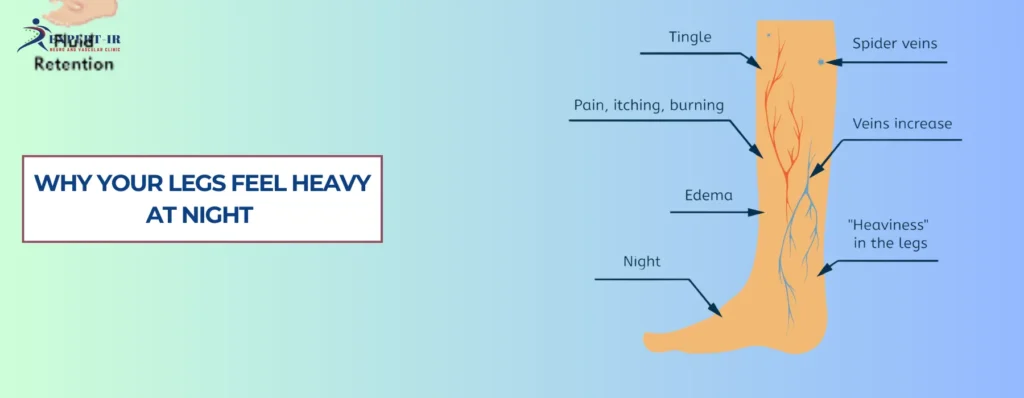
  • Mild ankle swelling
  • Aching or burning sensation
  • Night cramps
  • Visible spider veins
  • Itching around veins

It may indicate early venous insufficiency.

Why Your Legs Feel Heavy at Night

Why Symptoms Worsen in the Evening

As the day progresses, gravitational pressure increases in the leg veins. If the vein valves are weak, blood pooling intensifies. This leads to:

  • Increased swelling
  • Tightness in calves
  • Throbbing discomfort
  • Visible vein prominence

Once you lie down, symptoms often improve because gravity is no longer working against circulation. This pattern is a key clue that vein function may be compromised.

Who Is at Higher Risk of Varicose Veins ?

Certain individuals are more prone to nighttime leg heaviness due to varicose veins:

  • People with standing or sitting jobs
  • Pregnant women
  • Individuals with a family history of varicose veins
  • Overweight or obese individuals
  • Adults over 40

Genetics and lifestyle both play a major role.

How Varicose Veins Cause Leg Heaviness

Varicose veins develop due to venous reflux—when blood flows backward in the veins instead of upward. This backward flow increases pressure inside the veins, stretching them over time.

The increased venous pressure leads to:

  • Fluid leakage into surrounding tissues
  • Mild swelling
  • Oxygen deficiency in leg muscles
  • Sensation of heaviness and fatigue

Left untreated, symptoms may progress to skin discoloration or ulcers.

When Should You See a Doctor?

You should consult a specialist if:

  • Leg heaviness occurs daily
  • Swelling worsens over time
  • Visible veins appear
  • Pain interferes with sleep
  • Skin changes develop

Early evaluation helps prevent complications.

At Expert IR Clinic, detailed Doppler ultrasound is used to detect venous reflux before complications arise. Dr. Santosh Patil specializes in non-surgical, minimally invasive treatment for varicose veins, allowing faster recovery and long-term relief.

Can Lifestyle Changes Help?

Yes, especially in early stages. Helpful measures include:

  • Regular walking

  • Leg elevation after work

  • Avoiding prolonged standing

  • Weight management

  • Wearing compression stockings when advised

However, lifestyle changes manage symptoms—they do not permanently close faulty veins.

Types of Treatment for Varicose Veins

If leg heaviness is caused by varicose veins, minimally invasive treatments such as laser ablation or radiofrequency ablation can permanently close the affected veins.

These procedures:

  • Are done under local anesthesia
  • Require no large incisions
  • Allow same-day walking
  • Offer high long-term success rates

Treating the root cause eliminates heaviness rather than just masking symptoms.

Frequently Asked Questions (FAQs)

No. It can be caused by muscle fatigue or dehydration. However, recurring heaviness—especially with swelling or visible veins—may indicate varicose veins.

Lying down reduces gravitational pressure on leg veins, allowing blood to flow back more easily to the heart.

Yes. Leg heaviness is often one of the first symptoms of chronic venous insufficiency before visible veins appear.

Yes. Blood pooling during the day increases venous pressure, leading to ankle swelling and tightness by evening.

Walking, elevating your legs, staying hydrated, and using compression stockings may reduce symptoms temporarily.

For More Details Visit Our Channel