Therapy Vs. Sclerotherapy-What Is Best for Spider Vein Treatment
Spider veins are small, visible red, blue, or purple veins that commonly appear on the legs and face. While they are usually harmless, many people seek treatment due to discomfort, cosmetic concerns, or fear of progression into larger vein problems. When searching for solutions, patients often come across two broad approaches: therapy-based management and sclerotherapy.
This leads to a common question: Therapy vs. sclerotherapy – what is best for spider vein treatment?
The answer depends on severity, symptoms, expectations, and long-term goals. Understanding the difference between these approaches helps patients choose the safest and most effective path.
What Is Spider Veins and Why They Appear
Spider veins develop when small surface veins weaken due to faulty valves. Blood pools in these veins, making them visible under the skin. Factors such as prolonged standing, hormonal changes, pregnancy, obesity, genetics, and aging all contribute to their formation.
While spider veins are usually not dangerous, they can sometimes indicate underlying venous weakness that needs proper evaluation.
What Does “Therapy” Mean for Spider Veins?
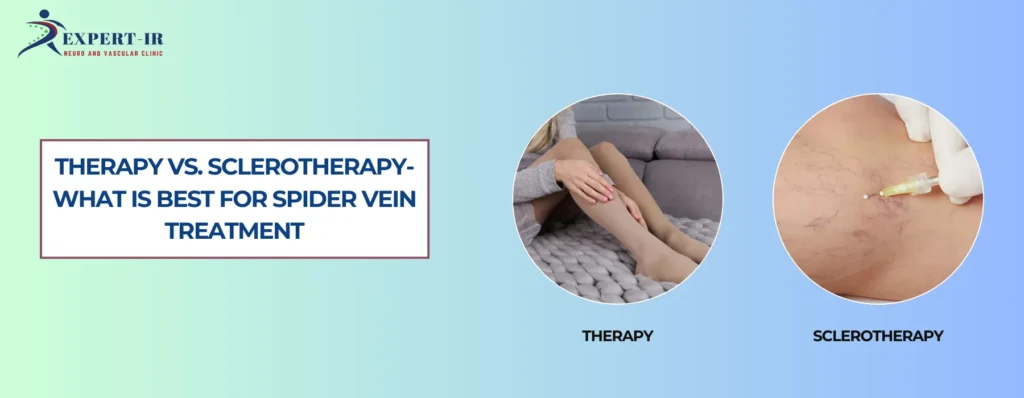
In the context of spider veins, therapy usually refers to non-procedural, conservative management aimed at improving circulation and preventing progression.
This includes regular walking and leg exercises to activate the calf muscle pump, leg elevation to reduce venous pressure, weight management, and the use of compression stockings. Lifestyle modifications such as avoiding prolonged standing, wearing comfortable footwear, and maintaining good hydration also fall under this category.
Therapy focuses on symptom relief and prevention, not removal of existing spider veins.
What Is Sclerotherapy?
Sclerotherapy is a medical, minimally invasive procedure used to treat spider veins and small varicose veins. A special medical solution is injected directly into the affected vein. This solution irritates the vein lining, causing it to collapse and gradually fade as the body absorbs it.
Blood is naturally rerouted through healthier veins, improving circulation and appearance. Sclerotherapy is performed as an outpatient procedure and does not require surgery or general anesthesia.
Therapy vs. Sclerotherapy: Key Differences
Therapy helps reduce leg heaviness, swelling, and discomfort, but it does not eliminate existing spider veins. The visible veins usually remain, even with consistent lifestyle changes.
Sclerotherapy, on the other hand, directly treats the spider vein itself. The treated vein is permanently closed and does not reappear. This makes sclerotherapy the gold standard treatment for spider veins worldwide.
While therapy is useful as a supportive and preventive measure, sclerotherapy offers visible, long-term cosmetic and functional improvement.
Which Option Is Best for Mild Spider Veins?
For very early or mild spider veins without cosmetic concern, therapy-based management may be sufficient. It helps slow progression and improves leg comfort, especially in people with long working hours or standing jobs.
However, patients should understand that therapy will not remove visible veins—it only manages symptoms.
When Is Sclerotherapy the Better Choice?
Sclerotherapy is the preferred option when spider veins are clearly visible, spreading, or affecting confidence. It is also recommended when spider veins are associated with burning, itching, or aching sensations.
Patients seeking definitive treatment rather than temporary relief benefit most from sclerotherapy.
Is Sclerotherapy Safe?
When performed by an experienced specialist, sclerotherapy is very safe. Mild temporary effects such as slight bruising or redness may occur, but serious complications are rare.
At Expert IR Clinic, spider vein treatment is performed using image-guided evaluation to rule out underlying venous reflux before sclerotherapy. Dr. Santosh Patil focuses on safe, precise treatment with long-lasting results.
Can Therapy and Sclerotherapy Be Combined?
Yes. In fact, the best outcomes often come from combining both approaches. Sclerotherapy treats existing spider veins, while therapy-based measures such as compression stockings and regular walking help maintain results and prevent new veins from forming.
This combined approach addresses both the symptom and the underlying venous stress.
Does Sclerotherapy Provide Permanent Results?
The spider veins treated with sclerotherapy are permanently closed. However, vein disease is progressive, meaning new spider veins may develop over time due to genetics or lifestyle factors. This does not mean the treatment has failed—only that new veins may need treatment in the future.
Frequently Asked Questions (FAQs)
Therapy such as exercise, leg elevation, and compression stockings can reduce symptoms and slow progression, but it cannot remove existing spider veins.
Yes. Sclerotherapy directly treats and permanently closes spider veins, making it more effective than therapy alone for visible vein removal.
Most patients experience only mild discomfort during injections. The procedure is quick and does not require anesthesia or hospital stay.
The number of sessions depends on the extent of spider veins. Some patients see improvement after one session, while others may need multiple sessions for optimal results.
Compression stockings help prevent worsening and support circulation but cannot eliminate existing spider veins.
Conclusion
Therapy is helpful for symptom control and prevention, but it does not remove spider veins. Sclerotherapy is the most effective and definitive treatment for visible spider veins. For most patients, sclerotherapy combined with supportive therapy offers the best, long-lasting results.
With expert evaluation and modern techniques, spider veins can be treated safely, effectively, and without surgery. Under the care of Dr. Santosh Patil at Expert IR Clinic, patients receive personalized treatment focused on both appearance and long-term vein health.