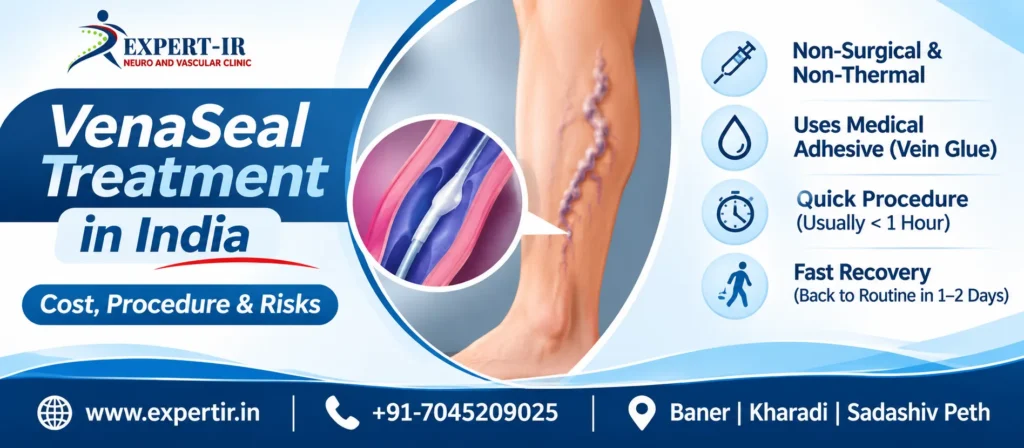
VenaSeal Treatment in India | Cost, Procedure, Risks
VenaSeal treatment is a non-surgical, non-thermal way to treat varicose veins by sealing the faulty vein from the inside with a tiny amount of medical adhesive. It needs only one small needle entry, usually takes under an hour, and most people walk out and return to daily activities the same day or the next day.
- What it treats: Varicose veins caused by leaky valves in the main surface veins of the leg
- How it works: A medical glue closes the faulty vein, and blood reroutes to healthy veins
- Anaesthesia: Only local numbing at the entry point, no multiple injections along the leg
- Recovery: Back to routine activities within a day in most cases
- Indicative cost in India: Around ₹5 lakh to ₹3 lakh per leg, depending on the hospital and the number of veins treated
- Main risk: A short-lived, phlebitis-like skin reaction over the treated vein in some patients
Living With Varicose Veins
It usually starts with the mirror. A few veins on the calf look thicker than before. Then come the evenings, when the legs feel heavy, the ankles swell a little, and cramps wake you up at night.
Many people put off treatment because they picture surgery, stitches and weeks of rest. That picture is outdated. Today, many varicose veins can be treated without a single cut.
VenaSeal is one of the newest of these options. Think of it as sealing a leaking pipe from the inside, so the water simply takes the next healthy pipe. You walk in with heavy, aching legs, and walk out the same day with a closed faulty vein and a small plaster.
In this article, we explain what VenaSeal treatment is, how the procedure works, what it costs in India, its risks, and whether it is the right choice for you.
What Is VenaSeal Treatment?
VenaSeal is a cyanoacrylate closure system, a medical-grade adhesive designed to close diseased veins. It is used for superficial venous insufficiency, the condition where valves inside the main surface veins of the leg stop working properly.
When these valves leak, blood flows backwards and pools in the leg. Over time, the veins stretch, twist and bulge. That is what we see as varicose veins.
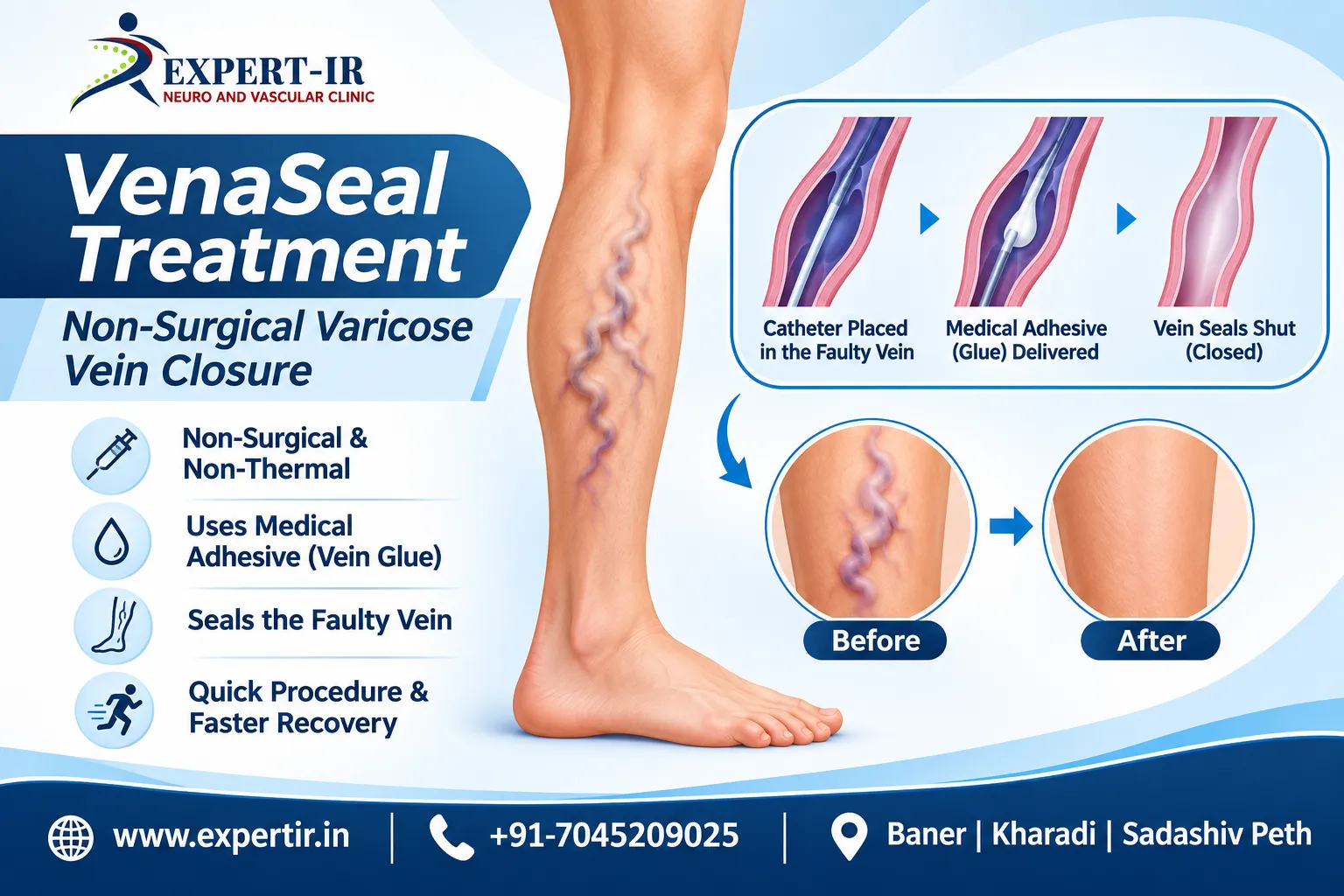
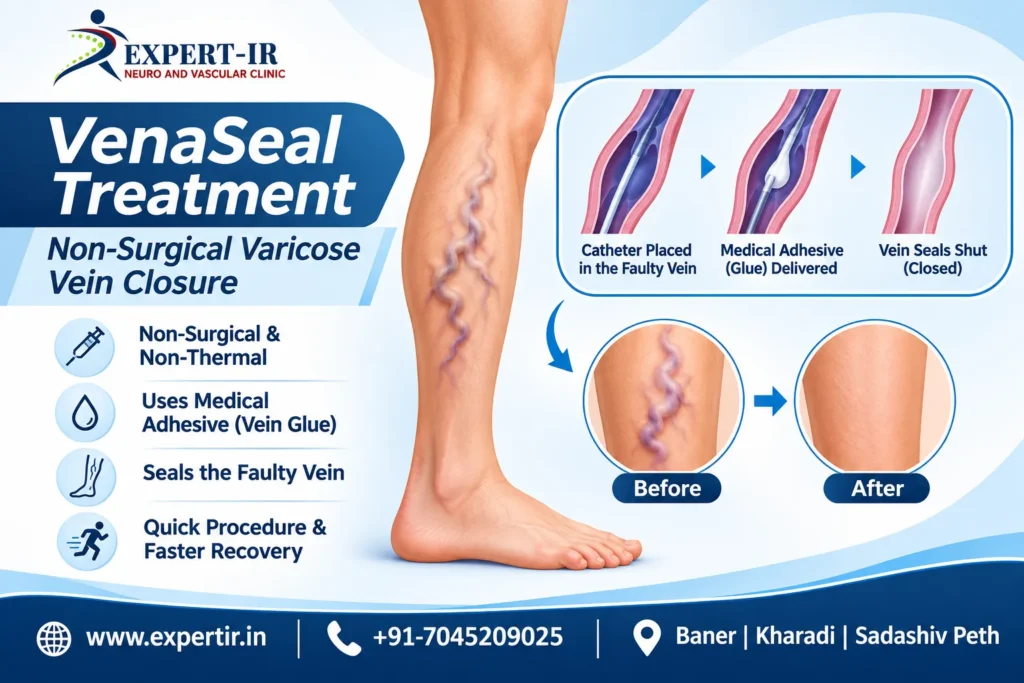
During VenaSeal treatment, a thin catheter is placed inside the faulty vein through a single needle prick. Small amounts of adhesive are released along the vein, which is gently pressed closed. The vein seals shut, and blood naturally reroutes through healthy veins. Over time, the closed vein is absorbed by the body.
Who Is a Suitable Candidate for VenaSeal?
VenaSeal may be suitable if you have:
- Varicose veins caused by reflux in the great or small saphenous vein, confirmed on Doppler
- Leg heaviness, aching, swelling, cramps or itching
- Skin darkening or changes near the ankles
- A healed or active venous ulcer, as part of a treatment plan
- A preference for a treatment with no heat and minimal needle pricks
When VenaSeal may not be advised
- Known allergy to acrylates or adhesives, such as skin glue, acrylic nails or eyelash glue
- Active blood clot (DVT) or recent clot in the leg
- Pregnancy or breastfeeding
- Active skin or blood infection
- Uncontrolled autoimmune or inflammatory conditions
Your doctor will check your history and Doppler scan to decide whether VenaSeal, laser, RFA or another option suits you best.
VenaSeal Procedure: Step by Step
Before the procedure
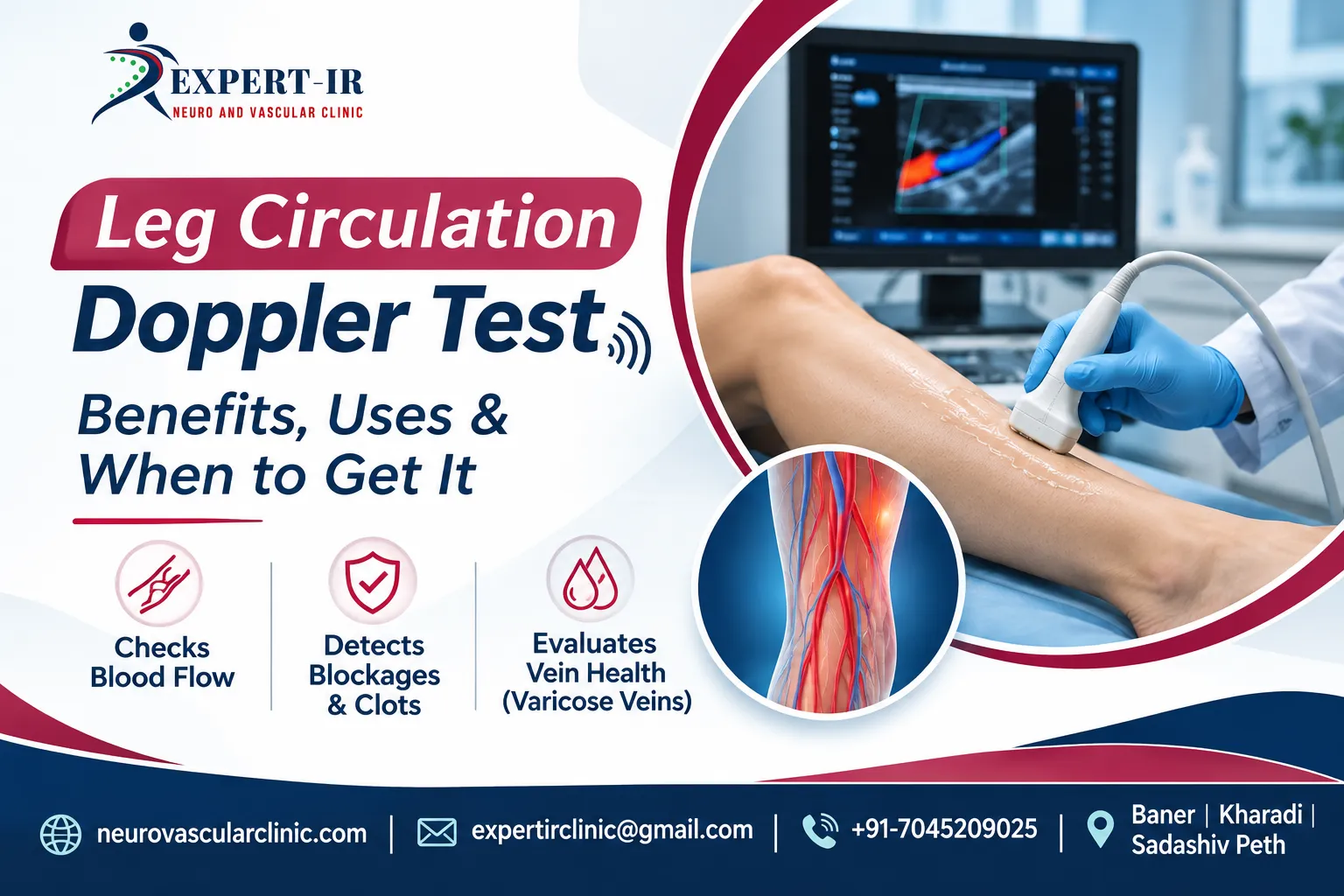
- A venous Doppler maps exactly which veins are leaking
- Your doctor reviews your medicines and any allergies
- No fasting is usually needed
- Wear loose, comfortable clothes
During the procedure
- Mapping: The faulty vein is marked using ultrasound
- Local numbing: A small area of skin is numbed where the catheter will enter
- Catheter placement: A thin catheter is guided into the vein under ultrasound
- Sealing: Tiny amounts of medical adhesive are released while the vein is gently pressed from outside
- Completion: The catheter is removed and a small plaster is placed over the entry point
The procedure usually takes 30 to 60 minutes, depending on how many veins are treated.
Right after the procedure
- You walk out the same day, often within an hour
- Most people return to work and routine activities the same day or the next day
- Many patients may not need compression stockings, though your doctor will advise based on your case
- A follow-up Doppler confirms that the vein has closed
Benefits of VenaSeal Treatment
- No cuts, no stitches: Only one small needle entry per vein
- No heat: Lower risk of nerve or skin burns compared with thermal methods
- Fewer injections: No need for multiple numbing injections along the leg, as in laser or RFA
- Quick recovery: Back to daily routine almost immediately
- Less bruising and discomfort for most patients
- Proven results: In a US study, VenaSeal showed 94.4% vein closure at 3 years, similar to radiofrequency ablation
- Day-care procedure: No overnight hospital stay in most cases
What Happens After the Doppler Test?
Depending on the findings, treatment may include:
- Lifestyle changes and medicines for early PAD or mild venous disease
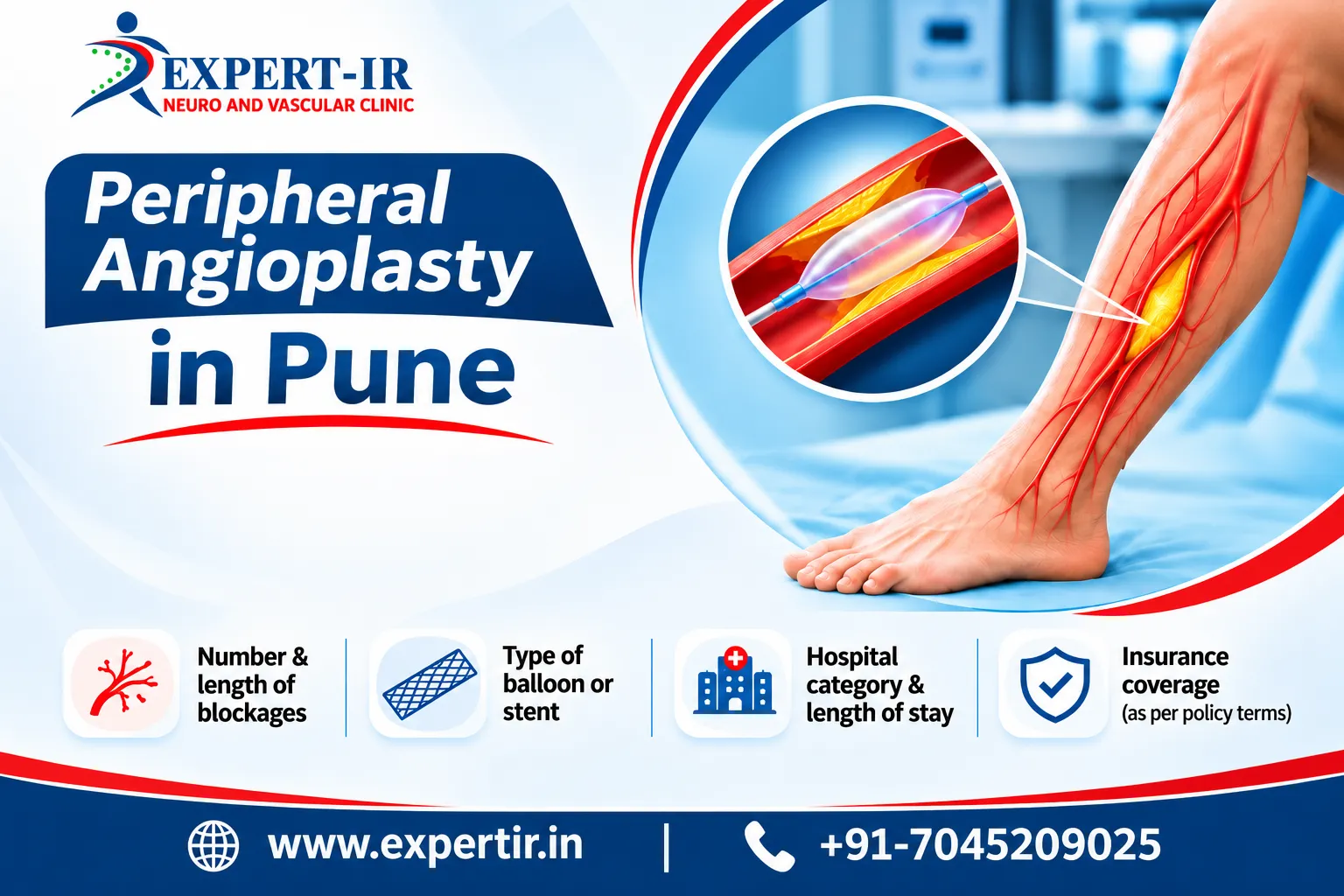
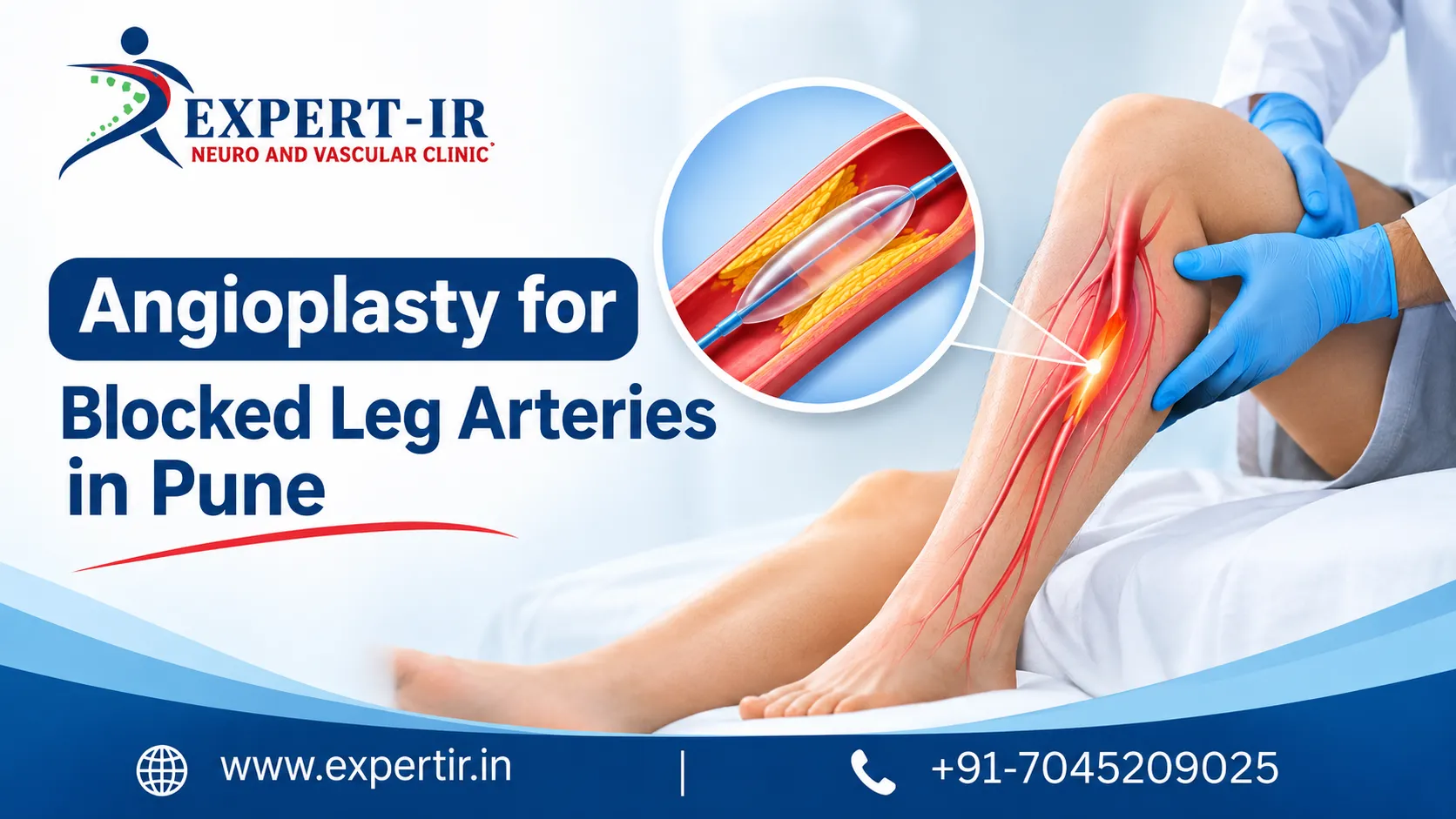
- Angioplasty or stenting for blocked leg arteries
- Blood thinners or clot treatment for DVT
- Minimally invasive vein treatments such as laser, RFA or VenaSeal for varicose veins
- Regular follow-up Doppler scans to monitor results
VenaSeal Treatment Cost in India
VenaSeal is usually priced higher than laser or RFA because of the cost of the closure system itself. In India, the cost generally falls in the following range:
Treatment | Indicative Cost in India |
VenaSeal, one leg (single vein) | Around ₹1.5 lakh to ₹2 lakh |
VenaSeal, one leg (multiple veins) | Around ₹2 lakh to ₹3 lakh |
VenaSeal, both legs | Higher, depending on the number of veins treated |
Add-on sclerotherapy or phlebectomy for branch veins | Extra, if needed |
Does insurance cover VenaSeal in India?
Varicose vein treatment is generally considered medically necessary when you have symptoms like pain, swelling, skin changes or ulcers. Many health insurance policies cover it, but coverage for newer procedures and the claim amount depend on your policy terms, sub-limits and waiting periods. Check with your insurer before the procedure.
Risks and Side Effects of VenaSeal Treatment
VenaSeal is considered safe when performed by an experienced specialist, but like any procedure, it has some possible side effects:
- Phlebitis-like reaction: Redness, itching or tenderness along the treated vein, usually mild and short-lived, and managed with simple medicines
- Allergic or hypersensitivity reaction to the adhesive, which is why a history of adhesive allergy is important to share
- Mild bruising or soreness at the entry point
- Small lumps along the vein that settle over time
- Blood clot extension into a deeper vein, which is rare and checked for on follow-up Doppler
- Recurrence: New varicose veins can develop over the years, as vein disease can progress
Inform your doctor if you notice spreading redness, increasing pain, sudden swelling in the leg, or breathlessness.
VenaSeal vs Laser vs RFA
Factor | VenaSeal | Laser (EVLA) | RFA |
How it works | Medical adhesive seals the vein | Laser heat closes the vein | Radiofrequency heat closes the vein |
Heat used | No | Yes | Yes |
Numbing injections along the leg | No, only at entry point | Yes | Yes |
Recovery | Same day or next day | 1 to 2 days | 1 to 2 days |
Compression stockings | Often not needed | Usually advised | Usually advised |
Cost | Higher | Moderate | Moderate |
All three are effective, minimally invasive options. The best choice depends on your vein anatomy, health, allergy history and budget.
Recovery Tips After VenaSeal Treatment
- Walk regularly from day one to keep blood flowing
- Avoid long hours of standing or sitting without movement for the first few days
- Avoid heavy gym workouts for a few days, or as your doctor advises
- Keep the entry point clean and dry for 24 hours
- Attend your follow-up Doppler scan
- Stay active and maintain a healthy weight to protect your veins long term
Why Choose Expert IR for VenaSeal Treatment in Pune?
At Expert IR, Dr. Santosh Patil, a Neuro and Vascular Interventional Radiologist and European Board-Certified Vascular specialist who has expertise in VenaSeal, laser and RFA for varicose veins, so the treatment is chosen for your veins, not the other way around.
- Doppler-guided evaluation to find the exact root cause
- All major non-surgical vein treatments under one roof
- Honest guidance on whether VenaSeal, laser or RFA is right for you
- Transparent estimates before treatment
- Three convenient locations in Pune: Baner (Manipal Hospital), Kharadi (Manipal Hospital) and Sadashiv Peth (Apollo Spectra)
Step Into Lighter Legs
Varicose veins are not just a cosmetic worry. Left untreated, they can lead to swelling, skin damage and ulcers. With VenaSeal, treatment can be quick, comfortable and free of cuts.
If heavy, aching or bulging veins are slowing you down, book a vein consultation at Expert IR and find out whether VenaSeal is right for you.
Book an appointment: +91-7045209025
Frequently Asked Questions (FAQs)
VenaSeal is a non-surgical treatment for varicose veins that uses a medical adhesive to seal the faulty vein from the inside. Blood then flows through healthy veins, and the closed vein is gradually absorbed by the body. It needs only one small needle entry and no heat.
VenaSeal treatment in India usually costs around ₹1.5 lakh to ₹3 lakh per leg. The final cost depends on the number of veins treated, whether both legs need treatment, add-on procedures and the hospital.
VenaSeal and laser are both effective. VenaSeal uses no heat and avoids multiple numbing injections, which can mean less discomfort and a quicker return to routine. Laser is usually more affordable. The right choice depends on your vein anatomy, health and budget.
Most patients feel very little pain. Only the needle entry point is numbed, and there are no multiple injections along the leg. Some people feel mild pressure or a slight pulling sensation during the procedure.
The VenaSeal procedure usually takes about 30 to 60 minutes. It is done as a day-care procedure, and most patients go home within an hour of treatment.
Most people return to work and routine activities the same day or the next day. Walking is encouraged from day one, and heavy exercise is usually resumed after a few days, as advised by your doctor.
The most common side effect is a phlebitis-like reaction, with redness, itching or tenderness over the treated vein, which is usually mild and short-lived. Other possible effects include bruising, small lumps, allergic reaction to the adhesive and, rarely, clot extension into a deeper vein.
VenaSeal may not be advised for people with a known allergy to acrylates or adhesives, an active or recent blood clot, pregnancy, active infection, or uncontrolled autoimmune conditions. Your doctor will review your history before recommending it.