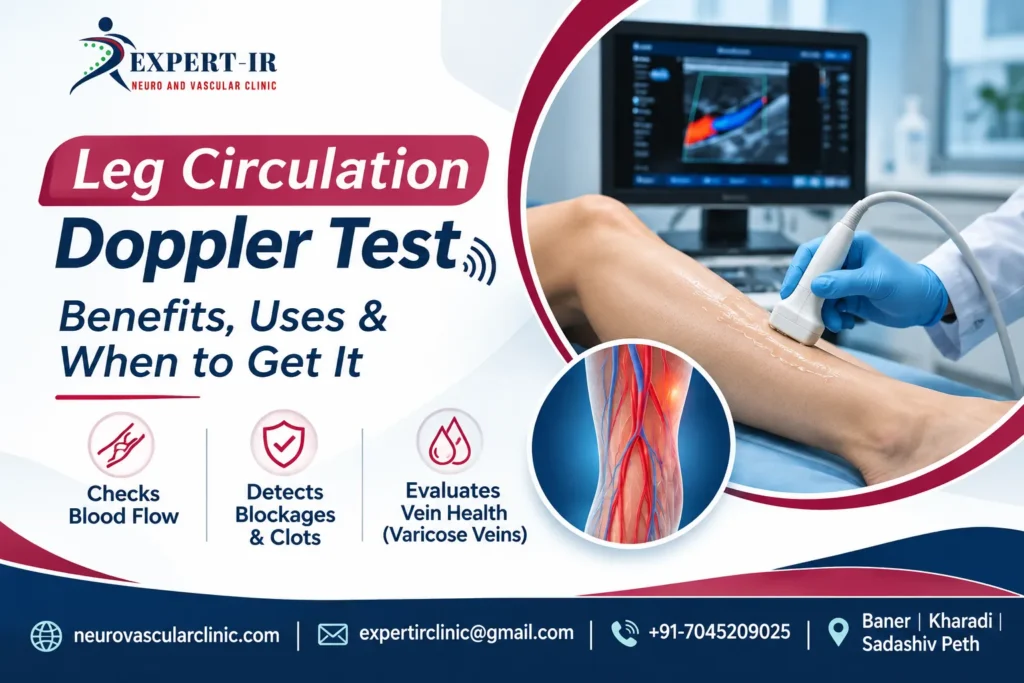
Leg Circulation Doppler Test in Pune | Benefits, Uses & When to Get It
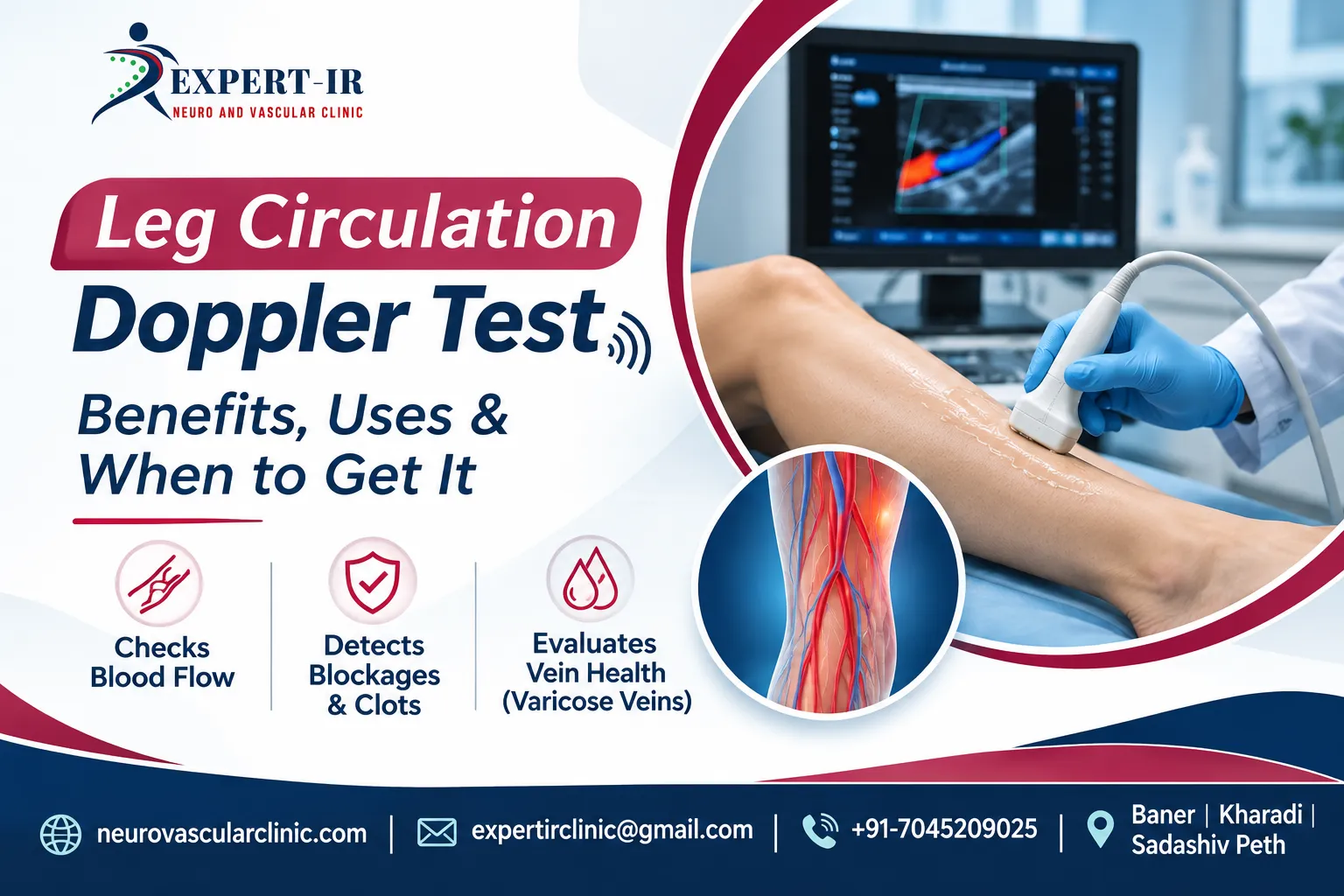
A leg circulation Doppler test is a painless ultrasound scan that shows how blood flows through the arteries and veins of your legs. It uses sound waves, not radiation, and usually takes about 20 to 45 minutes. It helps find blocked arteries (PAD), blood clots (DVT), leaky vein valves behind varicose veins, and other causes of leg pain, swelling or slow-healing wounds.
- What it checks: Blood flow, blockages, narrowing, clots and faulty vein valves
- Is it painful?It is non-invasive, with no needles and no radiation
- Preparation: Usually none. Wear loose clothing
- When to get it: Leg pain while walking, leg swelling, visible veins, colour changes, cold feet or wounds that do not heal
- Results: Often discussed with you on the same day
When Your Legs Start Giving Signals
Your legs carry you through every single day, so it is easy to ignore them when something feels off. A heavy feeling by evening. Ankles that look a little puffy. A calf cramp that makes you stop halfway to the market. Veins that look more noticeable than they used to.
Most people brush these off as tiredness or age. But very often, these are signals from your circulation. The blood is either not reaching the legs well enough, or it is not flowing back to the heart the way it should.
The good news is that finding the cause is simple. A leg circulation Doppler test lets your doctor see what is happening inside your blood vessels, in real time, without a single cut or needle.
In this guide, we explain what a leg Doppler test is, what it can detect, its benefits, and exactly when you should get one.
What Is a Leg Circulation Doppler Test?
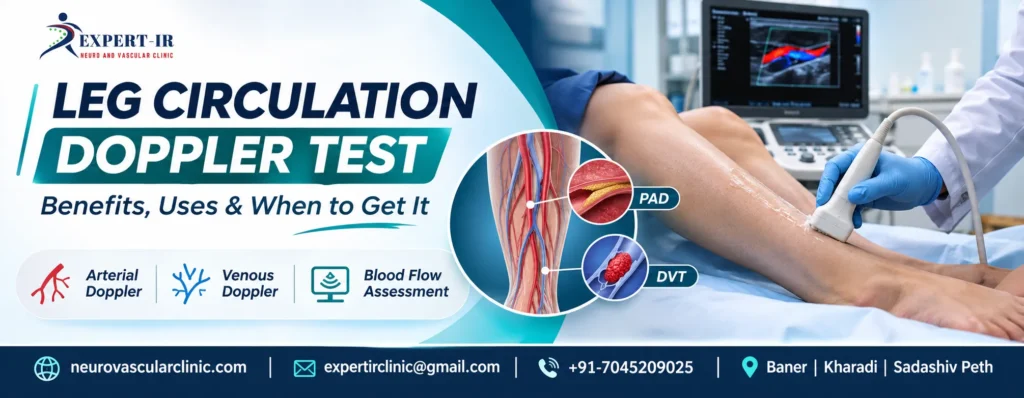
A leg Doppler test is a type of ultrasound that measures the speed and direction of blood flow in the legs. A small handheld probe is moved gently over the skin, and the machine turns sound waves bouncing off moving blood into images, colours and sounds.
Most clinics perform a duplex Doppler scan, which combines two things:
- Ultrasound images that show the structure of the blood vessel
- Doppler flow readings that show how well blood is moving through it
Think of it like checking a water pipeline. The ultrasound shows the pipe itself, and the Doppler shows whether water is flowing freely, slowing down at a blockage, or leaking backwards.
Types of Leg Doppler Tests
Type | What It Checks | Commonly Used For |
Arterial Doppler | Blood flow from the heart to the legs | Peripheral Artery Disease (PAD), blocked or narrowed arteries |
Venous Doppler | Blood flow from the legs back to the heart | Deep Vein Thrombosis (DVT), clots, vein blockage |
Venous reflux study | Whether vein valves are leaking | Varicose veins, spider veins, chronic leg swelling |
Ankle-Brachial Index (ABI) | Compares blood pressure in the ankle and arm | Quick screening for PAD, often done alongside arterial Doppler |
Your doctor decides which test you need based on your symptoms. In some cases, both arteries and veins are checked in the same visit.
What Can a Leg Doppler Test Detect?
Artery problems
- Peripheral Artery Disease (PAD): Plaque narrowing the leg arteries
- Complete blockages that reduce blood supply to the foot
- Aneurysms, or abnormal swelling of an artery wall
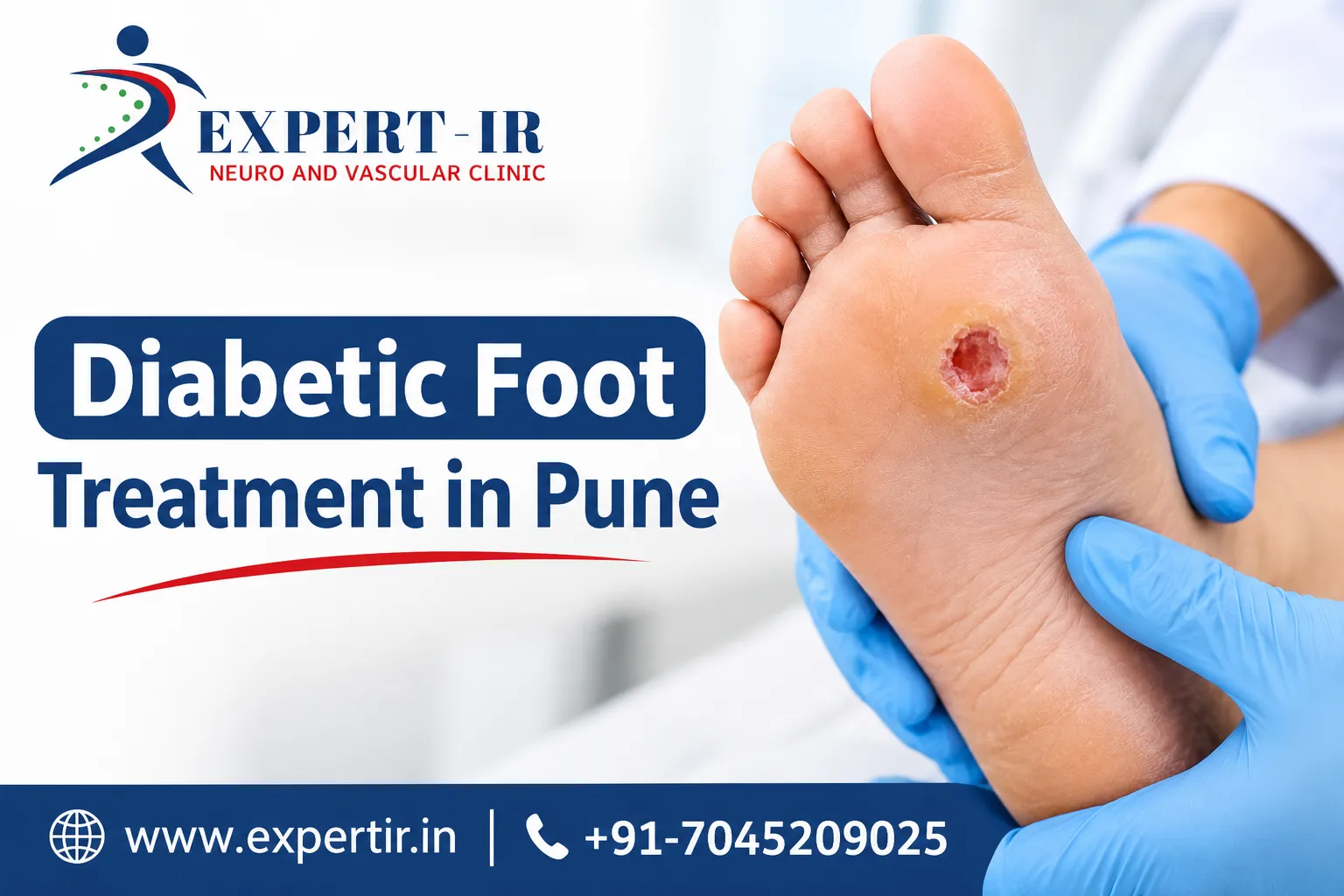
- Poor blood flow behind slow-healing foot wounds, especially in diabetes
Vein problems
- Deep Vein Thrombosis (DVT): A blood clot in a deep leg vein
- Venous insufficiency: Weak or leaky valves that let blood pool in the legs
- The root cause of varicose veins, showing exactly which veins are faulty
- Post-thrombotic changes in veins after an old clot
Benefits of a Leg Doppler Test
- Completely non-invasive: No needles, no cuts, no dye in most cases
- No radiation: Safe to repeat and suitable for most patients
- Painless and quick: Most scans are done in under an hour
- Real-time results: Blood flow is seen live during the scan
- Finds the root cause: Separates artery problems from vein problems, which can feel similar
- Guides the right treatment: Helps decide between medicines, lifestyle changes, angioplasty or vein treatment
- Tracks progress: Checks results after angioplasty, stenting or varicose vein treatment
- Catches problems early: Before they turn into ulcers, gangrene or a dangerous clot
When Should You Get a Leg Circulation Doppler Test?
Signs of an artery problem
- Calf, thigh or hip pain while walking that settles with rest (claudication)
- Burning foot pain at night, eased by hanging the leg off the bed
- Cold, pale or bluish feet
- Weak or absent pulse in the foot
- Shiny skin, hair loss on the legs or slow toenail growth
- Foot or toe wounds that do not heal
Signs of a vein problem
- Visible, twisted or bulging veins
- Heaviness, aching or tiredness in the legs by evening
- Swelling in the ankles or feet
- Itching, darkening or thickening of the skin near the ankles
- Night cramps or restless legs
- Wounds near the inner ankle that keep coming back
Who should get checked even without symptoms
- People with diabetes, especially for more than a few years
- Smokers or former smokers above 50
- People with high blood pressure, high cholesterol or kidney disease
- Anyone with a family history of PAD, DVT or varicose veins
- Patients before and after angioplasty, stenting or vein treatment
When it is urgent
Get medical help the same day if you notice sudden swelling, pain and warmth in one leg, as this can be a sign of DVT. If you also feel breathlessness or chest pain, go to the emergency department immediately. A leg that suddenly turns cold, pale, numb and very painful also needs emergency care.
How Is the Leg Doppler Test Done?
Before the test
- No fasting is usually needed
- Wear loose, comfortable clothing
- Take your regular medicines unless told otherwise
- Carry any old reports, scans or prescriptions
During the test
- You lie down on the examination table. For vein studies, you may also be asked to stand
- A water-based gel is applied to the skin
- The probe is moved gently along the leg, from the groin or thigh down to the ankle
- You may hear whooshing sounds, which is the sound of blood flowing
- For vein studies, the doctor may gently press the calf to check valve function
- For an ABI, blood pressure cuffs are placed on the arms and ankles
The test usually takes 20 to 45 minutes, depending on whether one leg, both legs, or both arteries and veins are checked.
After the test
The gel is wiped off and you can go back to your normal routine straight away. There is no recovery time.
Understanding Your leg Doppler Results
- Normal result: Smooth, healthy blood flow with no blockage, clot or valve leak
- Narrowing or blockage: Shows where blood flow is reduced in an artery and how severe it is
- Clot found: Shows the location and size of a DVT, which needs prompt treatment
- Valve leak (reflux): Shows which veins are causing varicose veins or swelling
Your doctor explains what the findings mean and whether you need medicines, lifestyle changes, further imaging such as CT angiography, or a minimally invasive procedure.
What Happens After the Doppler Test?
Depending on the findings, treatment may include:
- Lifestyle changes and medicines for early PAD or mild venous disease
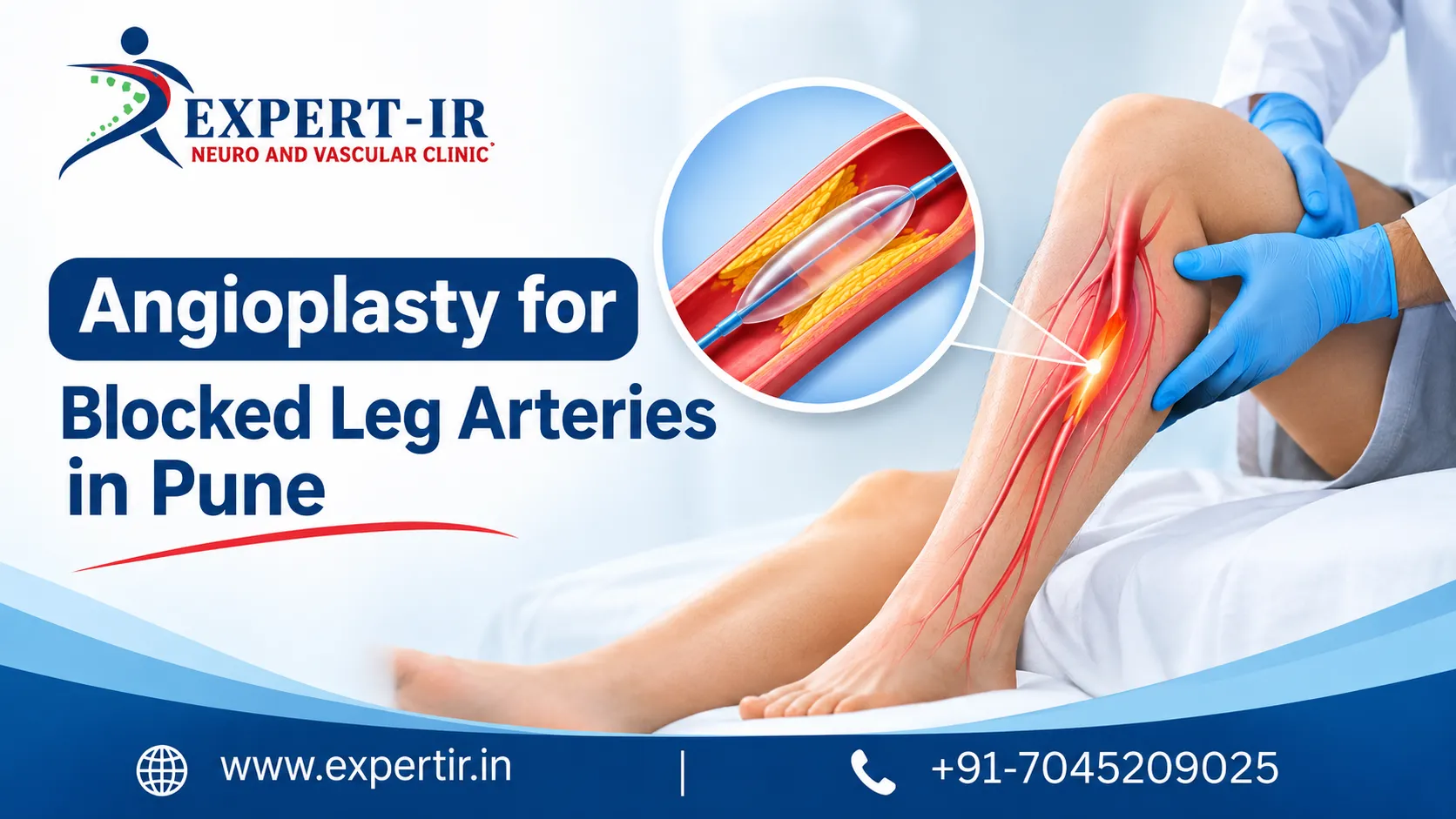
- Angioplasty or stenting for blocked leg arteries
- Blood thinners or clot treatment for DVT
- Minimally invasive vein treatments such as laser, RFA or VenaSeal for varicose veins
- Regular follow-up Doppler scans to monitor results
Why Get Your Leg Doppler Test at Expert IR Neuro & Vascular Clinic?
At Expert IR Neuro & Vascular Clinic, Dr. Santosh Patil, a Neuro and Vascular Interventional Radiologist and European Board-Certified specialist, uses Doppler findings to treat leg circulation problems from the root cause, without open surgery wherever possible.
- Artery and vein evaluation under one specialist
- Clear explanation of your scan in simple language
- Diagnosis and treatment planning in one place, from Doppler to angioplasty or vein treatment
- Focus on diabetic foot and limb salvage
- Three convenient locations in Pune: Baner (Manipal Hospital), Kharadi (Manipal Hospital) and Sadashiv Peth (Apollo Spectra)
Listen to What Your Legs Are Telling You
Leg pain, swelling and visible veins are not something you simply have to live with. A quick, painless Doppler test can tell you exactly what is going on, and early answers usually mean simpler treatment.
If you or someone in your family has any of these signs, book a leg circulation check-up at Expert IR.
Book an appointment: +91-7045209025
Frequently Asked Questions (FAQs)
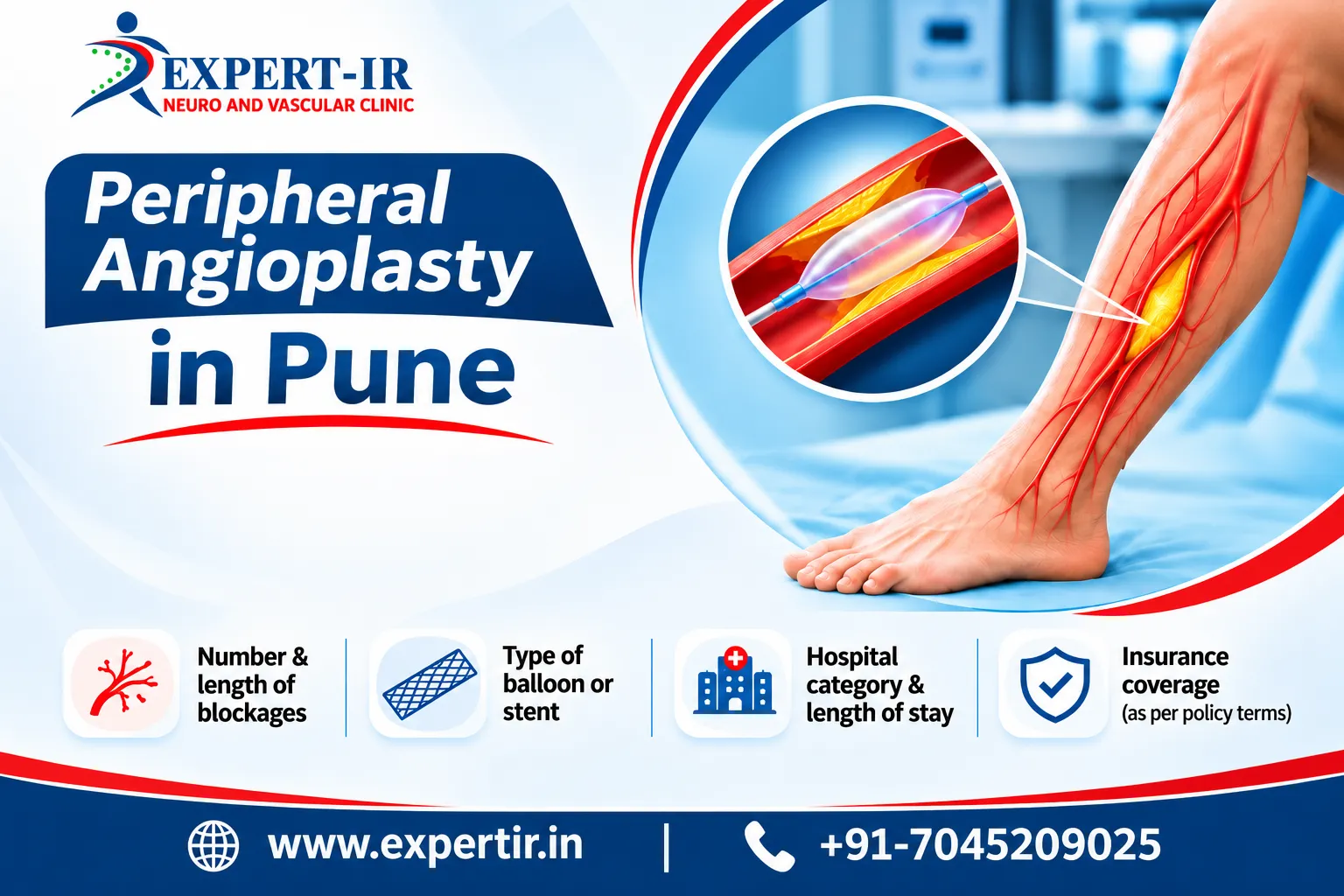
Peripheral angioplasty in Pune usually costs between about ₹1 lakh and ₹4 lakh or more. The final cost depends on the number and length of blockages, whether a stent or drug-coated balloon is used, the hospital category and the length of stay.
Leg angioplasty with a stent in Pune generally costs around ₹1.5 lakh to ₹3 lakh. Drug-eluting stents, multiple stents or complex blockages can increase the cost further.
The cost varies because every patient’s blockage is different. Location, length, calcium build-up, number of arteries treated, devices used, hospital stay and overall health all affect the final amount.
Yes. Plain balloon angioplasty is usually the most affordable option because no stent is placed. Your doctor decides between a balloon, drug-coated balloon or stent based on what will keep your artery open best.
Most health insurance policies cover peripheral angioplasty when it is medically needed. Coverage depends on your policy terms, waiting periods, room rent limits and whether the hospital is in the cashless network.
Common tests include an Ankle-Brachial Index (ABI), arterial Doppler, CT angiography and blood tests. These are often charged separately from the angioplasty package, so ask whether they are included.
In many cases, yes. Angioplasty usually needs a shorter hospital stay, local anaesthesia and a faster recovery, which can lower the overall cost compared with open bypass surgery. The right choice depends on your blockage.
Most patients go home the same day or the next morning. A longer stay may be needed for patients with foot wounds, infection, kidney problems or other health conditions, which can add to the cost.