What Happens If Veins Are Left Untreated for 5–10 Years?
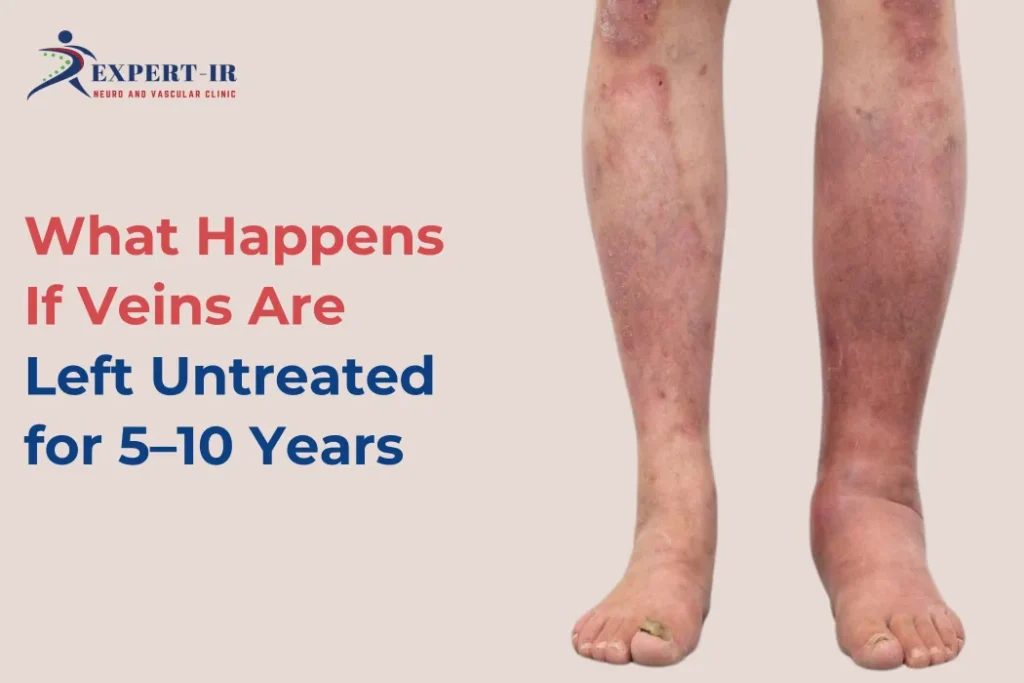
Many people live with varicose veins for years, assuming they are only a cosmetic issue. But, untreated vein disease is progressive, meaning it gradually worsens over time. The real concern is not how veins look today—but what happens 5 to 10 years down the line if they are ignored.
Understanding this long-term progression helps patients recognize the importance of early diagnosis and treatment.
Varicose Veins Are Not Static—They Progress
Varicose veins develop due to venous insufficiency, where vein valves fail and blood flows backward. This leads to blood pooling, increased pressure, and gradual vein damage.
Without treatment:
More veins become affected
Symptoms intensify
Complications begin to develop
This progression is slow but continuous.
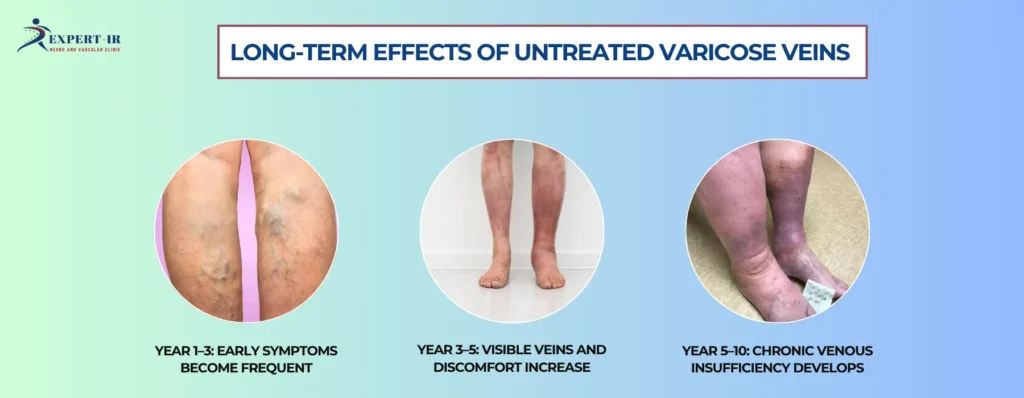
Year 1–3: Early Symptoms Become Frequent
In the initial months, symptoms may appear mild and occasional:
Leg heaviness after long days
Mild swelling near the ankles
Visible spider veins
Occasional aching or fatigue
At this stage, many people ignore symptoms or rely only on home remedies.
Year 3–5: Visible Veins and Discomfort Increase
As the condition progresses:
Veins become more prominent and bulging
Pain, burning, or throbbing increases
Swelling becomes more frequent
Itching or skin irritation develops
Daily comfort starts getting affected, especially after standing or sitting for long periods.
Inflamed, painful clots can form in affected veins.
Increased Risk of Infection
Open wounds and skin damage increase infection risk.
Why Modern Treatments Are Preferred for Vein Health
All three options—EVLA, RFA, and VenaSeal—are:
Minimally invasive
Performed under imaging guidance
Day-care procedures
Designed for faster recovery and long-term relief
At Expert IR Clinic, treatment selection is customized based on vein condition, patient health, and underlying hormonal factors. Dr. Santosh Patil ensures precision-based, non-surgical care for optimal outcomes.
Ovarian vein reflux occurs when vein valves weaken or fail, allowing blood to flow backward and pool in the pelvic veins. Hormonal changes (especially high estrogen levels), pregnancy, and multiple childbirths increase the risk.